Incubus: A Supernatural Thriller: The Weight in the Dark | Craig Beck
Sep 14, 2026Incubus: A Supernatural Thriller and the Real Thing That Sits on Your Chest
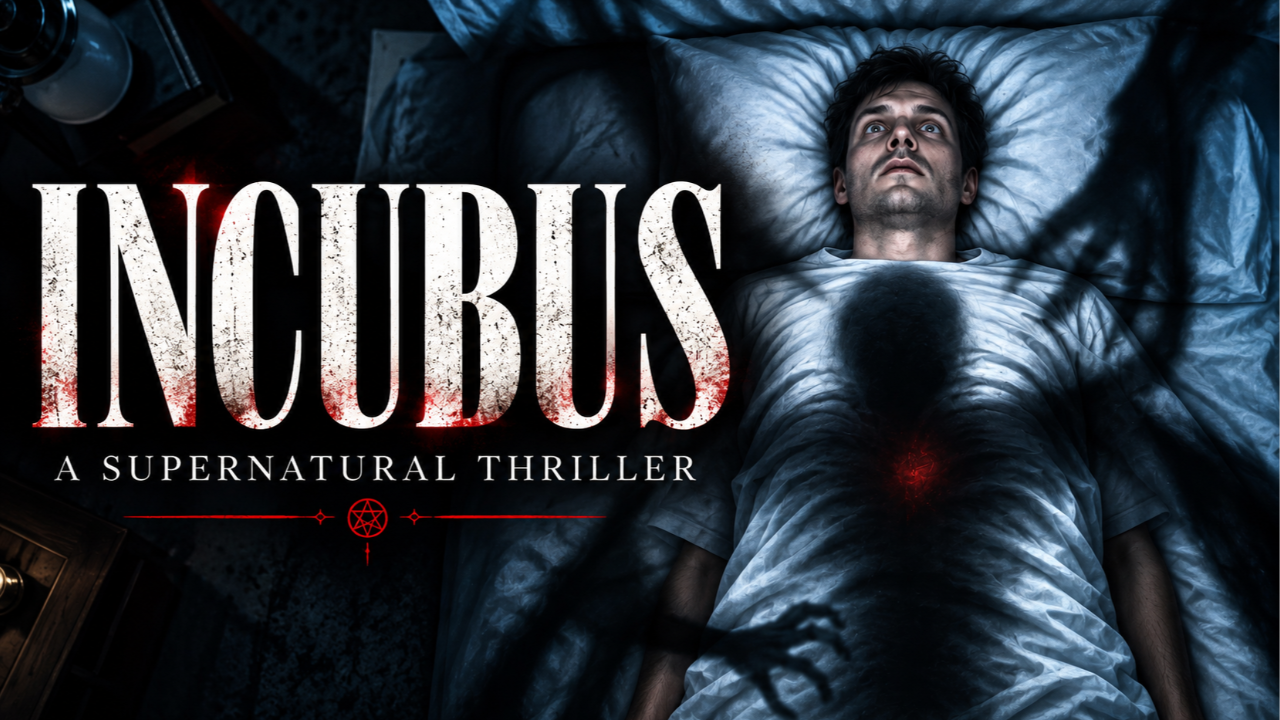
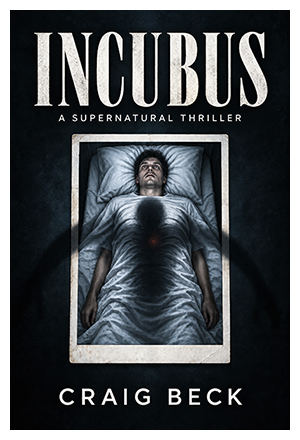 An incubus is the name medieval Europe gave to the thing that sits on your chest while you sleep. The word comes from the Latin incubare, to lie upon, and for the best part of a thousand years it explained a real and terrifying experience: waking in the dark, unable to move, with a weight pressing down and a presence in the room. Modern sleep science calls it sleep paralysis. My new horror novel, Incubus: A Supernatural Thriller, asks a nastier question. What if the weight isn't a misfire in your brain? What if it has been waiting?
Somewhere tonight, in a bedroom that looks exactly like yours, a perfectly sane adult will open their eyes at 3am and discover they cannot move a finger. Something will be pressing its full weight into their ribs, and they will know, with a certainty daylight never quite argues away, that it is looking at them. Ask them in the morning and most will laugh it off. Ask again at midnight and watch what happens to the laugh. If you'd rather meet the thing itself than read about it, Incubus: A Supernatural Thriller is waiting on Amazon.
Where the Incubus Legend Really Comes From
Every culture on earth invented this monster, and none of them compared notes. The Old English called it the mære, a spirit that rode sleepers in the night, which is where your word nightmare comes from. In Japan it is kanashibari, bound in metal. Newfoundland fishermen were being visited by the Old Hag long before anyone in a lab coat had a name for it. The medieval Church, never one to waste a good terror, gave it a sex life and a place in the witch trials.
In 1781 a Swiss painter called Henry Fuseli put the whole legend on one canvas: a woman flung across a bed, arms hanging, and a squat, grinning creature sitting on her chest and looking straight out at you. Today The Nightmare hangs in the Detroit Institute of Arts. Vikings, samurai, fishermen and Georgian art critics all drew the same thing: a weight, a watcher, and a body that will not obey. That is not a story that spread. That is a fear built into the hardware.
What Your Brain Is Doing When It Won't Let You Move
Every night, several times a night, your brainstem deliberately paralyses you. When you drop into the dreaming stage of sleep it switches off your voluntary muscles so you don't act out whatever your dreams are doing to you. Sleep scientists call this atonia, and it works like the lock on a washing machine door. Sleep paralysis is what happens when your mind wakes up before the lock releases. You are conscious. You can hear the room. And every command you send to your arms and legs comes back marked undeliverable. Nobody knew how common this was until a psychologist at Penn State pooled 35 studies covering more than 36,000 people. Roughly 8 percent of the general population has been through at least one episode, and among students it climbs to 28 percent. The hallucinations fall into three families: an intruder in the room, pressure on the chest, and the sensation of floating. Your brain is a pattern-finding machine, and when it wakes to a paralysed body and a pounding heart it gives the threat a face. The demon is your own alarm system filling in the blank.
Night terrors are a different beast, and they belong to children. They erupt from the deepest stage of sleep, and the child screams, stares wide-eyed, cannot be woken and remembers nothing in the morning. Most grow out of them. For the rare few who don't, doctors reach for drugs that stop the brain descending all the way down the staircase of sleep. That phrase lodged in my head for months. If a pill can stop a six-year-old going all the way down, what is waiting at the bottom?
The Real Cases That Read Like a Horror Novel
In Salem in 1692 a man named John Louder testified that Bridget Bishop had come into his bedroom at night, sat on his chest and pressed until he could not breathe or cry out. Read his words today and you'll recognise every symptom on the Penn State list. The court did not have a sleep lab. It had a rope, and Bishop was the first person hanged in the witch trials.
Three centuries later something stranger happened. Between the late 1970s and the mid 1980s more than 100 Hmong refugees, nearly all young men in apparently perfect health, died in their sleep in the United States. The Centers for Disease Control found no poison, no heart defect, no common cause. The Hmong had a name for it already: dab tsog, the crushing spirit that comes at night. Medicine filed it under sudden unexplained nocturnal death syndrome, which is a long way of saying nobody knows. A Hollywood screenwriter read those reports and built a famous slasher franchise on them. I read them and started thinking about a bench on East 52nd Street.
The Night the Idea Arrived: How Incubus: A Supernatural Thriller Was Born
The book opens in Forest Hills, Queens, in 1997. Six-year-old John Prest is having night terrors so violent his parents have called an ambulance four times since Easter. His eyes are open and the pupils have swallowed the brown. When he comes round he says the same thing he always says. It sat on me. He calls it the heavy. A kind paediatrician prescribes a cocktail of drugs to stop John reaching the bottom step, and for 29 years the silence holds. Then a stolen box truck runs a red light on the road the tabloids call the Boulevard of Death. Here is a passage from the novel, from the crash itself:
"Lying upside down on Queens Boulevard with the rain coming in through the space where the glass had been and the blood running the wrong way up his forehead into his hair, John Prest felt a weight settle onto his chest. It was warm. It was patient. It had been waiting a long time, and it took its time about getting comfortable, the way a cat does, or a man sitting down in a chair he owns."
The premise fits in one line. Whatever John falls asleep looking at, he can change. He tests it with a photograph of a tree and wakes to chainsaws in the street. He tests it with a ten-dollar scratch card and wakes to find it worth 500 dollars. Then a friendly shopkeeper leans into the frame for luck, and John learns the rule that runs the whole supernatural thriller. Every gift arrives with a bill, and the bill is always paid by somebody else. Fancy finding out who pays next? Grab Incubus: A Supernatural Thriller on Amazon in paperback, Kindle or audiobook, and take my advice: don't start it in bed.
Inside the Mind of the Thing That Sits on John Prest
I have spent two decades profiling predators, from the charm that made Ted Bundy so lethal to the quiet men next door, and I built the creature in this book from the same file. It has no empathy; the people in the photographs are inventory. It has grandiosity; it speaks to John like something that owns him. And it plans. Twenty-nine years locked in a child's skull by a doctor's prescription, and it never once stopped waiting. That is patience, and patience is the most frightening quality a predator can have.
Look at how it hunts. It never chases and never threatens. The first words it speaks to John are a welcome, not a warning, and its first act is a gift. Any drug dealer or cult recruiter will tell you why: the first hit is free, because reciprocity is the strongest lever in the human mind. Give somebody 500 dollars they didn't earn and you haven't bought them, you have made them reach. Every small yes makes the next yes cheaper. And notice who it chose. Not a fighter, not a believer, nobody with people who would notice him change. Predators pick the one who has already gone still. It finds the one man in New York nobody is looking at, and it looks at him, and being seen turns out to be the thing he wanted more than money.
Who Is John Prest and Why You'll Recognise Him
He is six foot two with a stoop that takes an inch off it, pale, with careful hair and a face that would be handsome on somebody who used it more. For eleven years he has processed insurance claims on the fourteenth floor of a building that looks like a filing cabinet, eaten the same sandwich on the same bench at 12.40 every day, and been called Sir by a deli owner who has never asked his name. He is the best claims man they have, and he has been passed over for team lead three times, in 2018, 2021 and 2024, in favour of a man who once described a policy exclusion, in front of underwriters, as the thingy.
You know a John Prest. Some of you, if we're being honest over this pint, have been one. His wife left and took the children in every sense that matters. He is not a bad man when the story opens. He is a starving one, and the hunger is for significance, which is the one hunger the demon understands. That is why the villain of this psychological thriller gets invited in rather than breaking in. If you have ever wondered why true crime hooks the human mind so hard, it is because the frightening ones are always recognisable. I built John to be the one you least want to see in a mirror.
"I read the first hundred pages on a night shift at the hospital in Tucson and had to put my phone face down on the desk. The bit with the tree is going to stay with me." Marisol Ortega, Tucson, Arizona
"I've had sleep paralysis since college and this is the first book that got it right. The weight, the breathing, the way it takes its time. I finished at 2am and sat in the kitchen with every light on until my husband got up." Dana Whitfield, Grand Rapids, Michigan
"Bought it for the flight to Denver and missed the drinks cart twice. It's the rule that gets you, that somebody else always pays. I look at the photos on my phone differently now." Kyle Brannigan, Raleigh, North Carolina
What You Do Every Night That Leaves the Door Open
This is the part I find harder to shake than any of the folklore. You lie down on your back, which the research says is the position most likely to trigger an episode. You stare at a glowing rectangle until your eyes close, so the last image on your retina is whatever your phone happened to be showing. You have let a machine switch off your body roughly 12,000 times so far and trusted it to switch you back on. Every one of those nights you were exactly where John Prest was: paralysed, on purpose, looking at a picture.
Expectation does the rest. People see what they have been told to look for, and I have just told you where to look. So, when the duvet settles a little heavier than gravity can explain tonight, you will know your brain has simply woken up a few seconds early. Probably. Whether you have any free will at all in that moment is a question I'll leave between you and the ceiling.
The Question Incubus Refuses to Answer
Every good supernatural thriller keeps its hands over one question, and this one has two. The first is whether the heavy is real, or whether a lonely man with 31 staples in his skull has finally found a story that makes him matter. The book gives you evidence for both. The second question is worse. If you woke tomorrow and the world did what you told it, and you knew a stranger would pay for every wish, what is the first photograph you would fall asleep looking at? Be honest. Then ask yourself why you already have it.
Everyone I know who has finished this book has sent me the same message, usually somewhere between midnight and three. Get Incubus: A Supernatural Thriller on Amazon, read it before the people at work start talking about it, and then find out what yours says.

Frequently Asked Questions
Is Incubus: A Supernatural Thriller based on a true story?
The story is fiction, but the fear underneath it is not. Childhood night terrors, adult sleep paralysis, the weight on the chest and the sensed presence in the room are all documented and surprisingly common, and the incubus legend was humanity's first attempt to explain them. I built John Prest's childhood from real paediatric case patterns and his adult episodes from the accounts of people who have lived through them. What the thing on his chest can do once it is awake is where the novel begins and the science ends.
Is Incubus part of a series?
Incubus reads as a complete standalone horror novel with its own beginning, middle and end, so you can pick it up without any homework. That said, the thing at the centre of it has been around a long time and it is not the kind of creature that retires quietly. Readers who reach the last page tend to write to me asking one question, and the answer is yes, I am already working on what comes next.
How scary is Incubus: A Supernatural Thriller?
It is not a jump-scare book and there is no cartoon monster with claws. The horror is psychological and it creeps: a man who cannot move, a voice that sounds pleased to see him, and consequences that land on people who never knew they were in the frame. Readers with a history of sleep paralysis tell me it is the most accurate thing they have read, which is either a compliment or a warning. If you sleep on your back, you may want to change that before chapter two.
About the Author
 Craig Beck is a former British broadcaster, certified NLP Master Practitioner and the author of more than a hundred books on persuasion, human behaviour and the darker corners of the mind. Over twenty years he has taken apart the machinery of why people say yes, why they trust the wrong face, and why they scream, and more than a million readers have used that work to understand the hidden levers behind their own decisions. His fiction turns the same instruments on you, in the dark, when you are least able to move.
Last updated: 14 September 2026