
Feeling Pointless Decoded: Why a Good Life Can Feel Empty
Oct 18, 2026Feeling Pointless Decoded: Why a Good Life Can Feel Empty
Feeling pointless when life looks fine on paper is usually your brain's reward system doing its job too well. It adapts to every win, so the new house, the promotion and the holiday quickly become the new normal. Dopamine keeps you chasing the next thing instead of enjoying this one, and autopilot blurs the days together. The emptiness is a signal that pleasure has been feeding you while meaning has been left off the menu.
 It tends to show up at about three in the morning. You wake for no reason, the house is silent, the person next to you is breathing slowly, and your brain flickers on like a strip light in a garage. Nothing is wrong. The mortgage went out on time, the kids are fine, the job is decent and you had a nice enough weekend. And yet a small, flat voice asks a question you would never say out loud at a dinner party. Is this it?
By breakfast it has gone, buried under the school run and the inbox. But it leaves a residue. You notice it when you hit a goal you chased for two years and feel about as excited as you would about a new kettle. You notice it on holiday, by the pool, when you catch yourself already planning the next holiday. Everyone keeps telling you how well you're doing. So why does your life feel empty when it looks this good from the outside? And why does every finish line seem to move the moment you cross it?
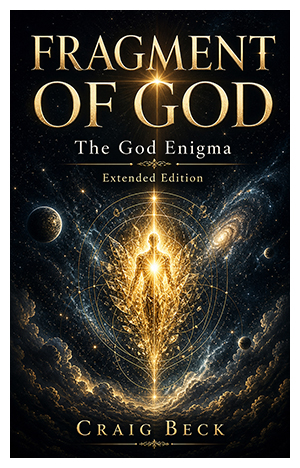
Want the full method for answering the question hiding underneath that 3am feeling? Get Fragment of God: The God Enigma Extended Edition on Amazon.
The Comfortable Story You Tell Yourself About Feeling Flat
The story most people tell themselves is simple. You need the next thing. Once the extension is finished, once the kids are a bit older, once you've hit the number or landed the promotion, you'll finally feel settled. The emptiness is a temporary waiting room between where you are and where you're heading. Keep your head down, keep climbing and the good feeling will be waiting for you at the top.
It's a lovely story, and it has a crack running straight through it. You have already arrived at several of the places you once swore would fix everything. Think back ten years. The version of you then would have been thrilled with the job, the house or the relationship you have now. Some of those wishes came true, and for a few weeks they felt wonderful. Then the glow faded and the waiting room reappeared, with slightly nicer furniture. If the next milestone were the answer, one of the last five would have worked.
And that's the uncomfortable part. Often life feels pointless because you have succeeded at a game that was never designed to satisfy you. You did everything on the list. Nobody mentioned that the list was written by your reward system, and your reward system has no interest whatsoever in you feeling finished.
What Feeling Pointless Is Doing to Your Brain
Psychologists have a name for the moving finish line, the hedonic treadmill. The American Psychological Association's definition of the hedonic treadmill describes the way happiness tends to drift back to its usual baseline after good and bad events alike, so even big changes produce shifts in mood that wear off surprisingly quickly. It isn't absolute, and some changes do stick. But down the pub, it means your brain gets used to things. The new car smell lasts about a month. The pay rise becomes the amount you now need to live on. Adaptation kept your ancestors alive, because a creature that stayed thrilled with yesterday's berries would never go looking for tomorrow's.
Then there's dopamine, which most people think of as the pleasure chemical. It's closer to the wanting chemical. Researchers who have spent decades studying reward describe two separate systems in the brain, a large and robust one for wanting, driven largely by dopamine, and a smaller, more fragile one for liking, the enjoyment you get once the thing is yours. You can read the research on how wanting and liking run on different brain circuits on the NIH's PubMed Central. That explains a great deal about modern life. Your brain lights up at the chase, the scroll, the countdown and the Add to Basket button, then goes quiet the moment the parcel lands on the doormat. The engine of desire is enormous. The engine of satisfaction is a moped.
The third piece is autopilot. Your brain loves efficiency, so anything you do often gets handed over to habit and stops reaching your conscious attention. That's brilliant for driving a familiar route and miserable for living a familiar life. The commute, the meals, the conversations and the evenings on the sofa all get automated, and automated experiences leave almost no memory worth keeping. That's why a whole year can vanish and you struggle to name three days from it. You weren't absent, exactly. You were running in the background.
The Milestone Loop and the 3am Audit
Put those three forces together and you get a loop that can run quietly for years. The cue is a flat, restless feeling, often on an ordinary weekday evening when nothing is demanding your attention. The routine is to reach for the next thing to want, whether that's a new goal, a property website, a holiday to book or a course to sign up for. The reward is a lovely flicker of anticipation, which feels like meaning for about a fortnight. Then the thing arrives, adaptation kicks in and the flat feeling returns, a little heavier than before, ready to cue the next round.
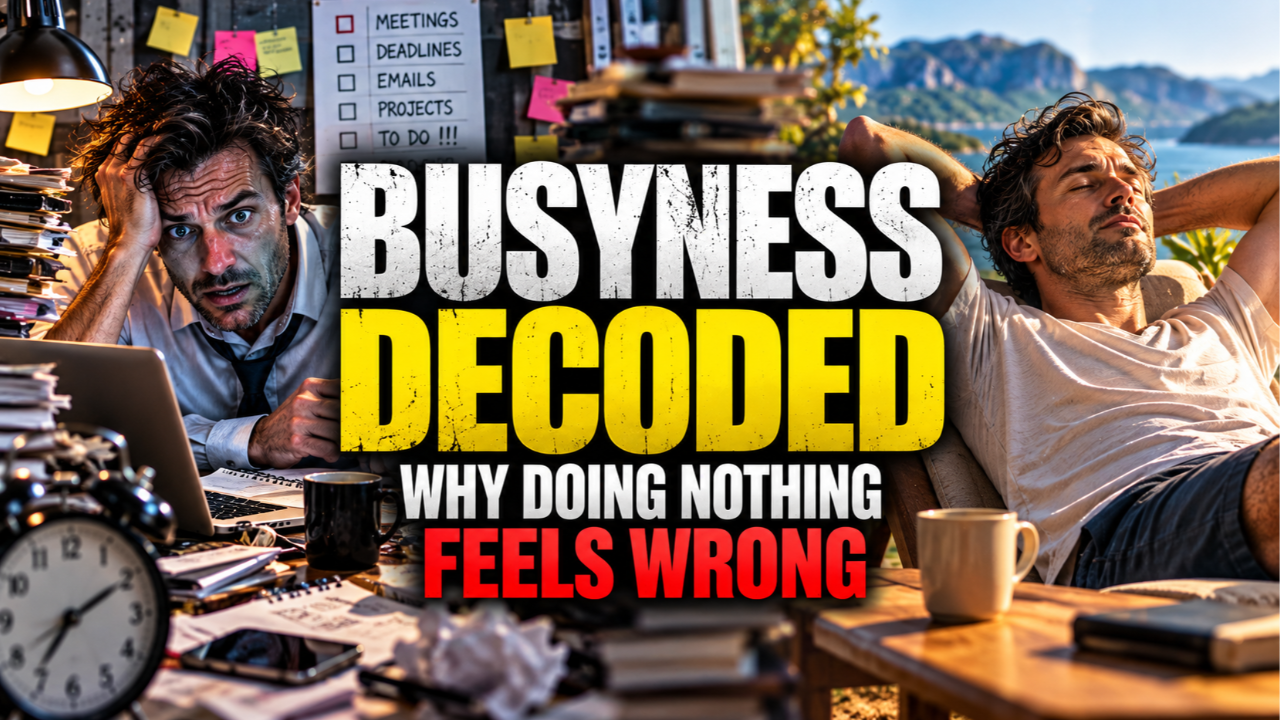
The loop escalates in a predictable way. The goals get bigger because small ones no longer make a dent. The gaps between them get shorter. You start to fill every spare hour so the flatness can't find you, which is the trap I unpicked in Busyness Decoded. And when you finally stop, on a long weekend or the first night of a holiday, the emptiness is there to greet you, as though it has been sitting in the back of the car the whole way.
That's why it so often surfaces at 3am. It's the only hour of the day when nothing is competing for your attention. There are no screens, no tasks and no next thing to chase, so the brain is left alone with its own accounts and starts an audit. What is all this for? Who would notice if I stopped? Is anybody else secretly feeling like this? Some nights the 3am brain wanders into stranger territory still, and if you've ever lain awake wondering whether any of it is even real, I went down that rabbit hole in my piece on whether we're living in a simulation. The audit feels like a malfunction. I'd argue it's the most honest meeting you attend all week.

Why the Usual Fixes for an Empty Life Keep Failing
The first fix is the upgrade. If life feels flat, buy something that isn't. A new car, a new kitchen, a watch or a weekend in a city you'll mostly see through a phone screen. It works for a while, because it feeds the wanting system everything it craves. Then the treadmill does what it always does, and you're back at your baseline with a new monthly payment.
The second fix is the bigger goal. Run the marathon, launch the side business, reach the next salary bracket. Goals are fine, and some of them will give you a lot. But if the goal is a way of not feeling the emptiness, it becomes one more milestone in the loop. You cross the line, collect the medal and feel the familiar quiet descend before you've even found the car park.
The third fix is anaesthetic. The second glass of wine becomes the bottle, the evening scroll stretches past midnight and the telly runs in the background so silence never gets a word in. Each one numbs the flatness for an evening and borrows against the next morning. The NHS guidance on coping with low mood, sadness and depression warns against using alcohol, cigarettes, gambling or drugs to lift a low mood, because they can all feed poor mental health, and most people discover that the hard way.
The fourth fix is the guilt lecture. Count your blessings. Other people would give anything for your life. Gratitude is a beautiful thing when it arises on its own, but forcing it on top of emptiness is like painting over a damp wall. You end up feeling pointless and ungrateful, which is a heavier load than the one you started with. Shame never fills a hole. It digs it a little deeper.
Ready for the full method behind filling the hollow that no upgrade can reach? Get Fragment of God: The God Enigma Extended Edition on Amazon and start with the biggest question of all.
Pleasure Feeds You, Meaning Holds You
Here's the reframe that changes the whole picture. Feeling pointless is not proof that your life is wrong or that you're broken. It's a signal that you've been running on one fuel when you need two. Pleasure is the first fuel. It's immediate, it lives in the wanting system and it fades fast by design. Meaning is the second. It's slower, quieter and far more durable, because it doesn't depend on the next thing arriving. It comes from feeling connected to something larger than your own ladder, whether that's people, a craft, a cause, the natural world or something you would call spiritual.
Pleasure asks what you can get today. Meaning asks what you're part of. A life built entirely on the first question will eventually feel thin, however expensive it gets. That's why the people with the most stuff aren't always the most content, and why people who give their time away often describe a fullness no purchase has ever delivered. When those caring for the dying talk about what their patients regret most, it's rarely the promotions they missed. I've written about those lessons in my piece on the top regrets of the dying, and the thread running through them is living for something real while there's still time.
For me, this question came to a head when I lost my faith. I'd grown up with one set of answers, and when they stopped making sense I lost the lot. For a while life felt like a well-furnished waiting room with no door. It took years of searching before I found a way of thinking about why we're here that I could live with, and that's what I wrote about in Fragment of God, the book behind this piece. It takes on the questions most of us push away at 3am, whether there's a point to life, why life feels so unfair and how to build the life we dream about, and it suggests each of us carries a small piece of something far bigger than ourselves.
You don't need to share my conclusions, or follow any religion at all, to borrow the central idea. A life starts to feel less pointless the moment you stop treating yourself as a sealed unit and start seeing yourself as part of something larger. Connection doesn't wear off the way a new kitchen does. If anything, it deepens with use.
Your First Small Move: Plant Something You Won't Harvest Tonight
Your first move isn't a grand life overhaul, a retreat in the mountains or a dramatic resignation. It's a small experiment in feeding the second fuel. This week, choose one hour that has nothing to do with your own ladder and give it to something that will outlast the afternoon. Help a neighbour with a job they can't manage, teach someone a skill you take for granted, plant something in a pot or an allotment, ring the relative who always sounds pleased to hear from you or volunteer for a local cause. The rule is simple. The hour mustn't improve your CV, your bank balance or your social media. It must matter to someone or something other than you.

Then add a second habit at the other end of the day. Before bed, write down one moment from the day that felt alive. It might be a conversation, a laugh, a robin on the fence or the smell of rain on hot pavement. Write the moment and one sentence about why it mattered. This trains your attention to catch what autopilot normally deletes, and it gives the 3am brain something to read when it opens the accounts. After a fortnight, look back over the page. You'll start to see a pattern, and the pattern is usually people, usefulness and presence, rarely the things you were chasing.
Do both for four weeks and notice what happens to the flatness. Meaning tends to build slowly, so don't expect fireworks on day two. If the emptiness has settled into a low mood that lasts more than a couple of weeks, you've stopped enjoying the things you used to love or you feel hopeless, please speak to your GP or a qualified professional alongside any self-help. And if you'd like support working through it, my coaching page explains how we can do that one to one, or try my hypnosis session for lifting low mood on the evenings the flat feeling won't shift.
The Question Nobody Asks About Feeling Pointless
We spend a fortune trying to make the feeling go away. We buy, we book, we climb and we numb. Very few people stop to ask what the emptiness might be asking for. It may be the part of you that refuses to settle for a life measured only in acquisitions, the fragment that suspects there's more to all this than the next thing on the list.
So, what would change if you treated the 3am question as an invitation instead of an intruder? And if you knew for certain that your life was part of something much bigger, how would you spend tomorrow?
Ready to stop chasing the next milestone and start answering the question underneath it? Pick up your copy of Fragment of God: The God Enigma Extended Edition on Amazon today and find out what a fuller life looks like from the inside.
"I had the house, the career and the family, and I still lay awake asking what the point was. This book helped me see I'd been chasing the next thing for twenty years. I started volunteering on Saturday mornings, and for the first time in ages my life feels like it means something." (Karen M., Columbus, Ohio)
"I'd lost my faith and assumed that meant life was meaningless. Craig gave me a way of looking at it that didn't ask me to pretend or go back to something I'd outgrown. The 3am wake-ups have mostly stopped, and I'm a lot kinder to the people around me." (David R., Sacramento, California)
"Every promotion felt flat within a month and I couldn't work out why. Reading this made me look hard at what I was chasing. I coach my son's soccer team on weeknights now instead of answering emails, and that hollow feeling has mostly gone." (Steven K., Knoxville, Tennessee)
Frequently Asked Questions About Feeling Pointless
Why does life feel pointless even when everything is going well?
Because your brain adapts to good things remarkably quickly. Psychologists call it the hedonic treadmill. New wins become your new normal, and dopamine pushes you towards the next thing to want instead of letting you enjoy what you already have. Add autopilot, where familiar days blur together, and you can tick every box while feeling strangely hollow. It usually means pleasure has been doing all the work while meaning, connection and purpose have been quietly neglected.
How do I find meaning when life feels empty?
Start small and outward instead of big and inward. Give one hour a week to something that will outlast the afternoon, such as helping someone, teaching a skill, growing something or supporting a cause, and make sure it does nothing for your status or bank balance. Each night, write down one moment that felt alive and why. Over a few weeks, patterns appear, and they usually point towards people, usefulness and presence instead of the next milestone.
Do you need to be religious to find a sense of purpose?
No. Meaning comes from feeling connected to something larger than your own ambitions. For some people that's God, while for others it's family, nature, a craft, a community or the simple knowledge that their life matters to someone. Fragment of God explores the biggest questions from a spiritual angle, but you can borrow its central idea without signing up to any religion. The key shift is seeing yourself as part of something bigger, instead of a sealed unit.
About the Author
 Craig Beck spent years as a UK broadcaster, learning how the right words in the right order can change the way people feel. He is a certified NLP Master Practitioner and the author of more than a hundred books on human behaviour, spirituality and change, from quitting alcohol to the biggest question of why we're here at all. His work skips the motivational fluff and shows readers the machinery underneath. Find out more on his about page.
Last updated 16 October 2026.