Incubus: A Supernatural Thriller by Craig Beck
Oct 14, 2026Incubus: The Thing That Listened for 29 Years
Forest Hills, Queens, 1997. It hears the mother before she reaches the door. Bare feet on the hall runner, the husband saying her name through sleep, a phone cord at full stretch. It hears all of it from underneath a six-year-old boy, because that is where it lives, and the boy is making the sound again. Not a scream. A scream has a shape. This is one flat note, a kettle somebody forgot, and it has run for eleven minutes. Cold water hits his open eyes. He doesn't blink. The weight on his chest settles in and waits.
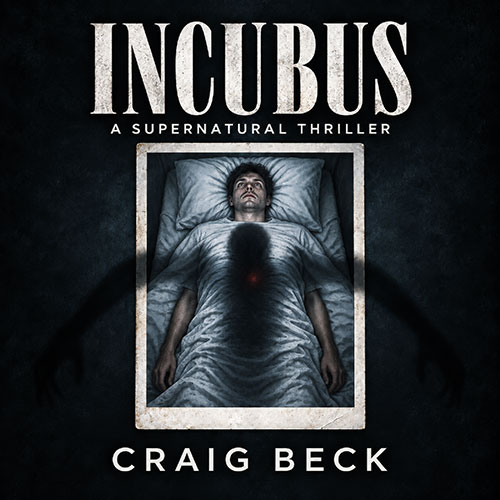
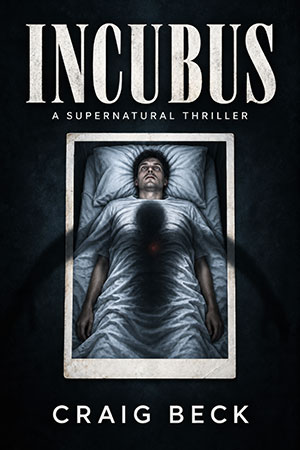 Incubus: A Supernatural Thriller is a horror novel by Craig Beck about John Prest, an overlooked insurance clerk in New York whose childhood night terrors return after a head injury at 35, except that now whatever he does inside the dream happens in the waking world. Whatever he falls asleep looking at, he can change. Every change comes with a bill, and the bill is always paid by somebody else.
The boy in the green room grows up. The doctor's drugs work, the terrors thin to one a season and then nothing, and by the summer of 2000 nobody renews the prescription. John grows up believing he was a sickly child who got better, which is what his parents told him and what they told themselves. And the thing underneath him, the thing he once called the heavy in a small hoarse voice in the back of an ambulance, does not get better. It gets patient. Incubus is on Amazon now in Kindle, paperback and audiobook, and I'd suggest a room with more than one lamp.
Meet John Prest Before the World Starts Listening
Twenty-nine years later John is six foot two with a stoop that steals an inch, and a face that would have been handsome on somebody who used it more. He works claims on the fourteenth floor of a tower on Lexington built when a building was allowed to look like a filing cabinet. He is the best processor they have, the eye that finds the clause on page 41, and his name is never on the memo that goes upstairs. Three times he has applied for team lead. Three times it has gone to Dean, who has a laugh you can hear from the lifts and a photograph of himself with a marlin on his desk.
On a warm Friday in October, John walks towards the office kitchen and hears Dean doing him. The stoop, the paper held four inches from the face, the little pause before the surname. The kitchen comes apart. Gail, who is meant to be the grown-up. Two juniors four months in. And Linda from accounts, in the green dress, laughing so hard she leans on the fridge. John goes back to his desk and works until the cleaners come through, because leaving early would mean walking past the kitchen door, and he will not give them a second act. Face down on that desk for a year is a photograph of his two children on the sand at Jones Beach. You already like him, don't you. That's the problem. I did too.
The Truck That Ran the Light on Queens Boulevard
He drives home, because the 7 train is full of people who look and don't look. It's raining, the hanging October kind that varnishes the road. Queens Boulevard, twelve lanes, middle lane, 30 miles an hour, thinking about Linda's hand over her mouth. The light at 48th Street is green. The box truck comes out of the cross street with its headlights off, white, unmarked, far too fast for a wet road, and he has time to see the driver. A young man, pale under the streetlight, face turned towards John, and the face looks interested. Then the windscreen goes white all at once, like a pond freezing in a film run too fast, and the Civic leaves the road on its roof.
Locals have called that road the Boulevard of Death since the 1990s, and it took a full redesign before the city could boast of 925 days without a fatality. I chose it because nobody in Queens asks questions about one more wreck on that stretch, and the truck is found two blocks away with the engine running and nobody in it. Upside down in the rain, with blood running the wrong way up his forehead, John feels something settle onto his chest. Warm. Unhurried. Getting comfortable, like a man in a chair he owns. Eleven days later he leaves Elmhurst Hospital with four titanium plates, 31 staples and a get-well card signed by the whole floor. Dean has drawn a small car with its wheels in the air.
Something Sits Up in the Dark Room
The first night home he looks at a photograph as he falls asleep, and then the nightstand isn't there and he is standing in the street outside his building. The light is wrong, a flat sourceless grey, a sky the colour of a bruise on its fourth day, and the buildings are melting. Not fast. The brick droops in soft folds over the windows. He can't move. He is standing in the street and he is also on his back in bed, and there's a weight on his chest, breathing slowly against his neck, and it smells of nothing at all. Then a voice that is more like a thought arriving from outside tells him, quite fondly, that it has found him.
Whatever he reaches for in that grey place, he wakes to find changed on 43rd Avenue. John does what any claims man would do with a miracle: he opens a legal pad and tests it. A scratch card photographed alone on a kitchen table. He learns that the thing can reach anything in the frame, and that a shopkeeper who leans into a photo for luck is in the frame. He learns that a woman from accounts who laughed against a fridge can be made to look at him, that looking costs something, and that she will come back to work the following week holding herself from the shoulders. And every time he goes through, a little of him stays in the doorway. Hair on the pillow, to start. It will be other things.
Inside the Mind of the Heavy
Here is what makes the antagonist of Incubus the most frightening thing I've put on a page. It isn't angry. On the fifth night, when John has fought sleep for four days with coffee and cold taps, it comes without a photograph, and for the first time it sits up. He can see it. A grey shape astride his ribs, no edges, no face of its own, so it borrows one. And it talks like an old friend who has waited for a quiet moment. It tells him it heard everything, from the inside, for 29 years. The boy who held his head in a toilet in seventh grade. The prom he didn't go to. Seven years of coming home and not turning the lights on. It was there for every minute, it says, and now it's out, and it intends to make it up to him.
That is the oldest trick there is. The men I've profiled in my true crime work fooled everyone around them for the same reason: a thing that wants to use you cannot afford to frighten you first. It must feel like the only one who ever noticed you. Fuseli painted the creature in 1781 as a squat weight on a sleeping woman's chest, and the museum that owns the painting says it shows how she feels rather than what she sees. I've covered where the legend comes from elsewhere. All you need for the novel is this: the heavy has never once chosen for John. It only lets him choose. If he looked at a photograph and wanted nothing, he'd sleep until the alarm. Then it shows him a picture so large it runs to the horizon, a whole city of faces turned up towards him, and says there are bigger pictures than a girl from accounts. Want to know what that city is? Read Incubus alone, if you can manage it. I narrate the audiobook myself, so the voice in your ear in the dark is mine. Sorry about that.
Why I Wrote Incubus With the Door Locked
I spent twenty years in radio talking to people I could not see. You learn that a voice in the dark is more intimate than a face in daylight, because the listener builds the rest of you out of their own head. That's where Incubus came from. Not a monster that jumps out. One that has been listening, warmly, for your entire life, and finally gets its turn to speak. I wrote my snowbound whodunit The Wolf's Lair in daylight with the balcony door open. This one came at a kitchen table after two in the morning, and I stopped twice in the chapter where it first sits up. Not because it was horrible. Because I had written it to be liked, and I liked it, and that was the point, and I hated the point.
The other confession is smaller and sillier. Halfway through the book I noticed I had stopped looking at my phone in bed. Face down on the nightstand, screen off, the way John must learn to do it. I told myself that was for sleep hygiene. It wasn't. I'd spent three months writing a creature that can reach whatever you're looking at as you go under, and the last photo in my camera roll was the family. I'm 52. I write true crime for a living. I don't believe in the heavy. I still turned the phone over.
What Readers Are Saying About Incubus
"I read the chapter where it sits up on a Greyhound between Boise and Salt Lake at midnight, and I put the Kindle in my bag and looked at the other passengers for a while. It's the fond voice that gets you. Nothing I've read has talked to me like that." Travis Lindqvist, Boise, Idaho
"My husband works nights, so I read it alone in the house. Big mistake, best mistake. The office scenes made me ache for John and then the book punishes you for caring. I finished at 3am and slept with the hall light on like I was nine." Renee Castellano, Baton Rouge, Louisiana
"Listened to the audiobook on my commute and missed my stop twice. Craig narrating the thing's lines is wrong in the best way. I have taken the photo of my kids off my lock screen and I'm not going to explain why to anyone." Owen Pryce, Burlington, Vermont
What You Will Look At Tonight Before You Close Your Eyes
Think about the last thing you see each night. For most of us it's a screen a few inches from the face, and on it is a photograph. Somebody you love. Somebody you envy. A man who got the job. You scroll until your eyes give out and the phone slides onto the pillow, still glowing, as you go under. In the world of Incubus, that is the entire mechanism. A want, a face in a frame, and a weight that has been waiting to help. So, here is my dare. Put the phone down tonight wanting nothing. Nothing at all. See how long you last.
I'll tell you what I won't tell you. I won't tell you what the ticket is worth, or which old photograph John goes looking for in the spring, or what the bill comes to when he finally asks for something that matters. I won't tell you what Dr. Feld, the man who drew the staircase in 1997, says when a 35-year-old patient turns up at his door asking what was at the bottom of it. If you're building a list of the best horror books of 2026, or hunting new supernatural thriller novels that stay in the room after you've closed them, my fiction shelf is here and Incubus is where to start. The thing on John's chest has heard every word you've ever said to yourself in the dark. It hasn't answered yet.
FAQ SECTION:
Frequently Asked Questions About Incubus
Is Incubus based on a true story?
No. Incubus is a novel, and John Prest, his family, the fourteenth floor of Meridian Assurance and the thing he calls the heavy are all invented. What is real is the folklore it grows from. Nearly every culture on earth has a name for the weight that sits on a sleeper's chest, from the Old Hag of Newfoundland to the mara of Scandinavia, and the Latin incubare, to lie upon, gave us the word. The crash on Queens Boulevard is fiction too, though the road's reputation is not.
Is there an audiobook of Incubus, and who narrates it?
Yes. The full audiobook is on Audible and Amazon, narrated by me. I've recorded all my own books for years, and this was the first one where I stopped the session and walked round the garden. Horror audiobooks work on a different nerve from the page. The voice is already inside your head, which is exactly where the heavy would want to be. If you listen in bed, I'd keep one earbud out and a light on.
How scary is Incubus, and is it part of a series?
It's a slow, close, dread-driven supernatural thriller rather than a jump-scare book. The horror is in what happens to ordinary people in the frame, and I don't look away from it, so expect graphic consequences and a body count that grows on both sides of the ledger. It's a standalone novel with a complete ending, written for adults who like their scary books to read at night with the door shut. Readers of my Decoded true crime series will recognise the same interest in why people do what they do.
About the Author
 Craig Beck spent two decades as a UK broadcaster before turning to the page, and has since written more than one hundred books, with a growing shelf of horror and supernatural thrillers alongside his true crime and psychology titles. A certified NLP Master Practitioner who spent twenty years learning how people are persuaded, he now spends that knowledge building monsters that feel real enough to argue with. Over a million readers worldwide have read his work. His fiction is for the reader who still glances at the wardrobe before the light goes off.
Last updated 14 October 2026