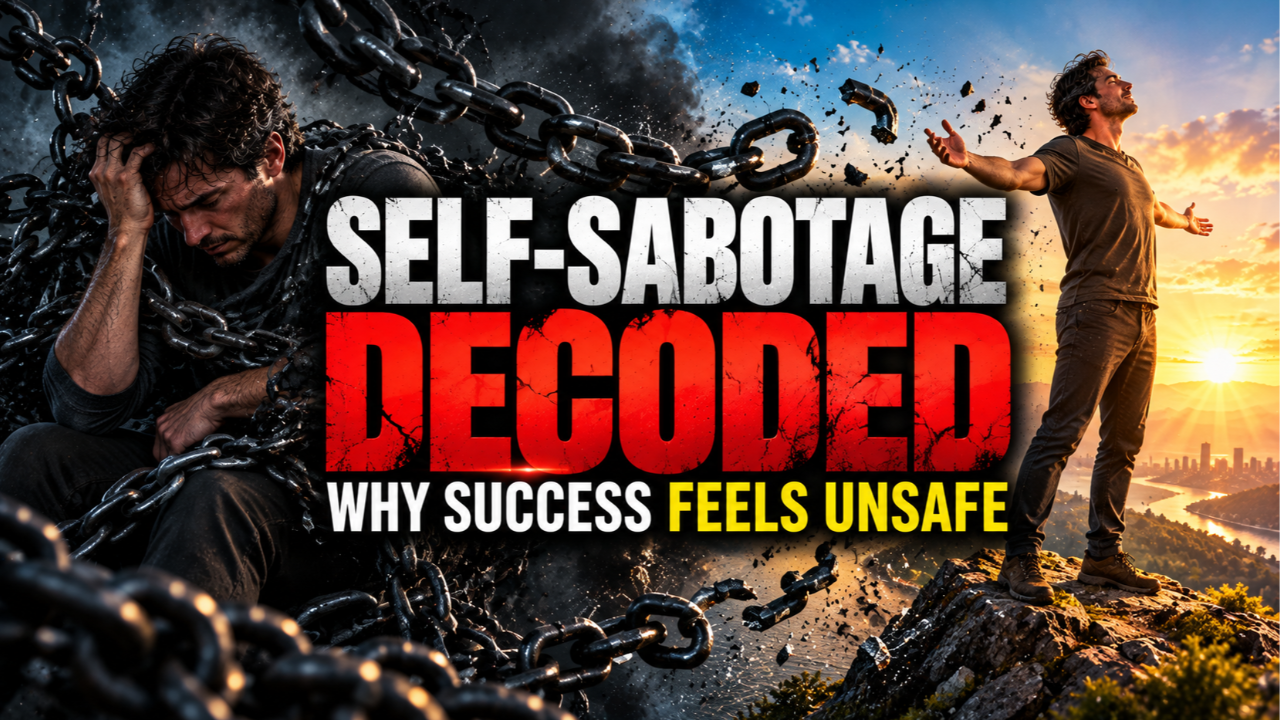
Self-Sabotage Decoded: Why Success Feels Unsafe
Oct 10, 2026Self-Sabotage Decoded: Why Success Feels Unsafe
Self-sabotage when things start going well is rarely a character flaw. It is your nervous system defending a familiar set point. The brain treats the unfamiliar as risky, even when the unfamiliar is good news, so a promotion, a happy relationship, or a diet that finally works can trigger the same alarm as a threat. Ruining it brings you back to known territory, and that return feels like relief.
 You know the moment. The new job is going brilliantly, your boss has used the word impressed twice in one week, and the relationship you were nervous about has settled into something warm and easy. The scales have moved in the right direction for the first time in years. And then, from nowhere, you do something daft. You fire off a snippy email you would never normally send, you pick a fight about the washing up, or you demolish a family-sized bag of crisps at midnight after six weeks of good choices. Some people go bigger. They stop answering the texts of the one person who treats them well, or they miss the deadline on the project that could have changed everything.
And afterwards, standing in the wreckage, a strange feeling arrives. There is regret, of course. But underneath it sits a sneaky sense of calm, as if something has been put back where it belongs. So, why would a perfectly intelligent adult wreck the very things they spent years wishing for? And why does it happen right when life finally starts to work?
Want the full method for stretching your comfort zone until good news stops feeling like danger? Get Zero Limits: Breaking Out of Your Comfort Zone on Amazon.
The Comfort Zone Thermostat Running Your Life
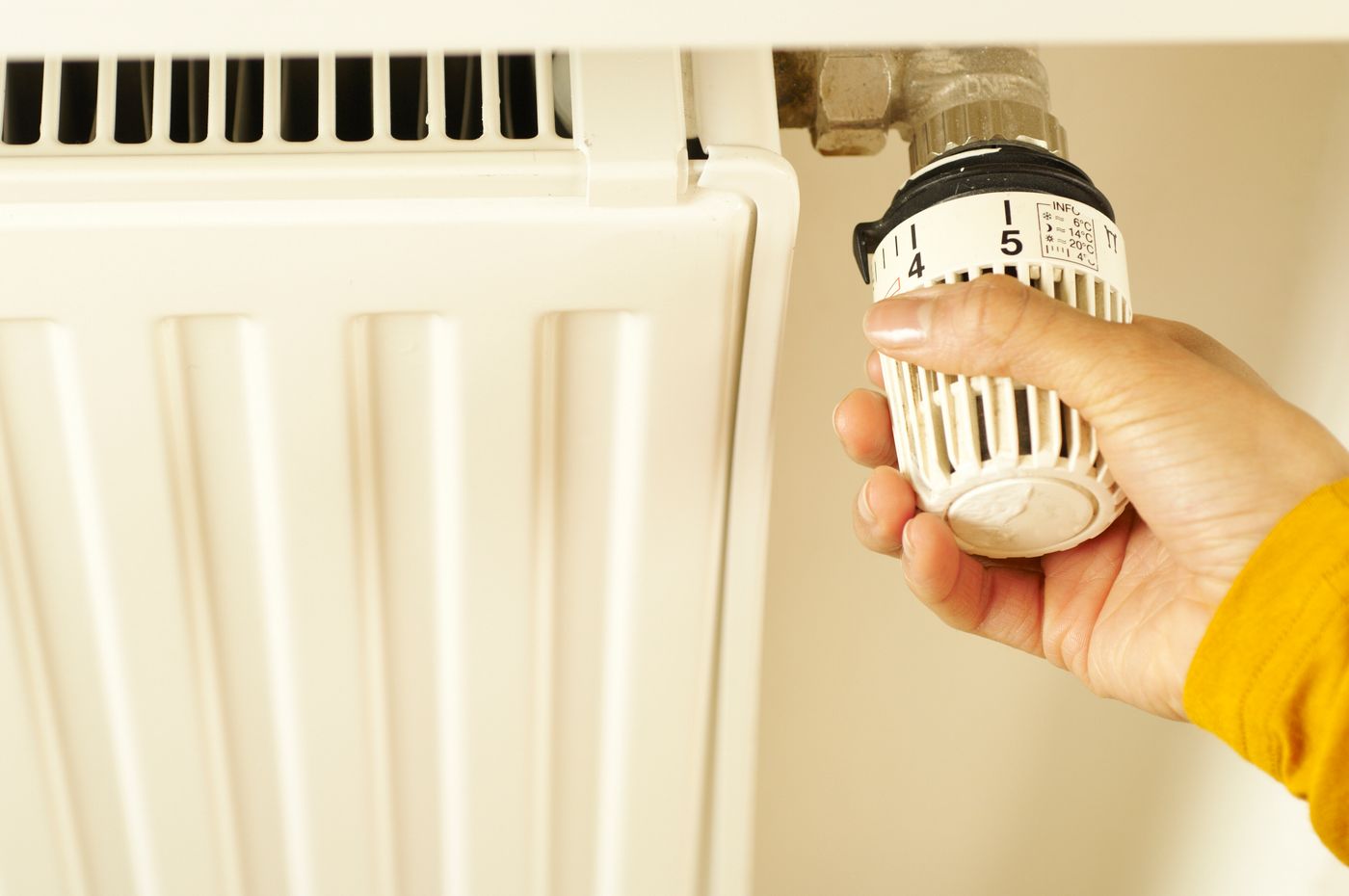
Start with the heating in your house, because your nervous system works in much the same way. A thermostat does not care whether a room is pleasant. It cares whether the room matches the number it has been set to. If the temperature climbs too high, it switches the heating off, even on a freezing night when you would happily be warmer. Your brain runs a similar system for how good life is allowed to feel. Psychologists call the general principle homeostasis, which simply means the body's habit of pulling everything back to its usual level. Over years of experience, you have set an internal number for how much money, love, success, and calm feels normal to you. Anything above that number registers as unfamiliar, and unfamiliar gets filed under risky.
That is the part most people miss. Your brain is not built to make you happy. It is built to keep you alive, and the safest survival strategy has always been to stick with what you know. A life that has always been a bit of a struggle is, from your nervous system's point of view, a proven route. You came through it. A life that is suddenly going well is uncharted water, and uncharted water is where the predators used to live. So, when things go well, your brain does not relax. It braces. The tight chest, the restless nights, and the vague sense that the other shoe is about to drop are the thermostat clicking on.
The Story You Tell Yourself About Ruining Good Things
Ask someone why they keep ruining good things and they will usually offer one of two explanations. The first is bad luck. The job just wasn't right, the relationship ran its course, the diet was never sustainable anyway. The second is a much harsher verdict. I'm a mess. I'm my own worst enemy. Something in me is broken. Both stories have the appeal of sounding final, and that is exactly why they are so dangerous. If it is luck, there is nothing to change. If you are broken, there is nothing that can be changed, so you may as well stop trying.
Here is the crack in that story. Look at how you behave in a crisis. Plenty of chronic self-saboteurs are brilliant when everything is falling apart. They are the friend you call at 3am, the colleague who stays calm when the system crashes, the parent who handles the hospital dash without breaking a sweat. That is not a broken person. That is a person whose nervous system is fluent in struggle and illiterate in calm. A few years into my broadcasting career I was offered a bigger show, and I spent the first fortnight quietly convinced I would be found out. I very nearly talked myself out of the contract extension, simply because it felt too good to keep. Nothing was wrong with me. My thermostat was set lower than my new salary.
Why Good News Sets Off the Alarm
Success brings three things your brain hates. The first is uncertainty. When life is predictably mediocre, at least you know the rules. When it starts going well, you have no idea how long it will last, and the brain would rather have a known bad outcome than an unknown good one. That is why so many people describe the waiting as worse than the fall. Breaking it yourself ends the suspense. You get to choose the moment the other shoe drops, instead of lying awake waiting for it to land on your head.
The second is exposure. Success makes you visible, and visibility means people can watch, judge, and expect more. Failure asks very little of you. The third, and the sneakiest, is identity. People tend to seek out experiences that confirm what they already believe about themselves, even when that belief is unflattering. If deep down your self-image is the one who never quite gets there, then getting there creates a horrible mismatch. Your brain resolves that clash in the cheapest way available. It does not upgrade the identity. It downgrades the reality. I went deeper into this in the dark truth about fear of success, because it is the quiet engine behind so much self-sabotaging behaviour.
The Self-Handicapping Loop That Protects Your Ego
Like any habit, self-sabotage runs on a loop of cue, routine, and reward. The cue is a good spell that feels unearned, such as praise you cannot quite accept, a result you are not sure you can repeat, or a partner who seems suspiciously kind. The routine is the handicap. You stay up until 2am before the big presentation, start a row the night before the holiday, or leave the important job until it is too late to do it well. The APA Dictionary of Psychology describes self-handicapping as creating obstacles to your own performance so that failure can be blamed on the obstacle rather than on your ability. And the reward is protection. If you flop, it was the late night, not you. If you somehow succeed anyway, you look like a genius.
Here is the twist that makes this loop so sticky. Classic research on self-handicapping found that people who had succeeded at a task without understanding why they had succeeded were more likely to pick a performance-wrecking option before trying again. It was the shaky success, not the failure, that triggered the handicap. That is your Tuesday night in a sentence. The better things get, the more there is to lose, and the more tempting the escape hatch becomes. Every time you pull it, the relief teaches your brain that sabotage works, and your identity as someone who always blows it collects a little more evidence. The loop is not malfunctioning. It is doing exactly what it was trained to do.
If you are tired of pulling the escape hatch every time life improves, grab Zero Limits on Amazon and learn how to make the unfamiliar feel safe enough to keep.
Why Trying Harder Makes the Wobble Worse
The usual response to self-sabotage is a stern talking-to. You promise yourself that this time you will not blow it, you write affirmations on the bathroom mirror, and you white-knuckle your way through the next good patch. But that turns every good week into a test you are terrified of failing, and fear is the very fuel the thermostat runs on. You have taken a situation that already felt dangerous and added a referee with a whistle. No wonder the wobble arrives sooner and hits harder than it did last time.
The second popular fix is going bigger. If the small win felt shaky, surely a huge leap will smash the pattern for good. So people quit the job to start the business, book the marathon with eight weeks to train, or move in together after three months. In reality, a giant leap pushes you so far above your set point that the alarm becomes deafening, and the crash is bigger too. Then comes the shame. You kick yourself for ruining it again, and shame is the most reliable relapse fuel there is, because it confirms the old identity and lowers the thermostat another notch. Beating yourself up feels like taking responsibility. It is closer to resetting the trap and baiting it for next time.
What Changes When You Raise the Set Point
Here is the reframe at the heart of all this. You do not need to destroy your comfort zone. You need to make it bigger. A comfort zone is not a fixed wall. It is a habit of perception, and perceptions change with repeated exposure. Every time you sit with a good thing for a little longer than feels natural, the thermostat learns that the new temperature did not kill you. Do that often enough and the number quietly rises. This is the central idea in Zero Limits. Change how you perceive risk and fear, and the limits you thought were solid start to look like old furniture you forgot you were allowed to move.
When you see self-sabotage as a safety system rather than a character flaw, the whole problem changes shape. You stop asking what is wrong with you and start asking what your brain is trying to protect you from. Usually the answer is something that no longer applies, such as the childhood house where good moods never lasted, the boss who punished confidence, or the relationship that taught you calm was the quiet before a storm. Your nervous system is still applying lessons from a life you have outgrown. It deserves an update, not a punishment. The same goes for money, which is why so many people stall just below the income they claim to want. If that sounds familiar, my book Millionaire Mindset looks at how old money beliefs keep a ceiling on what you earn.
The Wobble Log: Your First Small Move
So, here is the first move, and it is deliberately modest. Get a notebook and call it your wobble log. Every time life is going well and you feel the itch to do something drastic, write three things down before you act. What just went right. What you are tempted to do about it. And what that action would protect you from feeling. You will be surprised how often the honest answer to the third question is uncertainty, or being seen, or the fear that you cannot keep it up. Naming the urge turns an invisible reflex into a visible choice, and choices are far easier to change than habits you cannot see.
Then add one rule and treat it as non-negotiable. During a good spell, no big decisions for 24 hours. No resignation letters, no break-up texts, no cancelling the thing you were looking forward to, and no midnight spree on your bank card. Give the urge a full day to pass. Most sabotage impulses burn out well before then, because they are driven by a nervous system spike rather than a considered judgement. Alongside the rule, practise staying in the good feeling on purpose. When someone praises your work, say thank you and stop talking. When a calm evening arrives, let it be calm without searching for the catch. These are tiny reps, but every one of them nudges the thermostat up a degree.

Expect the wobble to come back, because it will. The aim is not to stop feeling it. The aim is to recognise it quickly and let it pass without obeying it. If the unease around good news is so strong that you cannot sleep, cannot switch off, or feel constantly on edge, please speak to your doctor, and the NHS has a clear guide to getting help with stress. And if the fear sits more on the side of falling short than flying high, my hypnosis session for fear of failure works on calming that alarm at a deeper level.
The Question Nobody Asks About Self-Sabotage
Most people ask how to stop self-sabotage. It is a fair question, but there is a better one hiding underneath it. What would it cost you to let this go well? Because if the honest answer is your old identity, your familiar struggle, and the comfortable story that the world keeps getting in your way, then you have found the real price tag. And it might be worth paying.
You do not need to become fearless overnight to stop wrecking the good things. You need to notice the wobble, wait out the urge, and practise tolerating a slightly warmer room. So, what is going well in your life right now that you are quietly bracing to lose? And who might you become if, this time, you simply let it stay?
Ready to stop wrecking the good bits and let your life climb higher? Pick up your copy of Zero Limits: Breaking Out of Your Comfort Zone on Amazon today and start raising your set point.
"I used to blow up every relationship around the six month mark and blamed the men I chose. The thermostat idea made me laugh and then cry, because it was so obviously me. I am coming up on two years with someone kind, and I no longer go looking for the exit." (Rachel D., Tulsa, Oklahoma)
"Every time I got promoted, I started missing deadlines within weeks. The wobble log showed me I was scared of being watched, not of the work. I have kept my current role for eighteen months and have just been asked to lead the team." (Kevin S., Columbus, Ohio)
"My weight loss always stalled the moment people started noticing. Now I say thank you, stop talking, and carry on. I am down forty pounds and, for the first time, I trust myself to keep it off." (Angela R., Spokane, Washington)
Frequently Asked Questions About Self-Sabotage
Why do I sabotage myself when things are going well?
Because your nervous system judges safety by familiarity, not by how pleasant something is. Over the years you set an internal level for how much success, love, and calm feels normal. When life rises above it, the brain reads the change as risk and pushes for a return to known ground. Picking a fight, missing a deadline, or bingeing after a good week does that job, and the relief afterwards teaches your brain to repeat it next time.
Is self-sabotage the same as fear of success?
They are close cousins. Fear of success is the anxiety that comes with visibility, higher expectations, and the worry that you cannot keep a good thing going. Self-sabotage is the behaviour that relieves that anxiety, such as procrastinating, starting rows, or creating obstacles so that any setback can be blamed on circumstances. Seeing the fear underneath the behaviour helps, because it shows you that the problem is a protective reflex rather than a lack of talent.
How do I stop self-sabotaging behaviour?
Start by catching the urge before you act on it. Keep a wobble log and, whenever life is going well and you feel tempted to do something drastic, note what went right, what you want to do, and what that action would protect you from feeling. Then follow a 24-hour rule for big decisions during good spells. Practise accepting praise and calm without hunting for the catch, so your comfort zone gradually expands instead of snapping back.
About the Author
 Craig Beck spent 25 years in UK broadcasting, a career built on the odd art of sounding relaxed while a red light reminds you that thousands of strangers are listening. Somewhere between the microphone and the mixing desk he became fascinated by why capable people talk themselves out of their own good fortune, and that question became his life's work. He is a certified NLP Master Practitioner, a hypnotherapist, and the author of more than 100 books on persuasion, habit, and human behaviour, from the bestselling Alcohol Lied to Me to the Decoded range of psychological profiles. To find out more about the man behind these breakdowns, and why he treats behaviour as software rather than a character flaw, start at About Craig Beck.
Last updated 8 October 2026