
9/11 Decoded: The Dark Psychology Behind the September 11 Terror Attacks
May 31, 2026Already enjoyed it? Please help spread the word, leave a review on:
🇺🇸 Amazon.com, 🇬🇧Amazon.co.uk, 🇨🇦 Amazon.ca or 🇦🇺Amazon.au
Thank you
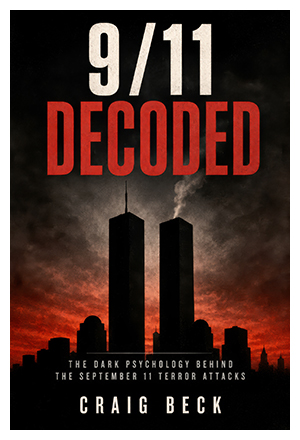
9/11 Decoded: The Dark Psychology Behind the September 11 Terror Attacks
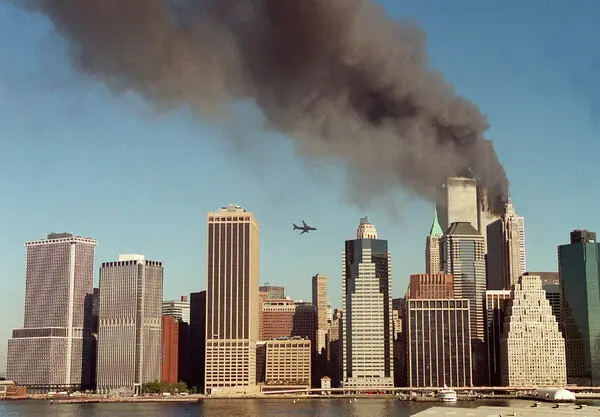
he September 11 terror attacks were not a religious crime. They were a psychological operation engineered by three minds that fit together like a loaded weapon. Osama bin Laden supplied the narcissism. Khalid Sheikh Mohammed supplied the operational genius. Mohamed Atta supplied the obedient hand on the controls. Strip away the politics and the flags, and what you find is a textbook study in how the dark triad scales from a single damaged ego into a mass murder of three thousand strangers on a clear blue morning.
 You have probably watched the towers fall on a Tuesday morning rerun. You have heard the names of the hijackers in passing. You may even have a rough idea of what Al-Qaeda wanted. None of that tells you why an articulate Egyptian urban planner with a soft voice and a degree from a German university booked himself onto a plane he intended to drive into a wall of concrete and people. None of it explains why a Saudi billionaire's son chose to broadcast his face to the world while sleeping in a damp cave. The mechanics of the attack have been pulled apart by every commission and documentary on Earth. The psychology has been quietly left on the cutting room floor. That, my friend, is where this story starts.
Want the full forensic dive? Pick up 9/11 Decoded on Amazon and read the complete psychological breakdown.
Who Was Really Behind the September 11 Attacks
When most people picture the architects of 9/11, they picture Bin Laden's gaunt face on a grainy video. He was the brand. He was not the brain. The actual operational mastermind was a man called Khalid Sheikh Mohammed, an engineering graduate of an American university who had walked the same Carolina pavements as the students he would later try to kill. He pitched the idea to Bin Laden as early as 1996. He chose the targets. He picked the men. He ran the project the way a senior consultant runs a delicate corporate transformation. Bin Laden funded and blessed it. Mohamed Atta and the Hamburg cell carried it out.
So, three roles, three psychologies, one outcome. The financier with the messiah complex. The architect with the cold strategic mind. The pilot with the broken inner child. Take any one of them out of the equation and the towers still stand. That is what the 9/11 Commission Report quietly admits between the lines, and what most documentaries forget to underline. The September 11 attacks were a triangle. Remove a corner and the geometry collapses.
The Childhood That Built the Ringleader
Mohamed Atta was not born a killer. He was built into one over several decades by a father who treated affection as a leak in the system. Atta senior was an authoritarian Cairo lawyer whose neighbours described him as aloof, overbearing, and so contemptuous of small talk that he refused to let his children play outside. The boy was tutored, drilled, monitored, and rationed. Family photos from his early years show a small, fragile child being clutched protectively by his mother and sisters while the father stands at the edge of the frame like a prison guard on tea break.
That early environment created what psychologists call a puritanical compulsive personality. Translation, a child who learns to bury every messy human impulse under a thick crust of rules and ritual. He becomes obsessively neat. He cannot bear disorder. He represses any erotic, aggressive or selfish urge so completely that when those urges do eventually crack the surface, they come out in the cleanest, most surgical way possible. Like flying a jet into a tower at five hundred miles an hour.
When his father shipped him off to Hamburg in 1992 to study urban planning, Atta carried that internal pressure cooker with him into a country whose food, women, and informal social codes scandalised him. He shrank. He stopped eating with strangers. He prayed harder. He sought out a quiet little mosque where the men understood his disgust and rewarded it. The boy from Cairo was already half disassembled. The cell that would finish the job was already waiting.
The Dark Triad in a Plain White Shirt
Osama bin Laden could have lived out his life as the spoiled seventeenth son of a Saudi construction tycoon. He chose, instead, to position himself as the destined liberator of the entire Muslim world. That is not religious devotion. That is grandiosity dressed in a robe.
Psychological profiles based on his speeches, behaviour, and interviews describe him as the unprincipled narcissist, a blend of two personality patterns that should never share an address. The narcissistic core gave him an arrogant sense of self-worth, a belief that he had been chosen for a unique mission, and a wounded pride that mistook every political slight against his religion for a personal insult. The antisocial undertone gave him a willingness to use other human beings as ammunition and to feel nothing as the bodies stacked up.
Add a Machiavellian streak, and you have the full dark triad in a man who never personally pulled a trigger after the late 1980s. He was the recruiter, the legitimiser, the mythmaker. Bin Laden understood, on a deep instinctive level, that you do not need to be a soldier to start a war. You only need to convince other men that they are. The same trick has been used by every persuasive monster since the dawn of empire. You can see the same wiring in my breakdown of the psychology of Adolf Hitler, the original blueprint for leveraged narcissism on an industrial scale.
How the Hamburg Cell Was Hollowed Out
The most chilling part of the 9/11 story is not the attack. It is the slow draining of identity that turned a soft-spoken urban planner, a polite Emirati engineering student called Marwan al-Shehhi, and a charming Lebanese student called Ziad Jarrah into a synchronised suicide unit.
The Hamburg apartment on Marienstraße functioned exactly like a cult living room. Same faces every night. Same imagery looping on the screen. Same rage-laced sermons drip-fed through the speakers. Footage of dead Muslim children from Bosnia, Chechnya, Iraq. Long evenings of silence broken by collective prayer. Slowly the outside world stops being real. Slowly the men inside the room stop being themselves. Slowly the only identity left is the one the group hands you when you walk through the door.
Group dynamics research after 9/11 found that the underground cell amplifies every personality trait that pushes a man towards violence. Isolation magnifies grievance. Loyalty replaces conscience. Shared secrets cement obedience. The mind that walks into a cell like that is not the mind that walks out. Atta walked out as the operational ringleader of the most ambitious civilian massacre of the modern age. The shy boy from Cairo had been overwritten. If that pattern of slow identity erosion sounds familiar, it should; it is the same machinery I dissect in my piece on Charles Manson, who pulled the same trick on broken girls in a California desert.
The Architect Who Drew the Crosshairs
 Khalid Sheikh Mohammed has the rarest CV in the history of mass murder. He grew up in Kuwait, joined the Muslim Brotherhood as a teenager, then flew to North Carolina in 1983 to study mechanical engineering at a small American college. He earned the degree. He learned to think like an American engineer. Then he turned that training on the people who had taught him.
He was the only senior Al-Qaeda figure who managed the operational planning of 9/11 from start to finish. Where Bin Laden gave broad blessings, KSM picked the precise number of operatives, the precise target list, even the precise day. He briefed Atta personally in Afghanistan. He vetoed targets that were too political and pushed for the ones with the highest civilian impact. The FBI investigation files name him as the principal architect, and he later boasted to interrogators that he was responsible for the operation from A to Z.
What is going on inside that mind? Not religion. Not really. The men who worked with him described someone who built networks by sheer force of personality, a man who saw himself as the sun around which everyone else orbited. That is grandiose narcissism welded to executive competence. The most dangerous combination of traits any human being can carry, because the ego provides the fuel and the cold mind provides the road map. Bin Laden was the prophet. Atta was the soldier. KSM was the engineer who drew the building so the others could burn it down.
Hungry for the deeper story? Grab 9/11 Decoded on Amazon and follow every thread the news cycle dropped.
Pizza, Prayer, and a Letter in a Suitcase
On the evening of 10 September 2001, Mohamed Atta drove a hired Nissan from Boston to Portland, Maine, with one of his muscle hijackers. They checked into the Comfort Inn at 5:43 in the afternoon. They went out for pizza. They withdrew forty dollars from a cashpoint outside Pizzeria Uno. He used a payphone to call Marwan al-Shehhi, the man he had grown to love like a brother in that Hamburg apartment. Twelve hours later they would both be dead, along with thousands of strangers who would never know their names.
In Atta's checked luggage at Logan Airport, the FBI later found a four-page handwritten document. It opens with the words, "The Last Night". It is part suicide note, part operational checklist, part prayer manual. It tells the hijackers exactly how to wash, how to dress, how to tie their shoes, how to shave, what to whisper as they cut a throat. It is the writing of a man who has rehearsed this scene in his head a thousand times, who needs to control every variable because the one variable he cannot control is his own conscience.
That document is the most revealing single piece of evidence in the entire 9/11 archive. Not because of what it says about Islam, but because of what it reveals about the puritanical compulsive mind facing the last hour of its life. Atta needed the ritual the way an addict needs the drug. Without it, the boy from Cairo would have stayed in bed. With it, he became a missile pointed at the World Trade Center north tower at 8:46 in the morning.
What September 11 Teaches You About Spotting a Hollow Man
You will not meet the next Bin Laden. The probability is too low. You will, however, almost certainly cross paths with smaller versions of the men he built. The colleague who needs to be the smartest person in every room. The boyfriend whose grievances are always somebody else's fault. The boss who treats the office like a fan club and reacts to disagreement as if it is a personal assault. The friend whose certainty about everything has grown into something that frightens you a little.
The lesson from 9/11 is that monsters do not live in caves. Monsters are mostly built, not born, and the men who build them rely on three reliable raw materials. A wounded ego. A waiting belief system. A circle of peers willing to applaud the worst instinct.
When you spot all three together, walk slowly toward the door. The man at the centre of that triangle does not need to be a terrorist to ruin your year. He simply needs to be persuasive enough to convince you that his grievance is your obligation. That is how every cult, every cycle of abuse, every disastrous board takeover begins. You can read more about that pattern in my essay on why serial killers keep fooling us. The body counts differ. The wiring rhymes.
The Question Nobody Asks About 9/11
Every documentary on 9/11 asks the same two questions. How did it happen, and what did the intelligence services miss. Almost nobody asks the one that matters. What kind of inner emptiness allows a 33-year-old man to fly a jet full of strangers into a building knowing that he will personally watch the windscreen turn into concrete?
The honest answer is uncomfortable. Atta was not insane. He was not stupid. He was not cruel by nature. He was a man whose internal life had been so thoroughly hollowed out by his upbringing, his isolation, and his recruiters that there was no longer enough of him left to refuse. The shell was still walking around. The person inside had been replaced by an idea.
That is the real horror story of September 11. The replaceable human being. The version of you that could be rebuilt by the right pressure into the wrong man, given enough time and the right closed room. Pretend that is not possible at your peril. Cult leaders do it every week in suburban living rooms. Bin Laden and KSM industrialised the process and aimed it at four planes. That is what makes the story darker than the news ever told you. We are not protected from this kind of evil by our intelligence agencies. We are not protected from it by our culture. We are protected from it, if we are protected from it at all, by the bonds we build and the people we let into the room when nobody is watching.
If this got under your skin, the book digs into every shadow the article only sketched. Read 9/11 Decoded on Amazon and step inside the minds you have only seen on the news.
"I have read every 9/11 book on the shelf and this is the only one that explains the why. Beck takes you inside the heads of these men without flinching. I could not put it down."
Robert Maxwell, Austin, TX
"Craig Beck writes like he is leaning across the bar with the secret nobody else will tell you. The chapter on Atta's father gave me chills. Worth every penny."
Linda Sorenson, Sacramento, CA
"Forget the documentaries. This is the psychology those producers were too scared to touch. Brilliant, unflinching, and impossible to forget."
Marcus DeWitt, Charleston, SC
About the Author
 Craig Beck is the world's foremost expert on persuasion and human behaviour. A certified NLP Master Practitioner, former broadcaster, and bestselling author of over one hundred books, he has spent two decades reverse engineering why people say yes. More than a million readers across the globe have used his work to understand the hidden mechanics of influence, decision making, and motivation. He does not teach theory. He shows you how the wiring of humanity works. For more, browse the best dark psychology books on the site.
Last updated 31 May 2026
Frequently Asked Questions
Who was the real mastermind of the 9/11 attacks?
Khalid Sheikh Mohammed, often called KSM, was the operational architect of the September 11 attacks. He pitched the concept to Osama bin Laden in 1996, chose the targets, recruited the pilots, and managed the planning from end to end. Bin Laden funded and blessed the operation. Mohamed Atta led the field team. The 9/11 Commission Report names KSM as the principal architect, and he later confessed his role from A to Z under interrogation in 2007.
What was Mohamed Atta's psychological profile?
Atta fit the puritanical compulsive personality, a pattern rooted in an overbearing childhood and rigid self-control. Profiles describe him as obsessively neat, emotionally rigid, and consumed by guilt around any messy human impulse. Reaction formation buried those impulses under ritual until they detonated outward as violence. He was not insane. He was hollowed out by his father, his isolation in Hamburg, and the cell that absorbed him into a borrowed identity.
Why did the 9/11 hijackers go through with the attack?
Group dynamics and identity replacement. The Hamburg cell isolated its members, drip-fed them images of suffering Muslims, and rewarded total obedience with belonging. Over time, each man's individual identity was overwritten by the cell's shared mission. By September 2001, the hijackers were emotionally fused to one another and operationally trained by Khalid Sheikh Mohammed. The decision to die was no longer a choice. It was the script their personalities had been rebuilt to follow.