The Best Dark Psychology Books: 9 That Hold Up | Craig Beck
Apr 30, 2026Last updated April 30, 2026
Best Dark Psychology Books
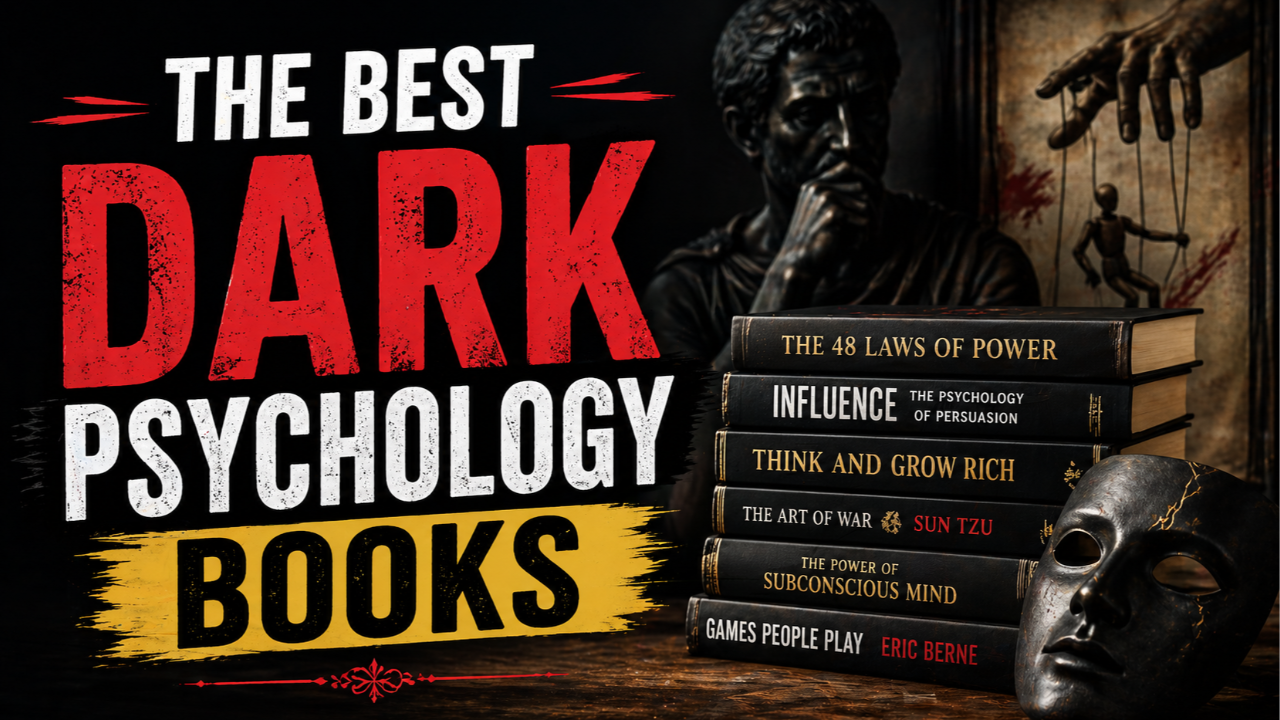
 The best dark psychology books are the ones that decode manipulation, predators, and persuasion gone toxic without dressing it up as a parlour trick. Forget the paperback noise selling secret powers in twelve easy steps. The genuine ones explain how charm becomes camouflage, how guilt becomes a leash, and how seemingly normal people learn to weaponise attention, fear, and seduction. They sharpen you. They warn you. The list below covers nine titles that hold up under pressure, plus how to choose between them depending on what you want from the read.
Most people hunting for the best dark psychology books are really after one of two things. They either want to understand manipulation so they stop being played by it, or they want to stare straight into the machinery of the human mind and see what cracks first. Both are valid. The trouble is that this corner of the bookshelf is filthy with rubbish. Recycled pop psychology, fake menace, and second-rate paperbacks written by people who confuse edge with insight. A worthwhile dark psychology book should do far more than whisper about mind control like a teenager trying to sound dangerous. It should show how persuasion turns toxic, how attention becomes a weapon, and why some people use seduction the way burglars use a crowbar. The best ones leave you sharper, not just spooked.
Want the full Craig Beck dismantling of these manipulation patterns? Grab Dark Psychology Decoded on Amazon, available in book and audiobook.
What Makes the Best Dark Psychology Books Worth Your Time
The phrase itself is a bit slippery. Dark psychology is not a tidy academic discipline with a lab coat and a framed certificate hanging on the wall. It is a working umbrella for subjects like manipulation, coercive persuasion, narcissism, psychopathy, deception, and social control. In plain English, it is the study of how human influence goes bad. That definition matters because not every book wearing the label is useful. Some read like forbidden manuals for cartoon villains. Others are so clinical they could sedate a horse. The sweet spot sits in the middle, where the mechanics are explained clearly, the examples come from real life, and predators are not turned into glamorous masterminds with smouldering eyes.
If a book helps you spot emotional blackmail, decode predatory charm, recognise covert intimidation, or understand how damaged people damage others, it has earned its place on the shelf. If it promises secret powers, instant dominance, or hidden mind control techniques the elites do not want you to know about, put it back and wash your hands. The American Psychological Association has done decades of work on personality and influence, and the genuinely useful books pull from that tradition rather than inventing dramatic new vocabularies to impress the reader.
Why True Crime Readers Are Pulled Toward Dark Psychology
There is a reason this subject overlaps so neatly with true crime. The crime is the headline. The psychology is the engine that drove the crime in the first place. Most readers are not fascinated by violence for its own sake. They want to understand how a person learns to split themselves in two. Charming in public, predatory in private. Polite at the school gates, monstrous behind a closed bedroom door. The best dark psychology books pull ahead of cheap shock material here because they explain how narcissism hardens, how childhood fractures mutate into control tactics, how denial becomes a survival system, and how persuasion gets used as camouflage. You stop reading about what happened, and you start learning how the perpetrator constructed a believable version of normal that fooled everyone within reach.
For anyone drawn to that decoded style of analysis, books on manipulation and psychopathy become more than self-protection manuals. They become case studies in human wiring that has gone catastrophically wrong, often very quietly, often over many years before the rest of us noticed.
9 Best Dark Psychology Books to Start With
1. The 48 Laws of Power by Robert Greene
So, let us start with the obvious one. Yes, it is endlessly quoted by ambitious people who think posting cold-blooded one-liners on the internet counts as strategy. Ignore them. Underneath the performance, this is a sharp study of status, manipulation, image management, and social warfare. What makes it useful is not the fantasy of becoming Machiavelli in a decent blazer. It teaches pattern recognition. You start to notice flattery used as bait, strategic humility, selective honesty, and the small dominance games people run when they want leverage without open conflict. Read it as a field guide, never as a religion.
2. Influence by Robert Cialdini
This is rarely marketed as dark psychology, yet it absolutely belongs in the conversation. Cialdini breaks down the persuasion triggers that make people say yes. Reciprocity, social proof, authority, liking, scarcity, commitment, and consistency. On the surface, it sounds clean and respectable. In practice, once you understand these levers, you also understand how easily they can be twisted. That is the value here. You stop treating manipulation as magic and start seeing it as a sequence of predictable moves that anyone with bad intent can chain together.
3. Without Conscience by Robert D. Hare
If you want the mask ripped off psychopathy, this is the book. Hare is not trying to thrill you. He is explaining how psychopaths think, how they mimic normal emotion, and why they leave such consistent destruction behind them. This is one of the strongest entries on any best dark psychology books list because it demolishes the lazy assumption that predators always look unhinged. Many of them look polished, persuasive, and entirely in control. That is the design. The veneer is the weapon.
4. The Sociopath Next Door by Martha Stout
One of the most dangerous lies people swallow is that conscienceless individuals are exotic and rare. Stout argues otherwise, and that is what gives this book its sting. She shows how ordinary settings, families, offices, relationships, and quiet neighbourhoods can become hunting grounds for people who feel no real remorse. The strength here is accessibility. It reads clearly, but the implications are nasty. You walk away understanding why guilt does not work on everyone, why empathy can be exploited by people who lack it, and why some victims stay confused for years after the damage has been done.
If this kind of psychological x-ray fascinates you, the audiobook of Dark Psychology Decoded takes the analysis deeper. On Amazon now.
5. Snakes in Suits by Paul Babiak and Robert D. Hare
If corporate psychopathy sounds like a dramatic phrase invented by someone who once had a bad manager, this book may ruin your optimism beautifully. It examines how psychopathic traits show up inside business environments, where charm, risk-taking, and cool emotional detachment can sometimes be mistaken for leadership and ambition. That trade-off is the whole point. Traits that look decisive in one context can be quietly destructive in another. If you have ever met someone who climbed fast, talked brilliantly, and left a trail of scorched colleagues behind them, this book explains the wiring underneath the success.
6. In Sheep's Clothing by George K. Simon
Some manipulators do not dominate through obvious force. They work through plausible innocence, passive aggression, covert intimidation, and quiet guilt-tripping. Simon's book is unusually strong on those hidden tactics, and that makes it practical in a way many dark psychology books are not. It helps you identify subtle manipulation in everyday interactions, especially from people who never raise their voice or look openly hostile. The wolf does not always snarl. Sometimes it smiles, nods, and tells you this is all your misunderstanding, dear, and you must be tired again.
7. Games People Play by Eric Berne
Yes, this one is older. Some of the language has aged. Do not dismiss it. Berne explores the unconscious scripts and social games people run inside relationships, where the surface conversation hides a very different transaction underneath. That matters because not every dark psychology pattern starts with a villain twirling his moustache. Sometimes it begins with familiar relational traps. Rescuing, blaming, provoking, withholding, controlling. If you want to understand the hidden choreography of toxic interactions, the kind that quietly rot a marriage or a friendship over years, this one still has teeth.
8. People of the Lie by M. Scott Peck
This is the most divisive book on the list. Some readers find it profound. Others find it too moralistic and too saturated with the author's own worldview. Even so, it offers a compelling look at evil as a psychological pattern built around denial, self-deception, and a refusal to confront one's own damage. It is not a tactical handbook, which is both its weakness and its strength. If you want neat frameworks and clean diagrams, you may get impatient. If you want a deeper look at how ordinary people protect a false self at terrible cost to everyone around them, it is worth the discomfort.
9. Modern Dark Psychology Anthologies
Now for the awkward truth. There are dozens of newer books with titles that sound exactly like what you typed into the search bar. Some are decent primers. Many are padded, repetitive, and engineered to catch search traffic rather than deliver insight. If you do pick up one of these modern, explicitly branded titles, judge it hard. Does it explain real mechanisms, or does it just stack dramatic terms in a hopeful order? Does it help you recognise manipulation in relationships, work, and family systems, or is it playing dress-up with fake menace? The label is sometimes useful. The label is never a quality guarantee.
How to Choose the Best Dark Psychology Books for Your Goal
It depends what you want from the read. If your goal is self-protection, start with Influence, In Sheep's Clothing, and The Sociopath Next Door. Those three sharpen your radar quickly and give you practical language for things you have already felt but could not yet name. The vague unease around a colleague, the energy drain after time with a certain relative, the conversation that left you doubting your own memory. These books hand you the vocabulary that makes the pattern visible.
If your goal is understanding predators, go straight to Without Conscience and Snakes in Suits. Those two explain the emotional vacancy behind the performance and why charm is so often the preferred weapon. If you want the broader strategic picture, The 48 Laws of Power belongs on the list, but read it with your eyes wide open. It is brilliant for decoding power games and dreadful as a moral compass. And if you want a more reflective psychological autopsy of why manipulative personalities form in the first place, People of the Lie and Games People Play offer the slower, deeper route. Read across the categories. The pattern recognition compounds. The more angles you study, the harder it becomes for any single tactic to slip past you. Craig Beck's coaching is built around exactly that compounding effect.
What These Books Will Cost You Inside
There is a real cost to reading widely in this field, and most introductions skip it. Not financial. Psychological. Once you can see manipulation clearly, you cannot unsee it. The casual flattery from a coworker who wants something. The friend who only calls when she needs an emotional hostage taker. The relative who weaponises Christmas. You will lose a measure of innocence about how often these dynamics appear in ordinary life. That trade is worth it, but it is not painless. Most people who go deep into dark psychology come out with cleaner relationships, fewer false friends, and a much shorter tolerance for performative charm. Some readers also find their internal voice gets sharper, almost suspicious for a while, before settling into something steadier. Calmer, but harder to fool. More Craig Beck pieces on that recalibration here.
A Final Warning About the Best Dark Psychology Books
Reading about manipulation does not make you manipulative, any more than reading forensic pathology turns you into a corpse examiner at dinner parties. There is a trap, though. Some readers collect these titles because they want the thrill of feeling dangerous. That is childish. The real value of the best dark psychology books is not dominance. It is clarity. You stop confusing intensity with truth. You stop mistaking charm for character. You stop handing the benefit of the doubt to people who have built an entire personality around exploiting it.
If a book helps you see people more clearly, trust your own gut faster, and spot the hidden mechanics before the trap closes, it has done its job. If you want that same decoded lens turned on the minds of famous predators and dangerously persuasive personalities, Craig Beck's audiobook work is built for that exact kind of psychological x-ray. The further reading on Psychology Today's psychopathy hub is also a sober, jargon-free starting point if you prefer free online material before committing to a paperback.
Read widely, but read with your guard up. The darkest minds rarely announce themselves. They sell you a story first, and the story is usually warm.
Ready for the full Craig Beck breakdown of dark psychology in action? Pick up Dark Psychology Decoded on Amazon today, in book and audiobook.
What Readers Are Saying
"I read three of the books on this list because of Craig's breakdown and finally understood why a former friendship had felt off for years. Worth every minute." Helena Cross, Birmingham.
"The audiobook version is the one I keep returning to. Craig's narration makes the psychology stick in a way the textbooks never did." Marcus Whitfield, Edinburgh.
"Bought this expecting another generic listicle. Got a proper field guide instead. My reading list is twice as long and twice as useful." Samuel Okafor, Leeds.
About the Author
 Craig Beck is the world's foremost authority on persuasion and human behaviour. A certified NLP Master Practitioner, former broadcaster, and bestselling author of more than a hundred books, he has spent over two decades reverse engineering why human beings say yes.
More than a million readers around the world have used his work to understand the hidden mechanics of influence, decision making, and motivation. He does not teach theory. He shows you how the wiring of humanity truly fires, and how to recognise when someone is using that wiring against you.
Frequently Asked Questions
Are the best dark psychology books safe to read?
Reading about manipulation will not turn you into a manipulator, any more than reading about cardiology turns you into a surgeon. The risk is psychological rather than moral. You may briefly become more suspicious of people around you as the patterns become visible. That phase usually settles within a few weeks into something steadier. Calmer, more discerning, harder to fool. The discomfort is part of the value.
Which dark psychology book should I read first?
If you want a fast, practical primer, start with Influence by Robert Cialdini. It is clear, evidence-based, and explains the universal levers that every manipulator and every salesperson rely on. Once those mechanics are visible to you, the more confronting books like Without Conscience and The Sociopath Next Door land with sharper context. Reading Cialdini first gives you the alphabet. The darker books then read like fluent sentences.
Do the best dark psychology books help with toxic relationships?
Yes, especially In Sheep's Clothing and Games People Play. Both focus on the covert tactics that quietly poison family, romantic, and workplace dynamics. They give you precise language for behaviours that previously felt confusing or undermining. Naming the pattern is often the first step in stopping it. From there, options open up. Boundaries, distance, conversations, and in some cases professional support that is informed rather than guesswork.