
Nilsen Decoded: The Twisted Psychology of Britain's Loneliest Killer
May 29, 2026Dennis Nilsen Decoded: Inside the Mind of Britain's Loneliest Serial Killer
 Dennis Nilsen was a Scottish civil servant who killed at least twelve young men in his north London flats between 1978 and 1983. He strangled his victims after buying them drinks and offering them a place to sleep, then kept their bodies for company before dismembering them. He was caught only when human remains blocked the drains at his Muswell Hill address. Convicted in November 1983, he died in prison in 2018. His true motive was not lust, not rage, not greed. It was loneliness so vast it grew into murder.
That single word, loneliness, is the key to the whole case. Forget every documentary you have watched on this man. The headlines never get past the wardrobe and the stockpot. They never bother to explain why a polite union official with a steady job and a friendly dog spent five years removing young men from London pubs and bringing them home to die. The answer is buried in a small fishing town in Aberdeenshire in the autumn of 1951, and it begins with a six year old boy being lifted up to look into an open coffin.
Want the full psychological dismantling? Get Nilsen Decoded on Amazon.
Who Was Dennis Nilsen Really
On paper, Dennis Andrew Nilsen was the most unremarkable man on his street. Born November 23, 1945 in Fraserburgh, raised in the village of Strichen by his mother and stepfather, he served eleven years in the British Army Catering Corps, briefly tried his hand at the Metropolitan Police, and settled into a long career as a Civil Service executive officer at a Jobcentre in Kentish Town. He paid his bills. He ran union meetings. He walked his dog. He drank, sometimes a little too much, in the pubs of central London. To his colleagues, he was a slightly tedious left winger with strong opinions on staffing reviews. To his neighbours, he was the polite tenant in the upstairs flat.
That was the version of him that the outside world ever saw. The other version, the one that lived behind his eyes, had been growing in private for over thirty years before anyone noticed it. By the time the world finally caught up with him, on the doorstep of 23 Cranley Gardens in February 1983, he had killed somewhere between twelve and sixteen people. The police arrested him because of a blocked drain. He had been hiding in plain sight for half a decade, and nobody, not a single colleague, neighbour, friend or family member, had spotted him.
The Six Year Old Boy at the Open Coffin
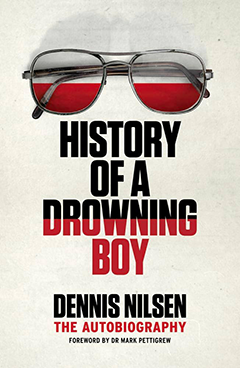 If you want to find the wound that grew into the wardrobe, you must go back to October 31, 1951. On that day, Dennis Nilsen's grandfather, a Fraserburgh fisherman called Andrew Whyte, died of a sudden heart attack. Andrew had been the only male presence in young Dennis's life worth speaking of. The boy's father had vanished into alcoholism years earlier. His grandfather had been the substitute, the steady hand, the smell of pipe tobacco that meant safety. When Andrew died, the family laid the body out in the front room of their cottage, as was the local custom, and Dennis was lifted up to take a final look.
Nobody told him the truth. He was told his grandfather was sleeping. He was told the dead man would see him again one day. He was told not to cry. The boy stared down into the coffin and registered, on a level he could not yet articulate, that the only person who had ever made him feel safe was now an object. Touchable, but unable to respond. Present, but no longer accessible. The lesson he absorbed that afternoon never left him. Love and stillness, in his developing mind, became the same substance. Tenderness, from that moment forward, would be associated only with bodies that could not get up and walk away.
This is what criminal psychologists call a foundational injury. Read the work of researchers like Robert Hare on the development of psychopathy, and you will see the same childhood pattern in a hundred similar cases. A major loss before the age of seven, in a household that does not permit grief, calcifies into a permanent emotional architecture. The person who suffers it cannot easily form healthy adult attachments because the original template for love was a corpse. Most children who suffer such losses do not become Dennis Nilsen, of course. But Dennis Nilsen could not have become Dennis Nilsen without it.
The Childhood That Built a Killer Without Anyone Noticing
The years that followed pressed every wrong button in the boy. His mother remarried in 1954 and went on to have four more children, leaving Dennis stranded as the awkward leftover from her previous marriage. His older brother Olav bullied him relentlessly and possibly worse. The strict religious household offered him no comfort. By his teens he had developed a quiet, ritualised inner life that involved lying down naked on the cold floor of the bathroom, holding his breath, and imagining what it would feel like to be discovered motionless by another person. This was not a casual game. This was a rehearsal. By the time he hit puberty, the fantasy had fused with the first stirrings of his sexuality, which he understood very early would have to be kept secret in 1950s rural Scotland.
So, by the age of fourteen, Dennis Nilsen was already carrying the full kit. Unprocessed grief, social isolation, sibling abuse, repressed homosexuality, religious shame, and an erotic fantasy life built around the body of an unconscious or dead man. He left for the army at fifteen, ostensibly escaping his childhood. In reality, he was packing it neatly into his kit bag and taking it with him.
The Army Cook Who Learned the Wrong Skills
 The British Army Catering Corps gave him eleven years of structure, a tolerance for cheap whisky, and one particular skill set that would later prove devastating. Every army cook is trained in butchery. He learned to break down carcasses, to handle a boning knife, to render fat, to dispose of offal cleanly. The army did not invent his pathology. The army simply handed him the practical toolkit he would later use on human bodies. He was, by all accounts, a clean and careful butcher.
It was during a posting to Aden in 1964 that the next critical development occurred. After a heavy drinking session, a fellow soldier passed out unconscious on a bunk. Dennis sat up watching him for hours, then produced a camera and photographed the unconscious body. He kept those images. He returned to them. The fantasy he had been rehearsing in the bathroom mirror had finally found its first real life subject. The drowning boy in his head had grown into a sleeping soldier on a bed in the Yemen.
Want the full psychological dismantling? Get Nilsen Decoded on Amazon.
The Dark Mind in Plain Sight
By the time he settled into his Civil Service career and moved into 195 Melrose Avenue in Cricklewood with his only adult partner, a young drifter called David Gallichan, every component of what modern criminal psychology calls the dark triad was sitting in his personality at industrial strength. Psychopathy, the absence of normal empathy. Narcissism, the inflated sense of his own intellectual importance, which he would lecture about at length to anyone unlucky enough to share an in tray with him. And Machiavellianism, the cold strategic willingness to manipulate other people as objects in service of his own goals.
You can read more about how these traits combine in Psychology Today's overview of the dark triad. What makes him interesting to study is not that he had these traits. Plenty of people do. What makes him interesting is the unique combination of traits with skills, with disinhibitors, with social camouflage, and with a city full of vulnerable young men who would not be missed. He had all of it, and when his only relationship collapsed in May 1977, the last brake on the system gave way.
Killing for Company on a Civil Servant's Schedule
The first killing came on December 30, 1978. The victim was Stephen Holmes, fourteen years old, who Nilsen met in the Cricklewood Arms pub and brought home for a drink. He strangled the boy, undressed him, bathed him, laid him out on the floor, and slept beside him. He hid the body under the floorboards and went into work the following week as if nothing had happened. The world did not notice. There was no police appeal. There was no knock at the door. The complete absence of consequence after that first killing sealed his future.
Over the next four and a half years he killed at least eleven more men, and probably a few more whose names will never now be recovered. They were almost all young, drifting, unattached. Many were gay, in an era when gay men in London were socially invisible to the institutions that should have noticed their disappearance. Many were homeless, runaway, or between addresses. He met them in pubs like the Coleherne, the Black Cap, the Salisbury, and the Golden Lion. He bought them drinks. He offered them shelter. He killed them after they fell asleep, then kept the bodies as company until decomposition forced him to act.
Read the BBC's archive coverage of the case at BBC News for the contemporary reporting. The pattern is the same in every killing. He did not torture his victims. He did not extract a power thrill from their suffering. He killed them quickly, almost gently in his own grotesque framing, because he wanted them to stay. The bodies under his floor and in his wardrobe were, in his head, a household. He bathed them. He dressed them. He propped them up in the armchair. He talked to them. He killed for company. That is the title of this entire case.
The Drains Spoke First
What finally caught him was not detective work. It was plumbing. By February 1983 he had moved into the top floor flat at 23 Cranley Gardens in Muswell Hill, a flat with no garden and therefore no convenient way to dispose of bodies by the bonfire method he had used at Melrose Avenue. He had improvised a new system involving a stockpot and the toilet. The pipes could not cope. A Dyno-Rod engineer called Michael Cattran climbed down a manhole on the evening of February 8 and discovered grey sludge mixed with what looked unmistakably like human flesh.
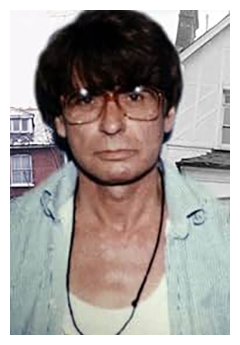 The next evening, Detective Chief Inspector Peter Jay of Hornsey CID was waiting on the doorstep when Nilsen came home from work. The exchange that followed has become part of British criminal folklore. Jay told him he had come about his drains. Nilsen, after the briefest flicker of recognition, invited the officers up to the flat and confirmed, in a tone closer to relief than to fear, that the rest of the body was in two black bags in the wardrobe. In the back of the police car on the way to Hornsey police station, asked whether they were talking about one body or two, he replied that the number was closer to fifteen or sixteen.
He was tried at the Old Bailey in October and November 1983 and convicted on a ten to two majority verdict. The judge sentenced him to life with a recommendation he serve at least twenty five years. He was eventually told he would never be released. He died at York Hospital on May 12, 2018, aged seventy two, after collapsing in his cell at HMP Full Sutton.
What Dennis Nilsen Teaches Us About Spotting Predators
The hardest lesson of his case is not about him. It is about the rest of us. He looked like an accountant. He worked at a Jobcentre. He drank in pubs anyone could have walked into. He had a dog. He paid his rent. He held down a steady professional job for years. He could be the man you sat next to on the Tube tomorrow morning. The country has watched documentaries about him for over forty years partly because, deep down, none of us is sure we would have spotted him if we had bumped into him.
The signal he gave off, to those who knew him at all, was not menace. It was loneliness. He sought out other lonely people. He preyed on the same wound he carried in himself. That is the real warning embedded in his case. The people most at risk of becoming victims of a man like him are the same people most at risk of becoming a man like him. Loneliness is not a small or harmless thing. The British public health establishment has finally started to understand this in the last decade or so. The case file on Dennis Nilsen has been telling us the same thing since 1983.
If this kind of psychological excavation grabs you, you might enjoy my deep dive on Ted Bundy's hidden architecture, or the breakdown of Jeffrey Dahmer's compulsion. The patterns repeat across cases more than the documentaries ever admit. You can also read my piece on how to recognise the dark triad in everyday life, which uses Nilsen as one of its case studies.
The Question Nobody Asks About Dennis Nilsen
Here is the question that should keep you up. We talk about him as if he were unique. He was not. He was an unusually complete combination of factors that show up, in lower concentrations, in millions of damaged people who never go on to kill anyone. The rest of those people manage their loneliness in the ordinary, painful, human ways. They drink. They stay single. They scroll. They call helplines at three in the morning. They cope. He could not. The thing that separates Dennis Nilsen from the lonely man at the end of every British bar tonight is mostly luck and slightly less damage.
That is not a comfortable thought. It is also the thought that any honest psychological reading of his case forces you to confront. We did not produce him by accident. We produced him by leaving an entire category of vulnerable people unattended for an entire decade in the capital city. Read the academic analysis at the National Library of Medicine on serial killer life patterns and you will see the same conclusion drawn from a hundred similar cases. The conditions that produced him have not vanished. The streets are still full of unattached young men nobody is watching. The pubs still close at eleven. The systems that should catch the drift still rely on individual decency more than they should.
I am not saying every quiet civil servant on your street is a killer. I am saying you should look up more often than you do. You should make eye contact with the lonely. You should hold the door, learn the name, ask the second question. The fabric of social attention is the only thing that catches people before they slip into something worse. Nilsen never had anyone catch him. The men he killed never had anyone catch them either. That, in the end, is the case in three sentences.
Want the full psychological dismantling, every chapter, every layer of the wiring? Get Nilsen Decoded on Amazon today.
What Readers Are Saying
"I have read every Nilsen book on the market and this one finally explained the why instead of just rehashing the what. Beck is on a different level."
Helen Marston, Bristol
"Dark, sharp, and unputdownable. The chapter on the open coffin made me put the book down and stare at the wall for ten minutes. Outstanding."
Daniel Crouch, Edinburgh
"Craig Beck writes like a friend telling you a true story over a pint, except the story happens to be the most disturbing case in modern British history. Could not stop turning the pages."
Sara Whitford, Manchester

Frequently Asked Questions
How many people did Dennis Nilsen kill?
Nilsen confessed to killing fifteen or sixteen young men between December 1978 and February 1983. He was convicted of six murders and two attempted murders, because the prosecution lacked sufficient physical evidence to charge him with the rest. The known victims include Stephen Holmes, Kenneth Ockenden, Martyn Duffey, Billy Sutherland, Malcolm Barlow, John Howlett, Graham Allen and Stephen Sinclair. Several of his earlier victims have never been formally identified.
Why did Dennis Nilsen keep the bodies of his victims?
Nilsen kept the bodies because his core motive was company rather than cruelty. He bathed his victims, dressed them, propped them up in the armchair and slept beside them. The bodies functioned, in his disturbed inner world, as the household he had been unable to build through normal relationships. He only dismembered and disposed of them when decomposition made it impossible to keep them in the flat any longer. The phrase killing for company captures his pathology more accurately than any other.
How was Dennis Nilsen finally caught?
He was caught on February 9, 1983 because human flesh and bone were blocking the drains at 23 Cranley Gardens in Muswell Hill. A Dyno-Rod engineer climbed down a manhole the previous evening, recognised what he was looking at, and reported it. Detective Chief Inspector Peter Jay of Hornsey CID confronted Nilsen on his doorstep when he came home from work. Nilsen confessed almost immediately and admitted to between fifteen and sixteen killings on the way to the police station.
About the Author
 Craig Beck is the world's foremost authority on persuasion and human behaviour.
A certified NLP Master Practitioner, former UK broadcaster, and bestselling author of more than one hundred books, he has spent two decades reverse engineering why people say yes, why predators get away with it, and why the most dangerous minds rarely look the way you would expect.
More than a million readers across the globe have used his work to understand the hidden mechanics of influence, decision making, and motivation. He does not teach theory. He shows you how the wiring of humanity works.