How to Quit Drinking Naturally: Rewire the Mind, Not the Fridge
Apr 30, 2026How to Stop Drinking Naturally: Rewire the Mind
 How to quit drinking naturally is the question millions type into Google late at night, and most never get a straight answer. The honest one is this: you stop fighting alcohol and start dismantling the beliefs that make alcohol feel necessary in the first place.
Quitting naturally means changing the meaning, not the behaviour. When the subconscious story stops glorifying the drink, the craving quietly collapses on its own. Willpower fails because it cannot outwork emotion. Belief change does the heavy lifting. The rest of this piece shows you exactly how that works, and why so many sober plans crumble without it.
Most people who try to quit alcohol make the same mistake. They treat drinking like the problem, when drinking is usually the symptom. So, every frustrated search for how to quit drinking naturally tends to end with another failed promise, another white-knuckle Monday, and another glass poured by Friday night. If you want lasting change, you must stop wrestling with the liquid and start dealing with the programming that keeps reaching for it.
That might sound contrarian, but it is also the truth. Alcohol has no magical pull. It cannot leap into your hand and march itself down your throat. What it does have is a carefully constructed story planted in your mind. The story says alcohol relaxes you, rewards you, helps you cope, makes you social, softens stress, and takes the edge off life. While that story survives, quitting will feel like deprivation. And whenever something feels like deprivation, relapse is rarely far behind.
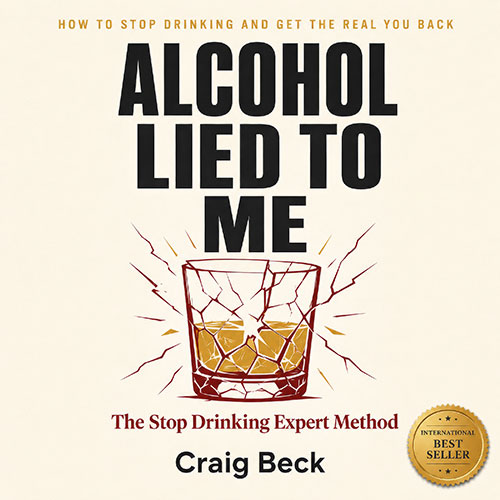
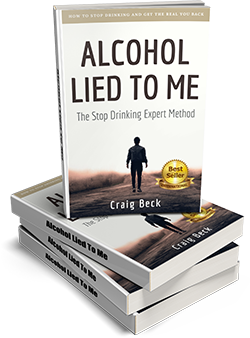
Want the full story dismantling? Get Alcohol Lied to Me by Craig Beck on Amazon, available in book and audiobook.
How to Quit Drinking Naturally Without White-Knuckling It
The word naturally trips people up. Some hear it and assume it means herbal teas, milk thistle capsules, magnesium tablets, or a few smug new habits. Those things may support you, but they are scaffolding, not the building. If you genuinely want to know how to quit drinking naturally, the real answer is sharper than that. You remove the internal demand for alcohol, and the behaviour becomes dramatically easier to change. The drink loses its job, so the brain stops ordering it.
This is where mainstream advice quietly falls apart. It tells you to resist temptation, count sober days, avoid bad influences, and stay endlessly busy. Some of that helps in the short term. But if your subconscious mind still believes alcohol is valuable, you are using discipline to overpower desire. Discipline gets tired. Belief does not. Belief works while you sleep, while you commute, while you sit in front of the television wondering why your hand keeps drifting toward the wine fridge.
Natural change happens when your thinking shifts far enough that alcohol stops looking like a treat and starts looking like what it truly is. An expensive chemical that steals energy, mood stability, sleep quality, confidence, and self-respect while pretending to help. That shift is not about moral judgement. It is about accuracy. The more honestly you see alcohol, the less you need to battle it. More on that mindset shift here.
Why Willpower Is the Wrong Tool for the Job
Willpower is brilliant for opening the front door when you do not feel like going to the gym. It is hopeless as a permanent strategy for addiction. If every evening feels like a wrestling match in your own kitchen, you are not free. You are abstaining badly. The bottle still owns you. You are simply ignoring its calls.
This is why intelligent, capable people keep failing at a problem they know is hurting them. They think they lack discipline. They do not. They are using the wrong tool for the job, in the way you would not unscrew a stripped bolt with a butter knife and call yourself useless when it stays put. The problem is not your character. The problem is the method.
Alcohol habits are tied to emotional conditioning. Your brain has learned that certain states mean drink now. Stress means drink. Celebration means drink. Loneliness means drink. Boredom means drink. The habit becomes automatic because it is welded to cues, not conscious choice. Real progress begins when you interrupt that link. Not by chanting affirmations you do not believe, but by exposing the lie underneath the urge. If stress triggers drinking, ask a sharper question. Does alcohol genuinely reduce stress, or does it create temporary sedation followed by worse sleep, lower resilience, and more anxiety tomorrow? When you stop romanticising the effect, the compulsion weakens. According to the National Institute on Alcohol Abuse and Alcoholism, alcohol disrupts the very neurotransmitters responsible for calm and stable mood. The drink that promises peace is the same drink quietly stealing it.
The Hidden Programming Behind Every Drink
For some people, quitting naturally can begin immediately with education and subconscious change work. For others, especially when drinking is heavy and frequent, medical support may be needed because alcohol withdrawal can be dangerous. That is not weakness. That is physiology. There is no prize for pretending a serious dependency can be handled alone in a bedroom with a self-help podcast. Be honest about where you are. The NHS guidance on alcohol misuse treatment is a sensible place to read about safe medical detox if your drinking has reached that level.
If your drinking is more psychological and habitual, you may find that changing the meaning of alcohol unlocks progress faster than another punishing plan ever did. The natural approach is less theatrical than the public declarations and dramatic detox plans some people crave. It is quieter. You observe your patterns, challenge false beliefs, change your environment, and retrain your emotional responses. That sounds less exciting than a clean, heroic story, but it works because it deals with reality rather than performance.
What Genuinely Helps You Quit Drinking Naturally
The first thing that helps is removing the fantasy. Alcohol is not your friend. It is not your reward. It is not your relief. It is a marketed toxin wrapped in cultural permission and pretty glassware. The clearer you see that, the less inner conflict you feel when the bottle appears at dinner. There is nothing to resist when nothing looks worth wanting.
The second thing is understanding your trigger pattern. Most people do not drink at random. They drink on a script. Maybe it starts at six in the evening. Maybe after an argument. Maybe when the house finally goes quiet and the children are asleep. Spot the script and you can interrupt it before autopilot takes the wheel.
The third thing is changing state quickly and physically. A great deal of alcohol use is really state management. You are not craving the drink itself as much as the feeling you think it produces. So, you need replacements that genuinely shift your physiology. A brisk walk, cold water on the face, a hard workout, guided hypnosis, a breathwork session, a high-protein meal, or simply leaving the house can break an urge cycle far faster than sitting on the sofa trying to be noble.
The fourth thing is protecting sleep. Poor sleep fuels cravings, impulsivity, low mood, and the false belief that you need a drink to unwind. The reality is uncomfortable. Alcohol sedates you, then quietly destroys the deep sleep stages your brain depends on for emotional regulation. When sleep improves, everything gets easier. You think more clearly, manage emotions better, and stop feeling like every day is a survival exam.
The fifth thing is identity. If you still see yourself as someone deprived of alcohol, you will feel fragile. If you begin to see yourself as someone who simply does not need alcohol, your behaviour starts catching up with that identity. This is not wordplay. Identity drives action. Belief shapes behaviour. Behaviour shapes life.
Want a deeper, structured walk-through of every belief that keeps you drinking? Pick up Alcohol Lied to Me by Craig Beck on Amazon, in book or audiobook.
Cravings Are Sensations, Not Orders
One of the biggest breakthroughs comes when you stop treating cravings like emergencies. A craving is a sensation, a thought, and a learned expectation arriving at the same time. It is uncomfortable, but it is not a command. It cannot fine you. It cannot punish you. It cannot pour itself a drink while you turn your back. Most cravings peak and pass in under twenty minutes, the same way a wave rolls into the beach and back out again.
The trouble is that people panic the moment the urge appears. They start negotiating with it. They make it bigger than it is. Then they cave, which teaches the brain that urges must be obeyed. The neural pathway gets thicker. The next craving feels even more urgent. So the loop tightens.
A better approach is to watch the craving with curiosity rather than fear. What triggered it? What story is your mind telling? What feeling are you trying to escape from? When you stop reacting automatically, the craving loses status. It becomes background noise rather than destiny. This is one reason hypnosis, NLP-based work, and other subconscious methods can be so effective. They go beneath the surface argument and rewire the hidden associations that keep the habit alive. Personalised coaching often accelerates this part dramatically because someone is mapping your patterns rather than leaving you to guess.
Sleep, Identity and the Quiet Wins
Quitting alcohol naturally tends to deliver a strange surprise. The dramatic moments people fear, the cravings, the awkward parties, the lonely Saturday nights, fade much faster than expected. What lasts is the quiet upgrade. The energy that returns. The skin that clears. The bank balance that stops haemorrhaging. The sleep that finally feels like sleep rather than chemical knockout.
And there is a curious side effect nobody warns you about. You stop being interested in conversations that revolve around drinking. The hangover war stories get boring. The phrase I needed a drink starts sounding faintly ridiculous, like an adult complaining they needed a sugary cereal to get through a meeting. The world has not changed. Your filter has.
This is where the natural route earns its name. Nothing has been added to your life by force. Something has been removed, and the natural rhythm underneath has finally been allowed to come up for air.
Quitting Without Becoming Miserable
Let us put another bad idea to bed. Quitting alcohol should not require building a smaller, duller life. If sobriety feels flat, restrictive, and socially awkward forever, something has gone wrong in the way you framed it. The goal is not to become a grumpy ex-drinker counting losses. The goal is freedom. More energy. Better mornings. Cleaner thinking. Stable mood. Real confidence. More money. Better relationships. More self-trust.
There may be an adjustment period. Some social situations feel strange at first. Some emotions show up without their old numbing strategy. That is normal. But if you stay with the process long enough to let your brain reset, what looked like sacrifice begins to feel like relief. The thing you thought you would miss turns out to be the thing that was eating you. Stop Drinking Expert is built around this principle. Change the hidden programming and the behaviour stops feeling like a lifelong fight.
The Truth Most Sobriety Advice Skips
You need not spend the rest of your life identifying as someone one drink away from disaster if that story keeps you trapped in fear. For some people that framework helps. For others it cements the struggle and makes the bottle feel powerful by sheer repetition. It depends on the person, their history, and which beliefs make them stronger rather than weaker.
What matters is this. Alcohol is not a necessity, and your mind can be retrained to stop worshipping it. Once that happens, quitting becomes less about resistance and more about alignment. You are no longer forcing yourself to avoid something wonderful. You are no longer interested in poisoning yourself for a temporary effect that never delivered what it promised in the first place. That is a very different game, played on a very different field, with very different rules.
If you are serious about learning how to quit drinking naturally, stop hunting for a miracle hidden in a bottle of supplements or another motivational pep talk. Start questioning the beliefs that made alcohol seem useful in the first place. Change those, and the habit often loses its grip far faster than you were led to believe. The moment alcohol stops feeling like relief, your freedom is much closer than you think.
Ready to dismantle the lie at the root of the habit? Get Alcohol Lied to Me by Craig Beck on Amazon, in book and audiobook.
What Readers Are Saying
"I had tried everything. Patches, apps, sober groups. Nothing stuck. Craig Beck's approach finally clicked because it was the only one that explained why I wanted to drink in the first place. Eight months alcohol-free and not white-knuckling a thing." Marianne Holcombe, Bristol.
"The first sober plan that did not feel like punishment. I expected another lecture. I got a complete rewire. My evenings look unrecognisable now and I sleep like a teenager." David Renshaw, Glasgow.
"Bought the audiobook on a whim during a long drive. By the time I got home I had decided to stop, and three months later that decision still feels like the easiest one I ever made." Priya Sandhu, Manchester.
About the Author
 Craig Beck is the world's foremost authority on persuasion and human behaviour. A certified NLP Master Practitioner, former broadcaster, and bestselling author of more than a hundred books, he has spent over two decades reverse engineering why human beings say yes.
More than a million readers across the globe have used his work to understand the hidden mechanics of influence, decision making, and motivation. He does not teach theory. He shows you how the wiring of humanity truly fires, and how to use that knowledge to change your own life from the inside out.
Frequently Asked Questions
How long does it take to quit drinking naturally?
The physical adjustment usually settles within two to four weeks, with sleep, energy, and mood often improving inside the first ten days. The deeper psychological shift, where alcohol stops looking attractive at all, can land in a single conversation if your beliefs change quickly, or build over a few months if you reshape them gradually. Speed matters less than depth. A real shift in meaning lasts. A timeline alone does not.
Is it safe to quit drinking naturally without medical help?
For light to moderate drinkers, quitting at home with the right psychological tools is usually safe and effective. For heavy, daily drinkers, alcohol withdrawal can trigger seizures, dangerous spikes in blood pressure, and in severe cases delirium tremens. If you drink large amounts every day, speak to a doctor before stopping. Medical detox is not failure. It is the responsible first step before the deeper mindset work begins.
Why does willpower fail when trying to quit drinking?
Willpower is conscious and finite. Cravings are subconscious and tireless. When you rely on willpower alone, you are pitting a small mental muscle against years of emotional conditioning. The brain wins because the brain has time on its side. Real, lasting change happens when the underlying beliefs about alcohol are rewritten, so the urge fades at the source rather than being suppressed at the surface.