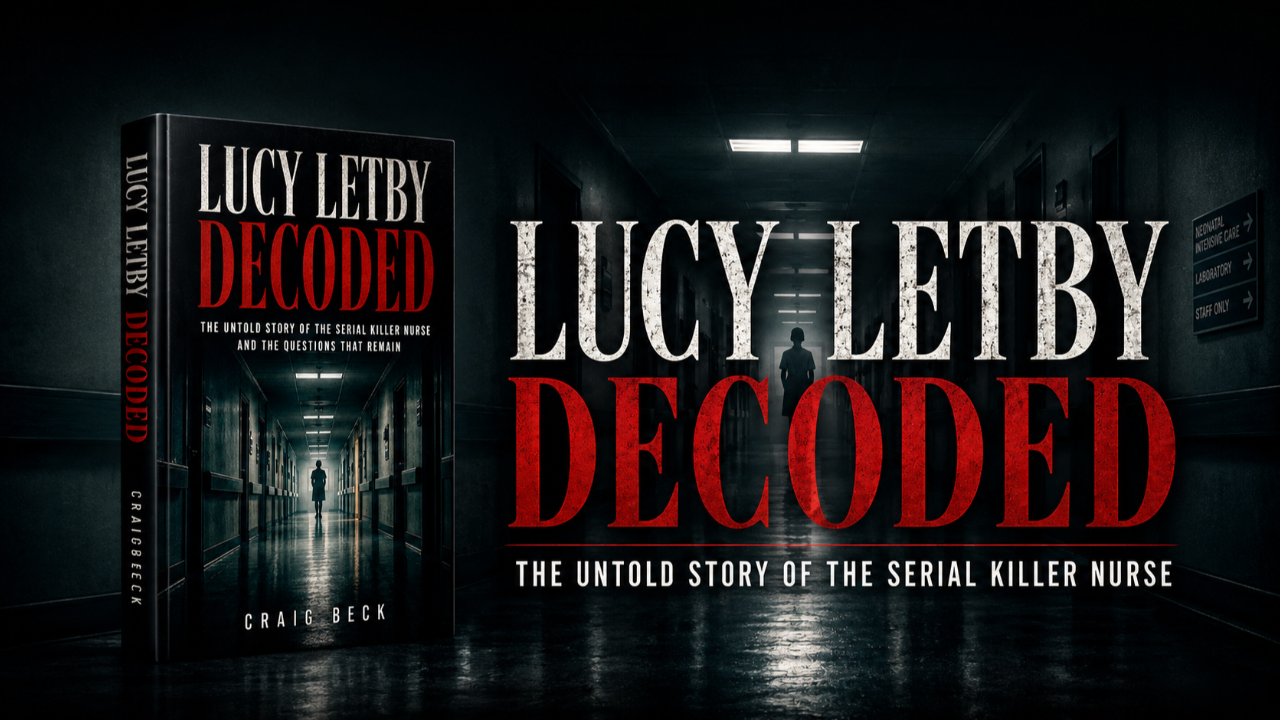
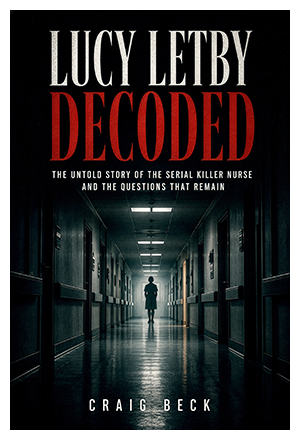
Lucy Letby Decoded: The Untold Story of the Serial Killer Nurse and The Questions That Remain
May 29, 2026Lucy Letby Decoded: Inside the Mind of Britain's Killer Nurse
Lucy Letby is the British neonatal nurse convicted in August 2023 of murdering seven babies and attempting to murder seven more on the unit at the Countess of Chester Hospital between June 2015 and June 2016. She was handed a whole life order, then a fifteenth one after a retrial in 2024. Her chosen methods included injecting air into tiny bloodstreams, dosing premature infants with insulin, and overfeeding stomachs the size of a walnut with milk. The case left a country numb, asking one impossible question. How does a smiling 25 year old paediatric nurse, with no obvious history of trauma, become Britain's most notorious child killer of the modern age?
That is the question this piece will answer. Not with the same headline rehash you have read a hundred times, but with the psychological scaffolding underneath it. What was built, what cracked, and what the rest of us missed while it was happening.
Want the full story behind the verdict? Grab Lucy Letby Decoded on Amazon for the deeper dive into the questions that still refuse to settle.
Who Was Lucy Letby Before the Headlines
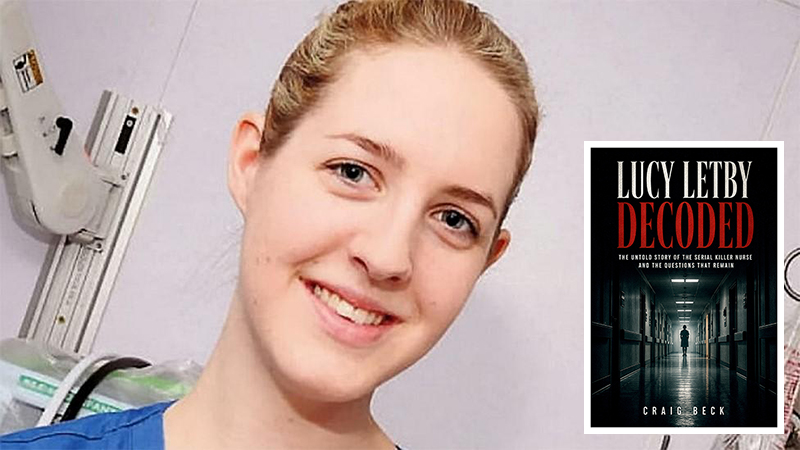
 Before her face was burned into every front page in Britain, Lucy Letby was the sort of woman you would walk past in Tesco without a second glance. Born on 4 January 1990 in Hereford, she was the only child of a furniture salesman and an accounts clerk. Adored. Wanted. Spoiled in the gentle, unremarkable way only children often are. Friends described her as quiet, reserved, kind to younger kids, and obsessed with the idea of looking after babies from an early age. Her parents drove her to every milestone like a precious cargo, and that mood of fragile devotion followed her into adulthood.
She studied child nursing at the University of Chester and qualified with a Bachelor of Science in Nursing in 2011. She liked her colleagues. They liked her. She joined a salsa class. She raised money for charity by cycling. She moved into a neat little semi on Westbourne Road, where the only complaint neighbours later remembered was that she sometimes left her bin out a day early. A bland, polite, smiling young woman who looked exactly like the kind of person you would happily trust with your newborn. That is the first uncomfortable lesson of this case. The face of a predator is almost never the face you are warned about.
The Quiet Girl from Hereford
Most serial killer profiles open with a horror reel of childhood. Beatings, alcoholic fathers, freezing bedrooms, a parent who vanishes overnight. Letby breaks the template. There is no documented abuse. No broken home. No moment anyone, including the criminologists hunting for an origin story, can point at and say, "There. That is where it began." That absence is the most disorienting thing about her. It makes you want to invent a trauma, because the alternative is far worse to sit with.
The quiet itself tells you something. Letby was an introverted only child, neat to the point of obsession, drawn to caring for things smaller than herself. She wanted to be a nurse before most kids could spell the word. There is a recognised pattern in clinical psychology where an only child raised in a tightly controlled home learns to extract their entire sense of self-worth from being seen as the helper. The good one. The one who fixes what is broken. When that identity is your only source of value, anything that threatens it feels like annihilation. Praise becomes oxygen. Criticism becomes a kind of dying. It does not create a killer on its own. It does build the perfect emotional architecture for one.
The Hospital That Became a Hunting Ground
The Countess of Chester is a working hospital in a working town. Nothing about it suggested it would become the most infamous neonatal unit in British history. Letby joined the unit in January 2012 and quickly built a reputation for going the extra mile. She did the unsociable shifts. She volunteered for the toughest cases. She turned up on her days off. Colleagues called her "Lucy with the babies". Parents trusted her. Senior nurses praised her. By 2015, she had built such a complete cover of competence that the unit could not function without her.
Then babies started dying. Not in the slow, statistical drip you expect in neonatal care, but in odd, sudden collapses that should not have happened to relatively stable infants. A days old twin boy died ninety minutes after she came on shift. Air had been pushed into his bloodstream. A pair of triplet brothers, taken within hours of each other, both with the same fingerprint of unexplained collapse. A premature girl injected with synthetic insulin so heavily that her blood sugar plummeted into a pit. Babies overfed with milk until their stomachs gave out. Breathing tubes, the most fragile lifelines on the ward, found dislodged at the worst possible moment.
For more than a year, senior consultants noticed a pattern nobody else wanted to see. One nurse was on duty for almost every collapse. They raised it. They were ignored. They raised it again. They were told to apologise to her. The unit's leadership protected its reputation while the body count climbed, and that institutional failure is its own scandal, one the Thirlwall Inquiry is still picking apart.
Want the full account of how a hospital can become a hunting ground in plain sight? Lucy Letby Decoded is available on Amazon now.
Inside the Dark Triad of a Nurse
Most serial killers do not score off the chart on a single trait. They score moderately high across three. Psychologists call it the dark triad. Psychopathy, narcissism, and Machiavellianism. Letby, on every available scrap of behavioural evidence, is a textbook case of how those three traits can hide inside a job description that nobody questions.
The psychopathy shows up in the absence. No remorse at the time. No tears for the babies in any contemporaneous note. A flat, clinical interest in the families afterwards. Dr David Holmes, the criminal psychologist who studied her behaviour, concluded she carried psychopathic tendencies from birth. Psychopathy is not the cartoon version most people picture. It is a quiet thing. A deficit. A missing layer of wiring that lets the rest of us feel another person's pain as if it were our own. You can be a psychopath and still smile politely at the school gate, because you have learned what smiles are for.
The narcissism shows up everywhere else. The hero complex. The need to be the one who found the deteriorating baby. The need to be on shift when the worst happened. The need to be the one consoling the parents. Professor David Wilson, the emeritus criminologist, argued her killings were rooted in a saviour fantasy. She was the only one who could save these children. The fact she had also caused the collapse was, in her internal logic, beside the point. The rescue was the dopamine hit.
The Machiavellianism, the cold strategic third leg, is harder to spot and more chilling once you do. Letby chose her victims carefully. Vulnerable. Premature. Easily dismissed as deaths that "just happened" in neonatal care. She struck during handover lulls, in side rooms, when other nurses were distracted. She kept handover notes in shoeboxes at her home. That is not chaos. That is a plan.
The Notes, The Searches, and the Married Doctor
If you only ever read one thing about this case, read the notes. Police found scraps of handwritten paper in Letby's house. One read, "I am evil, I did this." Another read, "I killed them on purpose because I'm not good enough to care for them." A third said, "The world is better off without me." Her defence argued the notes were a counselling exercise, a way to externalise distress while she was being investigated. The prosecution argued they were a confession in plain English. You can decide for yourself which feels closer to the bone.
Then there were the Facebook searches. Letby looked up the families of her victims, sometimes on the anniversary of the death, sometimes on the dead child's birthday. She told the jury this was casual curiosity, the result of being on her phone too much. Criminal psychologists call that behaviour revisiting, and it appears in case after case of compulsive killers. The act is not enough. The aftermath has to be relived.
And then there was Dr A. The married consultant Letby developed an obsessive interest in. Coffee dates. Restaurant trips. A day in London together. Texts heavy with love heart emojis. When he eventually gave evidence against her in court, she became so distressed she tried to leave the dock. That collapse is the moment seasoned trial watchers say the mask slipped. The thing that broke her composure was not the dead babies. It was the man.
This is the textbook profile of attachment dysfunction in a high functioning narcissist. Idealisation. Fantasy escalation. Possessive intensity directed at a person who barely registers you as a romantic option. Some criminologists have suggested the killings on shifts she shared with Dr A were a form of drama generation, creating crises that would force him into her orbit. We can never prove that one. But the pattern fits a profile too uncomfortable to ignore.
How the Net Closed In
 The end, when it came, came slowly. Cheshire Police began Operation Hummingbird in 2017, an investigation so quiet that Letby barely registered it was happening. She was moved off the unit to an admin role. She was furious. She filed a grievance. She demanded an apology. That, too, is dark triad behaviour. The performance of wounded innocence is so loud you almost forget to look for the wound.
She was arrested in 2018, then again in 2019, then charged in 2020. The trial began in October 2022 and lasted ten months, the longest murder trial in British legal history at the time. On 18 August 2023, the jury convicted her on seven counts of murder and seven of attempted murder. Three days later, Mr Justice Goss handed her a whole life order. A retrial in July 2024 added a fifteenth. You can read the full sentencing remarks on the official Judiciary of England and Wales website if you have the stomach for it.
And yet the case has not closed in the public mind. A panel of fourteen international experts in February 2025 challenged the medical evidence behind the convictions. The Criminal Cases Review Commission is now examining whether this is a miscarriage of justice or the most chilling cover story in modern medicine. The Crown Prosecution Service stands by every conviction. The consultants who first raised the alarm stand by their accounts. The families, on every side of the debate, are stuck in a grief loop that will never be properly closed.
The Questions That Still Refuse to Die
Here is what makes the Letby case different from almost every other case in modern British criminal history. There is no body of physical, forensic, slam-dunk evidence of the kind that locked Harold Shipman into his cell. There are statistical patterns. There are circumstantial collapses. There are notes that read like confessions and might be self-loathing. There are searches of grieving families that look like trophy-hunting and might be morbid curiosity. The case sits on probability, pattern, and the cold testimony of consultants who say they watched a colleague kill children for a year.
Compare that with the body of work I covered in the Harold Shipman piece, where the forensic trail is unambiguous, or the cold psychological architecture of the Jimmy Savile breakdown, where decades of victims eventually broke through the deference. Letby's case is closer in shape to that of the rare female killer profile, which I have explored in detail in the Aileen Wuornos breakdown, where motive, opportunity, and psychology refuse to line up neatly.
So, was she a Munchausen by proxy carer, harming to be the hero who responded? Was she a narcissistic saviour figure addicted to the drama of crisis? Was she a psychopath who got a quiet thrill from watching life leave a body too small to fight? Or, as a growing minority of medical experts now argue, was she the unlucky scapegoat for a failing neonatal unit with a poor survival statistic and a culture of denial? The Decoded book wrestles with every one of those answers, because the only honest position is that the public still does not know.
Ready to weigh the evidence yourself? Pick up Lucy Letby Decoded on Amazon for the full, no-holds barred psychological breakdown.
What the Letby Case Teaches You About Spotting a Predator
If you take nothing else from this story, take this. The most dangerous people in a system are almost never the ones the system flags as dangerous. They are the ones the system rewards. They volunteer. They smile. They turn up on their days off. They are the first to the bedside in a crisis. They make the people in charge feel safe, which is why those people refuse to listen when the warning signs start to whisper. The senior consultants at the Countess of Chester saw the pattern early. They were told to apologise. That detail, more than any other, should haunt every hospital, school, care home, and church in the country.
The dark triad does not announce itself with a sneer. It announces itself with a job well done. The predator who hides inside a uniform of competence is the hardest to see and slowest to stop. You will catch them on pattern, on data, on the willingness to believe quiet professionals when they tell you something is wrong. If you want a deeper read on the psychology of your own fascination here, see my piece on why true crime hooks the human mind.
The story of Lucy Letby is not done. The CCRC will rule. New experts will testify. Families will keep grieving on both sides of the verdict. The face you nodded to in the corridor. The voice you trusted in the worst moment of your life. The hand that lifted your baby out of the cot. The real terror in this case is not that one woman might have done what a jury said she did. It is that the people who could have stopped her did not, because she did not look the part. She never does.
"I had read every article on the Letby case and still felt like I understood nothing. Craig's book is the first thing that made the psychology click. I devoured it in two evenings."
Marcia Doolan, Tampa, Florida
"As a retired ICU nurse, I have followed this case with a sick feeling for years. Craig Beck cuts through the noise like nobody else writing in this space. Essential reading."
Brett Ellington, Portland, Oregon
"I bought the audiobook for a long drive and almost missed my exit. The man knows how to tell a story and how to land a psychological punch. Five stars."
Janelle Rivers, Asheville, North Carolina
About The Author
 Craig Beck is one of the world's leading authorities on persuasion and human behaviour. A certified NLP Master Practitioner, former UK broadcaster, and bestselling author of more than a hundred books, he has spent two decades pulling apart the wiring of why people do what they do. More than a million readers around the globe have used his work to understand the hidden mechanics of influence, decision making, and the darker corners of motivation. He doesn't lecture in theory. He shows you how the machinery of the human mind works, and what to do when you spot it operating against you.
Last updated 29 May 2026.
Frequently Asked Questions
Was Lucy Letby a psychopath?
No formal psychiatric assessment has been publicly released, but criminal psychologists who have studied her behaviour, including Dr David Holmes, have suggested she shows traits consistent with psychopathy. These include a lack of empathy, superficial charm, and a flat emotional response to suffering. Professor David Wilson has argued for a narcissistic hero complex with Munchausen by proxy features. The honest answer is that the public has profile-level clues, not a clinical diagnosis, and the experts disagree on which label fits best.
Why did Lucy Letby kill the babies at the Countess of Chester Hospital?
Prosecutors never offered a single agreed motive at trial, telling the jury they would never fully know why. The leading psychological theories point to a need for attention, a drive to be seen as the saviour, possible Munchausen by proxy, and a dysfunctional attachment to a married consultant on the unit. Some experts now argue the medical evidence itself is unreliable. The motive question remains the single biggest gap in the case.
Is Lucy Letby still in prison and could she be released?
Yes. Letby is serving fifteen whole life orders, the harshest sentence available in English law, with no prospect of parole. Her legal team has applied to the Criminal Cases Review Commission to examine the convictions as a possible miscarriage of justice. If the CCRC refers the case back to the Court of Appeal, the verdicts could in theory be quashed. Until then, she remains behind bars for the rest of her natural life.