Aileen Wuornos Decoded: Inside The Mind Of America's First Female Serial Killer
Aug 21, 2026Already enjoyed it? Please help spread the word, leave a review on:
🇺🇸 Amazon.com, 🇬🇧Amazon.co.uk, 🇨🇦 Amazon.ca or 🇦🇺Amazon.au
Thank you
Aileen Wuornos Decoded: Inside The Mind Of America's First Female Serial Killer
On a wooded back road off Interstate 95, in the early winter of 1989, a fifty one year old electronics shop owner pulled his Cadillac into a clearing he had been told held a private spot for the half hour of company he had just paid for. He had not paid for company. He had paid for the last thirty minutes of his life. Three .22 calibre bullets later, the long road that would end in a Florida execution chamber thirteen years afterwards had officially begun. The woman who pulled the trigger was thirty three years old, drank herself into a stupor most evenings, and had spent her entire life being told, in one way or another, that she was disposable.
 Aileen Wuornos was an American serial killer who shot seven men along the Florida highways between November 1989 and November 1990. Born in 1956, abandoned by her mother at four, raised by an abusive grandfather, and homeless by fifteen, she became the most famous female serial killer in American history. She was executed by lethal injection on the ninth of October 2002 at the age of forty six. Her case sits at the intersection of severe childhood trauma, untreated alcohol dependency, and a brain that had been quietly assembling a weapon since girlhood.
This article is a long form psychological profile of the woman behind the headlines. If you want the full deep dive, including the trial coverage, the Tyria betrayal, and the recantation that sealed her fate, you will find it in the companion book.
Want the full story behind the headlines? Get Aileen Wuornos Decoded on Amazon now.
Who Was Aileen Wuornos
Aileen Carol Wuornos was born on the twenty ninth of February 1956 in Rochester, Michigan, to a teenage mother named Diane and a father she would never meet. The father, Leo Pittman, was already a sexual predator in the making and would, before the decade was out, be serving a life sentence in Kansas for the rape of a seven year old girl. He hanged himself in his cell in 1969. Aileen was, in genetic terms, carrying the inheritance of one of the worst people the American carceral system was holding at the time.
Diane lasted four years before she walked out and dumped Aileen and her older brother Keith on the doorstep of her own parents in Troy, Michigan. The grandparents, Lauri and Britta Wuornos, formally adopted the children and made the decision that would matter more than almost any other in the case. They told Aileen and Keith that they were their parents. The lie held until Aileen was twelve years old. The day she found out the truth in a primary school playground was the day the foundation of her identity came apart, and nothing she did for the rest of her life ever fully repaired it.
The Childhood That Built A Killer
Lauri Wuornos was a Finnish immigrant with a leather strap, a whisky habit, and a temper that came out most evenings somewhere between his third and fifth drink. He beat both children. He humiliated Aileen by making her strip before he hit her. There are accounts, never proven in court but corroborated by enough family witnesses to carry weight, that he sexually abused her too. By the time she was thirteen, she was drinking out of his bottles when he passed out on the sofa, fighting boys at school, and trading sex with neighbourhood teenagers in the woods behind the family property for cigarettes and pocket change.
At fourteen she fell pregnant, gave birth in a home for unwed mothers, and never saw the baby boy again. At fifteen, after her grandmother Britta died of liver failure, Lauri threw her out of the house. She slept in a hollow in the woods through the Michigan autumn, surviving on whatever the same neighbourhood boys would pay her for. By sixteen she had thumbed her way south, looking for a state warm enough to sleep outside year round. Florida obliged. The next twenty years would unfold there, in motels, in patrol cars, in courtrooms, and finally in a death chamber.
Modern child welfare research uses a tool called the adverse childhood experiences score to measure the cumulative damage of a difficult early life. Aileen would have scored close to the maximum. The damage she carried into adulthood was not only emotional. It was structural. The amygdala, the part of the brain that handles fear, had been kept on permanent high alert since she was small. The prefrontal cortex, the planning and impulse control centre, had been pruned by chronic stress. The reward pathways had been hijacked by alcohol from the age of thirteen. She walked into adulthood with the brain of someone who had been at war her entire life, because she had been.
The Dark Triad Hiding In Plain Sight
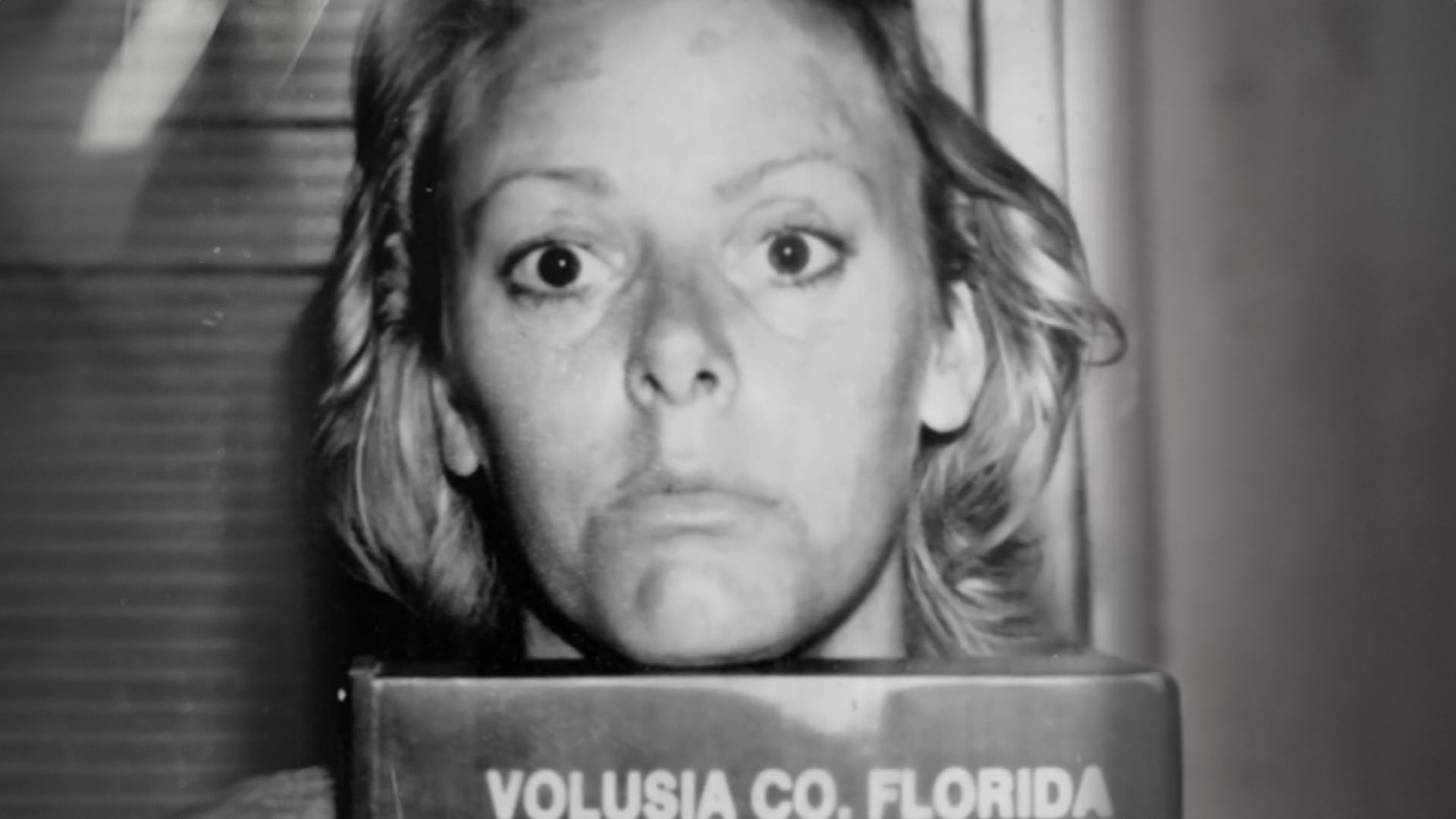
Forensic psychologists use a framework called the dark triad to map the psychology of predatory offenders. The three traits are psychopathy, narcissism, and Machiavellianism. Psychopathy is the absence of the ordinary brakes on cruelty. Narcissism is the inflated sense of one's own importance. Machiavellianism is the cold, strategic willingness to use other people as objects. When all three appear in the same skull, you tend to find the kind of behaviour that leaves bodies in wooded clearings.
The fascinating thing about Aileen, and the reason she does not slot neatly into the textbook, is that she had pieces of all three but none of them in pure form. The psychopathy was real but switched on by trauma rather than wired in from birth. The narcissism was real but kept colliding with a shame so deep it should have crushed her. The strategic coldness was real but kept being undone by an emotional immaturity that made her sob in courtrooms at the worst possible moments. She was, by any honest reading of the framework, a hybrid. The textbooks the experts had been using were not built to accommodate her. They were quietly revised in the years that followed.
If you want a comparison, the same hybrid pattern surfaces in Charles Manson's psychological profile, although Manson channelled the ingredients into a cult while Aileen channelled hers into roadside murders. Different distribution channels. Same underlying broken parts.
How Aileen Wuornos Hunted Her Victims
 The killings began on the thirtieth of November 1989 with Richard Mallory. They ended in November 1990 with Walter Antonio. In between, in the space of twelve months, she shot David Spears, Charles Carskaddon, Peter Siems, Eugene Burress, and Charles Humphreys. The seventh body, Siems, has never been recovered. The other six were found, at intervals over the year, in wooded patches off central Florida back roads, with bullets in their chests and their wallets missing.
The pattern was simple. She walked the truck stops along Interstate 75 and Interstate 95, working as a roadside prostitute. She got into the cars of men who agreed a price for sex. She had them drive her to a private spot. At some point during the encounter, she pulled the .22 from her bag and emptied it into the man on the other end of the front seat. She took the wallet. She drove the car away. She abandoned it somewhere far from the body. She walked back to the motel where her partner Tyria Moore was waiting and handed over whatever cash she had collected.
The escalation in violence between the killings is the signature of a pattern the FBI behavioural unit has been documenting in serial offenders for decades. The first killing involved three bullets. The second, six. The third, nine. The brain that has been allowed to do the thing once tends to find the second time easier, the third easier still. By the fourth killing, the act had been automatised. The .22 was no longer a piece of equipment being tested. It was a piece of equipment being preferred. You can read more about how predatory escalation works in the FBI's official guidance on serial murder, which remains the most accessible authoritative source on the subject.
The Trap That Brought Her Down
Aileen was arrested on the ninth of January 1991 at a biker bar called the Last Resort in Port Orange, Florida. The arrest itself was almost gentle. Two undercover detectives bought her a beer, walked her out into the parking lot, and put the cuffs on under the cover of an old firearm warrant that gave them an excuse to take her in without revealing what she was being held for. She did not resist. She had no idea, at the moment of the arrest, that the police already had her name, her face, her fingerprints from a pawned camera, and a working theory linking her to all seven of the killings.
What broke her was not the evidence. It was Tyria. The detectives flew her former girlfriend back from Pennsylvania, set her up in a Daytona hotel with a wired telephone, and walked her through three days of phone calls in which she was instructed to beg Aileen to confess in order to keep her own name out of the case. Aileen, who would have done anything to keep Tyria safe, did exactly what was asked. On the sixteenth of January 1991 she sat down in an interview room and gave a three hour confession to all seven killings, framing each one as self defence. The framing did not survive the first cross examination. The confession itself ended any chance of an acquittal.
The Trial, The Sentence, And The Final Years
The first trial, for the Mallory killing, opened in Volusia County in January 1992 in front of Judge Uriel Blount. The prosecutor was John Tanner, a born again Christian with political ambitions. The defence was led by an experienced public defender named Tricia Jenkins. The decisive ruling came in the first week, when the judge admitted evidence of all six other killings under the Williams Rule, allowing the jury to consider the pattern as well as the single charge. The verdict came in under two hours. Guilty of first degree murder. The death sentence was imposed at the end of January.
Five more death sentences followed over the next year, all by no contest pleas in the various counties where the bodies had been found. Six death sentences in total. She spent the next decade on death row at Broward Correctional Institution, deteriorating mentally in ways the psychiatric staff documented in growing detail. She was adopted on death row by a born again Christian horse breeder named Arlene Pralle, fired her appeals attorneys in 2001, and was executed by lethal injection on the ninth of October 2002. Her final words referenced a mothership and the film Independence Day. She was forty six years old.
What Aileen Wuornos Teaches Us About Trauma And Violence
Stand back from her story and the central lesson is uncomfortable, because it punctures the comforting cultural narrative that violent killers are aberrations. Aileen was not an aberration. She was an outcome. Take a damaged genetic inheritance, drop it into a violent household where the adult role models are themselves drunks, layer in sustained sexual and physical abuse, remove every protective adult by the age of fifteen, add untreated alcohol dependency from the age of thirteen, and run the experiment for another two decades on the highways of Florida. You will not always get an Aileen Wuornos. But you will get her sometimes.
The same recipe, in different proportions, produces the predators we read about in different decades. Jeffrey Dahmer's psychological profile shares some of the same architectural elements, although his sexual sadism was wired in by adolescence rather than emerging from chronic abuse. The trauma framework that explains Aileen does not explain every offender, but the genetic and environmental ingredients are not exotic. They are present, in varying combinations, in millions of households today. Most of those households will not produce a serial killer. Some will. The ones that do are the names you read about.
The real question her case asks of us is not why she did it. The real question is what must be different about the way we look after children for an Aileen never to be assembled in the first place. The answer, on the evidence, is a great deal more than the present systems are doing. You can find more on this kind of dark psychology in the best dark psychology books worth reading, several of which deal with the formation of violent personalities in early life.
The Question Nobody Asks About Aileen Wuornos
Most coverage of her case ends at the execution. The films stop. The documentaries fade out. The chapter closes. The question almost nobody asks, because it makes everyone uncomfortable, is the one I want to leave you with. If the production of an Aileen Wuornos is the predictable result of a process, what does that say about the children currently going through the same process in homes nobody is paying attention to? The wiring she walked into the death chamber with did not assemble itself by accident. It was put there by adults who could have chosen otherwise and by systems that could have intervened earlier. Most of them did not.
Read the research on serial killer psychology for long enough and the same pattern surfaces again. Damaged children, denied intervention, growing into adults whose brains have been quietly altered. The bodies that follow are downstream consequences of decisions taken decades earlier in homes that nobody was watching closely enough. Aileen's case is, in this respect, not exotic at all. It is a slow motion warning written in seven male corpses along the Florida back roads.
Frequently Asked Questions About Aileen Wuornos
How many people did Aileen Wuornos kill?
Aileen Wuornos killed seven men along the Florida highways between November 1989 and November 1990. Six bodies were recovered and identified. The seventh victim, Peter Siems, has never been found, although she confessed to the killing and his abandoned car was eventually traced to her and her partner Tyria Moore. The state of Florida convicted her of six of the murders and imposed a death sentence for each one.
Why is Aileen Wuornos called America's first female serial killer?
The label is technically inaccurate, since women had been killing in series in the United States for over a century before her. Belle Gunness and Nannie Doss are two earlier examples. Aileen earned the label because she did not fit the female pattern. She killed strangers, used a firearm, and acted on opportunistic financial motives, all of which the public and the press associated with male serial killers. The novelty of the gender inversion was what stuck.
What was the cause of Aileen Wuornos's behaviour?
The honest answer is a combination of severe childhood trauma, including physical and sexual abuse, untreated alcohol dependency from age thirteen, an inherited genetic load from a violent father, and the absence of any meaningful adult intervention during the developmental years. None of these factors alone would have produced what she became. In combination, over thirty years, they assembled a brain capable of doing what she did and a circumstance in which the doing of it became possible.
About The Author
 Craig Beck is the world's leading expert on persuasion and human behaviour. A certified NLP Master Practitioner, former UK broadcaster, and bestselling author of more than one hundred books, he has spent two decades reverse engineering why people say yes, why predators choose certain victims, and how the wiring of the human mind quietly produces the behaviour we see in the world. More than a million readers have used his work to understand the mechanics of influence, decision making, motivation, and, in the Decoded series, the formation of violent personalities. He doesn't deal in theory. He shows you how the wiring works.
"I have read every major book on Aileen Wuornos and this is the only one that goes properly under the bonnet. The psychology chapters are the kind of writing the genre desperately needs."
Marcus T., Phoenix, AZ
"Beck does not flinch and he does not preach. By the end of this book I understood her in a way three documentaries had never quite managed. Five stars and worth every minute."
Jennifer R., Charleston, SC
"If you only read one book on the case, make it this one. The trauma neuroscience material is presented in a way anyone can follow, and the storytelling pulls you through like a thriller."
Daniel K., Portland, OR
Last updated: 12 May 2026