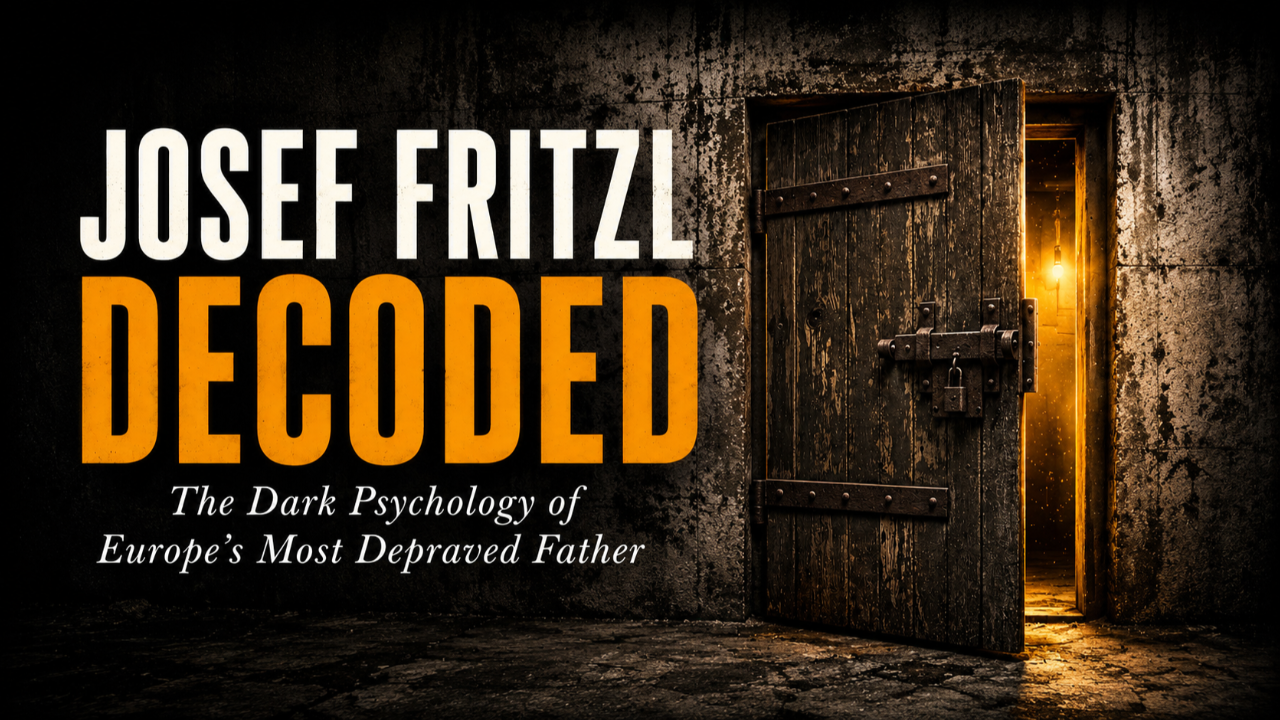
John Wayne Gacy Decoded: Inside the Mind of America's Killer Clown
Jul 01, 2026Already enjoyed it? Please help spread the word, leave a review on:
🇺🇸 Amazon.com, 🇬🇧Amazon.co.uk, 🇨🇦 Amazon.ca or 🇦🇺Amazon.au
Thank you
John Wayne Gacy Decoded: Inside The Mind of The Killer Clown
John Wayne Gacy was an American serial killer who murdered at least 33 boys and young men in and around Chicago between 1972 and 1978. Performing as Pogo the Clown at children's parties, he buried 26 of his victims in the crawl space beneath his suburban home at 8213 West Summerdale Avenue. Convicted in 1980, he was executed by lethal injection on May 10, 1994. Behind the painted smile lived a cold, calculating predator who weaponised charm.
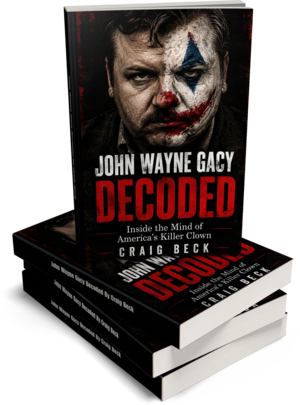 You have probably seen the photograph. The puffy white face, the red triangle eyebrows, the arched grin painted to look harmless. Pogo the Clown shaking a politician's hand, posing with neighbourhood kids, waving from a parade float in suburban Illinois. The image is so absurd it almost feels like a costume joke. And then you remember what was rotting under the floor of the man wearing the makeup, and the joke dies in your throat.
This article will not give you the bullet points you can find on Wikipedia. You will find the why. Why this particular son of a violent drunk became the worst serial killer Chicago has ever seen. Why nobody saw it. And why the warning signs, when you know what to look for, were screaming for years. The companion deep dive, John Wayne Gacy Decoded: Inside the Mind of America's Killer Clown, takes the autopsy further than any blog can.
Who Was John Wayne Gacy
Born on March 17, 1942 in Chicago, John Wayne Gacy Jr. grew up in a working-class household with two sisters, a doting Polish mother, and a Danish-American father whose temper could empty a room. By the time of his arrest in December 1978, he had built the perfect ordinary life. He owned a contracting firm called PDM. He was a precinct captain in the Democratic Party. He had been photographed with First Lady Rosalynn Carter and wore the Secret Service security pin she gave him on his lapel. He volunteered as a clown at children's hospitals and street fairs. The neighbours on Summerdale Avenue called him friendly, generous, the sort of bloke who would lend you a ladder.
That public persona was the entire point. Gacy did not stumble into respectability as a cover. He chased it with the focus of a man building a bunker. The civic awards, the political photographs, the costumes, the smiles, were all load-bearing walls protecting what he kept beneath the house. To understand him, you must understand the desperate, lifelong project of pretending to be a man worth liking.
Want the full story? Grab John Wayne Gacy Decoded on Amazon and read the autopsy in full.
The Boy Who Learned To Fear The Front Door
Every monster has a kitchen. The room where the cracks first appeared. For Gacy, that kitchen sat in a Chicago apartment shared with a father who drank the family into bruises. John Stanley Gacy worked, paid the bills, mowed the lawn, and then turned on his children with belts, fists, and a vocabulary built to humiliate. He called his only son a sissy, a girl, a queer, a disappointment. The beatings came without warning. The verbal punishment was the daily weather.
Researchers studying violent offenders point to a brutal pattern. Boys who absorb constant psychological abuse from a male authority figure rarely process the rage outward at first. They internalise it. They believe the script. And the script becomes a voice that lives in the head long after the abuser has died. Gacy's father died in 1969 while his son was in an Iowa prison for sexually assaulting a teenage boy. He was never permitted to attend the funeral. By every account from psychologists who later examined him, he never shut that voice up. He simply learned to hand the microphone to other people.
There were physical layers too. A childhood swing accident left him with a blood clot on the brain that went undiagnosed for years, triggering blackouts and seizures from age 16. He wet the bed long past the age boys are meant to. He suffered fainting spells the doctors could not explain. None of these on their own create a killer. Stack them with sustained paternal cruelty, sexual confusion he could not articulate in 1950s Catholic Chicago, and a mother who soothed but never protected, and you produce a child whose nervous system is wired for shame and whose imagination is already learning to escape into private fantasy. The MacDonald Triad of warning signs is a blunt instrument, but the ingredients of his early life sit eerily close to the recipe.
The Dark Triad Wearing Greasepaint
Forensic psychologists describe a cluster of traits common to organised killers. Psychopathy strips empathy out of the wiring, so other humans become props rather than people. Narcissism inflates the ego until the killer believes ordinary moral rules apply to lesser men. Machiavellianism brings the cold, strategic planning that allows years of murder to go undetected. Gacy ticked every box, and he did so with a fluency that fooled judges, social workers, parole boards, and elected officials.
The psychopathy showed in the way he discussed his victims after his arrest. He referred to them as "worthless little queers," street trash, runaways nobody would miss. He cried easily for the cameras when discussing himself, and showed nothing when shown photographs of dead boys. Conscience was not absent. Conscience was a tool he picked up when convenient and put down when it got in the way.
The narcissism powered the public theatre. He was not content to live quietly. He needed to be the host, the precinct captain, the entertainer, the photo on the wall. Murder, in his head, never threatened that identity. The man who handcuffed boys in the basement was someone else, a separate construct he later named Bad Jack. The man who shook hands with the First Lady was the real John. This compartmentalisation is the most chilling feature of his psychology, because it allowed him to genuinely believe he was a good man right up to the moment the police pulled corpses from beneath his floor.
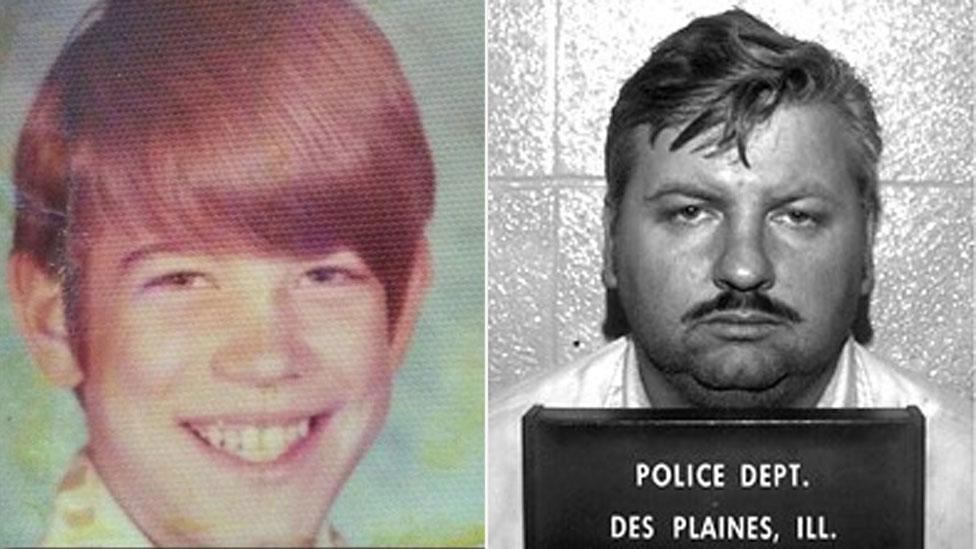
How Gacy Hunted Boys In Plain Sight
The mechanics of his murders were almost industrial in their repetition. Gacy ran PDM Contractors, hiring teenage boys for cash labour, often picking them up from bus stations, hustler strips on Bughouse Square, or simply offering rides to lads who looked like they needed work. The pretext of legitimate employment was the lure. A young man could leave home telling his mother he had a building job, and never come back, and nobody at first thought to look.
Once a boy was inside the Summerdale Avenue house, the choreography began. A few drinks. A magic trick. The famous handcuff trick. Gacy would slip on a pair of cuffs, demonstrate how to escape, then ask the boy to try. Once locked, the boy was helpless. What followed was hours of rape, torture, and suffocation. He used a tourniquet system he called "the rope trick," tightening a ligature around the throat with a wooden stick, sometimes loosening it to revive his victim and prolong the suffering. He raped some of them while reciting the 23rd Psalm. He told one survivor, before letting him go, that he was the executioner. He believed it.
The hunting ground was deliberate. Bus stations, gay bars he frequented under aliases, building sites, and the boys he employed directly. Many victims were runaways, drifters, or sex workers, lads on the margins whose disappearances slid past the desks of overworked detectives in 1970s Cook County. Gacy understood the maths of indifference better than most predators ever do. He picked targets the system had already half-discarded, and the system, for a long stretch of those six years, obliged him.
The Crawl Space That Held A Cemetery
The number that haunts this case is 26. Twenty-six bodies stacked, layered, and dissolved in lime in the crawl space of a single suburban house. Three more buried elsewhere on the property. Four dumped in the Des Plaines River when, by his own admission, he ran out of room beneath the floorboards. He kept a meticulous internal map. He remembered which lad lay where. He poured concrete over some, lime over others, and slept upstairs every night for years with the smell rising through the heating ducts.
Neighbours had complained about the stench for years. Gacy blamed broken sewer lines, dead rodents, damp. The complaints stopped. The smell never did. When investigators finally entered the crawl space on December 22, 1978, it was so saturated with human remains that some of the boys had been reduced to long bones and dental fragments. Several victims remained nameless until DNA technology caught up in the 2010s.
Pause on that before you keep reading. Gacy ate dinner above a mass grave. He hosted barbecues over it. He fundraised for a local political candidate from the kitchen directly above twenty corpses. The neuroscience of accommodating that level of cognitive dissonance points to severely altered reward pathways and emotional flat-lining, not insanity. He was not psychotic. He was comfortable.
The Night Robert Piest Walked Into Hell
The end of John Wayne Gacy began with a quiet, polite 15-year-old boy named Robert Piest. On the evening of December 11, 1978, Robert finished his shift at Nisson Pharmacy in Des Plaines, Illinois. He told his mother he was going to speak to a contractor about a summer job that paid better than the pharmacy. The contractor was Gacy. Robert never came home. His mother, a nurse, refused to accept the police line that her son was just another teenage runaway. She made noise. She named the contractor. The detectives followed up.
That single act of maternal stubbornness cracked open the entire operation. Lieutenant Joseph Kozenczak of the Des Plaines Police Department led a surveillance operation on Gacy that lasted ten days. The pressure broke him in stages. Officers tailed him to restaurants. He invited them in for breakfast, charming them, sweating them, daring them. By December 21, with a search warrant in hand, detectives entered the Summerdale house and found a class ring belonging to a previously missing boy, photographs, handcuffs, and a stretch of disturbed earth in the crawl space. The first body emerged the next day. Gacy confessed soon after, drawing a diagram of his graveyard for investigators.
Want the deep psychological autopsy of every confession session and the moments his mask slipped on the witness stand? John Wayne Gacy Decoded walks you through it interrogation by interrogation.
The Two Men Inside One Body
The most quoted Gacy line, repeated to detectives, psychiatrists, and journalists, was that the killings had been done by an alter ego he called Bad Jack or Jack Hanley. Real John, in his telling, was the businessman, the volunteer, the friendly neighbour. Bad Jack was the predator who emerged when the lights went down. Defence lawyers tried to spin this as evidence of dissociative identity disorder. The court did not buy it. Neither did the doctors who examined him. Neither, frankly, should you.
What Gacy was demonstrating is something psychology calls externalisation of blame, weaponised to its absolute limit. By naming the killer Jack, he could keep loving John. He could grieve himself, defend himself, even like himself, while disowning the most monstrous behaviours imaginable. It is the same psychological move every functional abuser makes, scaled up and given a costume. The childhood pattern is the seed. The father's voice told young John he was worthless and disgusting. The adult John could not survive being that. So, he split. The disgusting parts became Jack. The acceptable parts became the precinct captain.
This is the hidden tragedy of his pathology, and it is also the warning. People who cannot tolerate any wound to their self-image are the most dangerous animals in the room, because the cost of protecting that self-image will eventually be paid by somebody else. Gacy's fragility, dressed in a clown costume, killed 33 people.
What Gacy Teaches Us About Spotting Predators
The myth that monsters look like monsters has done more damage to public safety than any single law could ever fix. Gacy was overweight, suburban, beaming, civic-minded, and in many photographs genuinely warm. The lesson is not that everyone smiling is hiding a dungeon. The lesson is that the surface tells you nothing reliable, and the patterns that matter sit underneath.
Look for the chronic need to be admired. Look for stories that always cast the teller as victim or hero, never as ordinary. Look for the casual cruelty about people lower on the social ladder, the throwaway slurs about "those types." Listen for grandiose claims about connections, awards, power. Notice the alcohol or substance pattern that lets the mask slip after dark. Watch for the relentless drive to be near children, teens, or vulnerable adults under the guise of helping. Single signals mean nothing. The constellation is the warning. Read more on this in why serial killers keep fooling us, and on the same fluency of social camouflage in the psychology of Ted Bundy.
The Question Nobody Asks About John Wayne Gacy
The question every documentary tiptoes around is this. If Gacy had never been caught for the 1968 Iowa sodomy conviction, would he still have killed 33 people? The instinct is to say yes, because the urges were already there. I think that misses something. The Iowa prison sentence taught him exactly how the system fails to track its own predators. He was paroled in 18 months out of a 10-year sentence. His record was sealed when he moved to Illinois. He used what he learned. He understood that authority responds to confidence, that records vanish across state lines, that respectable men get believed by default. Prison did not rehabilitate him. It trained him.
The other question worth chewing on. He genuinely seemed to enjoy clowning. He drew clown self-portraits in prison and sold them. He once told a reporter that a clown can get away with anything. He was telling on himself. The greasepaint was a confession nobody could read until the floorboards came up. The same fluency of social camouflage runs through Dahmer Decoded and Nilsen Decoded.
Gacy was executed at Stateville Correctional Center on May 10, 1994. His final words were "kiss my ass." No remorse. No gift to the families. The man who had built his life around being liked refused, in his last sentence, to be liked. I think it was the only honest moment of his adult life.
If this hooked you, the full breakdown is in John Wayne Gacy Decoded: Inside the Mind of America's Killer Clown, available on Amazon as paperback and audiobook.
For the official record, the FBI's Serial Murder report and Britannica's biographical entry on Gacy remain essential reading.
Reader Reviews
"I have read everything from Ann Rule to Robert Ressler, and Beck does something different. He makes you understand the wiring instead of just narrating the body count. Finished it in two nights." Marcus Holloway, Tucson, Arizona
"My book club picked this for true crime month and we ended up arguing about it for three weeks. The chapter on the Jack Hanley split alone was worth the price. Beck writes like a friend who happens to have a degree in human nature." Diane Fitzgerald, Cleveland, Ohio
"I avoid Gacy stuff because the photos always feel exploitative. This was the opposite. Tough to read in places, but every page earns its keep. Listened to the audiobook on a long drive and missed my exit twice." Rebecca Tran, Sacramento, California
Frequently Asked Questions About John Wayne Gacy
How many people did John Wayne Gacy kill?
Gacy was convicted of murdering 33 boys and young men in the Chicago area between 1972 and 1978. Twenty-six of his victims were buried in the crawl space beneath his home, three were buried elsewhere on the property, and four were thrown into the Des Plaines River once the crawl space ran out of room. Several victims remained unidentified for decades, with new names being added through DNA testing as recently as 2021.
Why did John Wayne Gacy dress as a clown?
Gacy joined a local "Jolly Joker" clown club in the mid-1970s and performed as Pogo the Clown and Patches the Clown at children's parties, charity events, and parades. The costume was part of a broader civic persona that included political volunteering and contracting work. Psychologists believe the clown identity served a deeper purpose, allowing him to enjoy the disarming social cover the makeup provided. He himself once remarked that a clown can get away with anything.
What were John Wayne Gacy's last words?
Before being executed by lethal injection at Stateville Correctional Center on May 10, 1994, Gacy was asked if he had any final statement. According to witnesses, he replied "kiss my ass." He expressed no remorse for the murders, made no apology to the families of his victims, and provided no further information about any unidentified bodies. The defiance of the line is consistent with a lifetime of refusing accountability.
About The Author
 Craig Beck is the world's foremost expert on persuasion and human behaviour. A certified NLP Master Practitioner, former UK broadcaster, and bestselling author of more than one hundred books, he has spent two decades reverse engineering why human beings say yes, comply, fall in love, fall apart, and sometimes kill. More than a million readers across the globe have used his work to understand the hidden mechanics of influence, motivation, and decision making. He does not teach theory from a lectern. He shows you, in plain English, how the wiring of humanity works once the cover is pulled off.
Last updated May 9, 2026.