
Son Of Sam Decoded: The Dark Psychology of ‘.44 Caliber’ David Berkowitz
May 14, 2026Son Of Sam Decoded: The Dark Psychology of ‘.44 Caliber Killer’ David Berkowitz
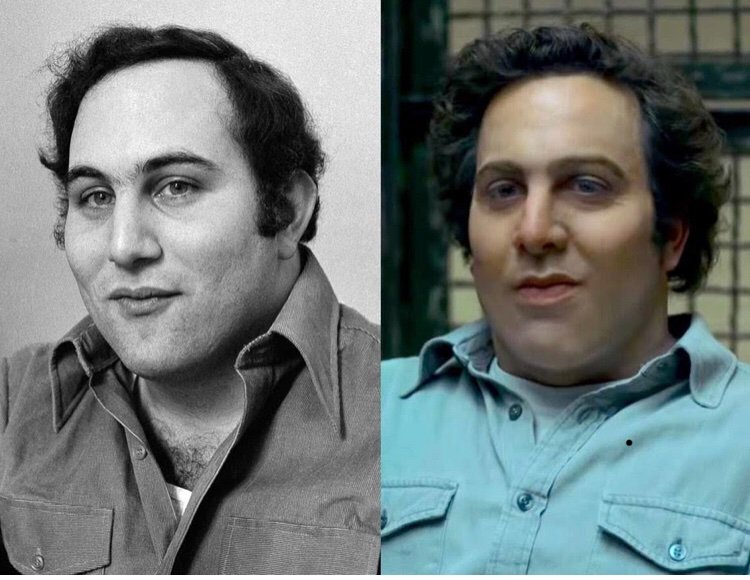
David Berkowitz, known as the Son of Sam and the .44 Caliber Killer, is the New York postal worker who shot fourteen people in thirteen months between July 1976 and August 1977. Six died. He was arrested on 10 August 1977 and is serving 365 years at Sullivan Correctional Facility. He blamed a demonic dog. The actual psychology is far darker, far lonelier, and far more revealing about the men your daughter still walks past on the bus every morning.
 The .44 calibre Bulldog he carried in a brown paper bag through the streets of three New York boroughs has become one of the most photographed revolvers in American crime history. The man who carried it has become one of the most studied lonely postal workers in the history of the species. Yet, almost fifty years on, the central question about David Berkowitz still goes mostly unanswered in the popular accounts. Why did a polite, soft, balding twenty three year old from Yonkers turn into the man who emptied the discotheques of an entire city for thirteen straight months?
That is what we are dismantling today. Drop the demonic dog. Drop the satanic cult chatter. Drop the famous parking ticket. They are the wrapping. We are after what was inside the box.
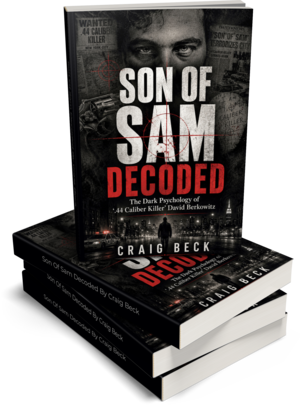
Want the full forensic breakdown? Get Son Of Sam Decoded on Amazon and read the .44 calibre case the way it should have been told from the beginning.
Who Was David Berkowitz
On paper, David Richard Berkowitz was the kind of young man nobody in mid seventies New York would have crossed the street to avoid. Born in Brooklyn on 1 June 1953, he was adopted as an infant by Nathan and Pearl Berkowitz, a kindly Jewish couple from the Bronx who had been told the baby came from a respectable family. He served three quiet years in the army, including a tour in South Korea. He came home in 1974 to a stepmother he did not like and a long held question about his origins that he had begun, by then, to investigate. He took a job sorting mail on the overnight shift at the Bronx General Post Office. He paid his rent on time. He brought his own tuna sandwiches. He waved hello to the women down the corridor.
You would have walked past him without a glance. Almost everybody did.
In the small rented flat on the seventh floor of 35 Pine Street in Yonkers, however, the walls had begun, by the summer of 1976, to be covered in a different kind of paperwork. Lists of women. Inverted crosses. Phrases about a wicked king. A diary cataloguing several thousand fires he had set since boyhood. Letters to his neighbours threatening their dogs. The polite postal worker who clocked off the overnight shift at six in the morning was, by the time he climbed the seven flights of stairs to his front door, a different person from the man his colleagues had spent the night standing next to. They had not noticed. He was good at the mask.
The Childhood That Built a Killer
If you want to know how a soft adopted boy from the Bronx becomes the most feared serial killer in modern American history, you must start before he could speak. The infant David was the inconvenient result of an affair between a married woman in Brooklyn called Betty Falco and a married man she had no intention of leaving her own marriage for. She handed him over to the adoption agency because keeping him would have complicated two simultaneous lives. That single fact, encoded into the rhythm of his first weeks of life, is the wound that everything else flows from. It is also the wound that almost every popular account skips past in its rush to get to the Bulldog.
The early signs were textbook. He wet the bed long past the age when most children stop. He set hundreds of small fires across the Bronx and Brooklyn, keeping a careful numbered ledger of each one in his bedside drawer. He tortured small animals in his bedroom when he was eleven. The combination has been called the MacDonald triad. The grim joke about the triad, as the criminal psychology literature has noted for decades, is that while not every troubled child who exhibits these behaviours grows up violent, almost every violent offender, when his early years are examined, turns out to have walked the same road.
The killing blow came in 1974. He tracked Betty Falco down. He met his half sister Roslyn. He learned the truth he had always half suspected. The conversation healed nothing. The conversation confirmed his worst suspicion in plain English over a coffee table on Long Island. From that afternoon, the fires came back, the dogs and the demons came in behind them, and the funnel inside him began narrowing at a faster rate than it had been narrowing across the previous twenty one years. The actual story of the Son of Sam case does not start in a parked car on Buhre Avenue in July 1976. It starts in a Brooklyn delivery ward in 1953 with a married woman who never wanted the baby in the first place.
The Dark Triad Hiding in a Postal Uniform
Forensic psychologists describe a cluster of three traits, often grouped together, that sit at the core of most serial offenders. Psychopathy, narcissism, and Machiavellianism. Berkowitz was a textbook case in all three, although you would not have spotted any of them across a tea break at the parcel table.
The psychopathy showed in the flatness of his emotional life. He did not love. He did not grieve. The death of his adoptive mother Pearl, when he was fourteen, produced almost no visible response in him. The narcissism showed in his certainty that the wider world owed him something it had been refusing to deliver. He believed, in the language of his own diaries, that he had been chosen for some larger purpose. The Machiavellianism showed in the cold patient organisation of the killings. He kept records. He selected unfamiliar vehicles. He picked boroughs he did not work in. He drove home calmly afterwards each time and put the gun back in the drawer.
Charm, in the conventional sense, was not part of his presentation. He was not Ted Bundy. He was the quieter, lonelier kind of predator, the one who hides behind invisibility rather than behind a winning smile. The same wiring runs underneath both types of killer. The expression on the surface is different. The engine room is the same. You can read more about how these patterns appear in other Decoded breakdowns on craigbeck.com.
The Hunt: How Berkowitz Chose His Victims
Between July 1976 and July 1977, the soft postal worker drove the streets of the Bronx, Queens, and Brooklyn in a yellow 1970 Ford Galaxie, with a Charter Arms Bulldog revolver wrapped in a brown paper bag on the passenger seat. He cruised, listened, watched. He chose young women, usually with their boyfriends, sitting in parked cars on quiet residential streets. He chose Donna Lauria in Pelham Bay. He chose Christine Freund and Virginia Voskerichian in Forest Hills. He chose Stacy Moskowitz in Bath Beach. Eight scenes in total. Six dead. Seven wounded, including the survivor Robert Violante who walked out of Kings County Hospital with one glass eye and only partial vision in the other.
The victims were not random in the way the early newspaper coverage suggested. They were young, attractive, visibly loved by someone sitting next to them, the kind of women who had spent their lives ignoring the Berkowitzes of the world without ever noticing they were doing it. The killings were the unwanted boy's primitive correction of the original verdict. For a few seconds in the muzzle flash, the rejection moved from him to her. The high lasted only as long as the smoke.
Between shootings, he wrote letters. He addressed one to Captain Joseph Borrelli of the NYPD and dropped it at the scene of the Suriani and Esau murders in April 1977. He sent another to the columnist Jimmy Breslin at the Daily News in late May. The Breslin letter, with its famous opening line about the gutters of New York City, ran in the paper on 5 June 1977 and pushed his case into national consciousness inside a single news cycle. The letters were not strategy. They were the long delayed correspondence of a child who had finally found a way to make the world write his name in print.
Hooked yet? The book digs into every line of those letters, every wall in apartment 7E, and every survivor's half century. Pick up Son Of Sam Decoded here while you have the link to hand.
The Yellow Galaxie and the Fifteen Dollar Parking Ticket
The case did not break because of brilliant police work. Operation Omega, the largest manhunt in the city's history at the time with over three hundred detectives at its peak, had run for over a year without a single useful suspect. The case broke because Berkowitz parked the Galaxie too close to a fire hydrant on Bay 17th Street in Bath Beach on the night of 31 July 1977, the night he shot Stacy Moskowitz. A traffic warden, walking her usual beat earlier that evening, slipped a fifteen dollar ticket under his windscreen wiper. A woman called Cacilia Davis, walking her small white Pomeranian on the same street a few minutes later, saw him swing the revolver out of the paper bag a minute before the shots. She rang the precinct four days afterwards.
It took the NYPD ten days to connect the ticket to the car to the address in Yonkers. Detective John Falotico tapped on his driver's window at around ten past ten on the evening of 10 August 1977. Berkowitz looked up at him with the patient smile of a man who had been waiting for this exact moment for thirteen months and said the line that has been quoted ever since. "Well, you got me. What took you so long?" The most aggressive manhunt of its era was concluded by a parking warden, a woman with a dog, and a quiet flat in Yonkers that had been on the local police books for over a year and a half before anyone in Manhattan thought to ask.
The Born Again Cell at Sullivan
The David Berkowitz who pleaded guilty in May 1978 has not been the same man, on the surface at least, for several decades. After a 1979 prison stabbing at Attica that nearly cost him his life, he was eventually transferred to Sullivan Correctional Facility in Fallsburg, New York, where he has remained ever since. In 1987, by his own account, a fellow inmate handed him a pocket Bible in the yard. He read it. He read it again. He began calling himself Son of Hope. He has refused parole at every hearing since becoming eligible in 2002, telling the board he deserves to serve every day of his 365 year sentence.
 The conversion, whatever its sincerity, has performed a useful psychological function for the man at the centre of it. It has allowed him to keep generating an income of attention without admitting that the income is, in some quiet sense, the same thing he had been generating in 1977 with a different tool. Then, the gun. Now, the testimony. He answers thousands of letters a year from evangelical Christians around the world. He gives the occasional television interview. He hints, in carefully ambiguous correspondence, that he was not the only shooter in the .44 case. The wider story keeps him interesting to the next visitor at the prison gate. He continues to feed it.
What Berkowitz Teaches You About Spotting the Wrong Kind of Quiet
If you take one practical lesson out of the Son of Sam case, it is that the dangerous person in the room is almost never the loud one. The loud man at the bar wants attention now. He is finding it. The quiet man at the end of the bar, the one nobody is paying any attention to, the one who has been sitting there for an hour with the same beer and the same small forgettable smile, is the one who has been working out, in the privacy of his own head, what he is going to do about the long uncomfortable feeling of being unseen. That feeling is, in some lives, the early stage of the same wound that turned the Berkowitzes and the Dahmers and the Gacys of the world into the men your local newspaper had to write about.
Most lonely men do not become serial killers. The overwhelming majority go on to live small unhappy lives that hurt nobody but themselves. But every serial killer, when traced back, began as one of those lonely men. The triggers that distinguish one from the other are individual and complex. The cultural climate, the access to weapons, the early childhood, the perceived debt against the world, the available outlets for fantasy, all of them play their part in deciding which of the quiet men, in any given generation, eventually walks out of his small flat with a brown paper bag in his hand. You can read more breakdowns of this same pattern across the wider Decoded series.
The Question Nobody Asks About David Berkowitz
Every popular account of the Son of Sam case tends to ask the wrong questions. Was the dog really demonic. Was there a satanic cult. Did John Carr pull the trigger on one of the shootings before he died in Minot in 1978. These are interesting questions, in the way conspiracy questions always are. They are also a distraction from the actual question, which is much harder and much more useful to ask out loud.
The actual question is, what happens to a child who learns, before he can speak, that his existence is inconvenient. The answer in the case of David Berkowitz is the eight shootings, the wall writings, the letters, the conversion, and the half century of self mythologising from inside a maximum security cell. The answer in other cases is something different. Some of the inconvenient children become tax inspectors. Some become writers. Some become alcoholics who hurt only themselves. A small percentage become the men whose names live in the back of the brown manila folders at One Police Plaza. The boundary between the categories is thinner than the comfortable reader of true crime would like to believe.
According to the FBI's Behavioral Analysis Unit, the demographic of the typical lust killer has barely changed in fifty years. Lonely. Damaged. Often adopted or raised by parents who never quite welcomed them in the first place. Patient. Patient enough to wait until the perfect moment in the perfect parked car. Patient enough, sometimes, to wait their whole lives without ever crossing the line at all. The Berkowitzes are the ones who crossed. The unanswered question of the case is how many of the others, in any given decade, do not cross only because nothing in their environment quite gives them the final permission.
The cultural moment in nineteen seventies New York was not a moment of restraint. The bicentennial year of 1976 produced fireworks for the country and a hand cannon for the man on Pine Street. The decade was producing, by quiet collective negligence, a steady supply of damaged young men whose fantasy lives had been allowed to swell, decade by decade, under the weight of cheap pornography, cheap weapons, and cheap apocalyptic literature. He was one of them. He was not the last. The factory that built him is, on every available measure, still running. The badges on the front gate have just been changed.
If you want the full anatomy of that factory, the wider cell, the letters in full, the survivors in their own voices, and the psychology decoded chapter by chapter, Son Of Sam Decoded is available now on Amazon. The case that the headlines kept simple is the case the book finally lets you understand.
What Readers Are Saying
"I have read every Son of Sam book on the market. This is the first one that actually tells you why. Beck dismantles Berkowitz piece by piece. The best true crime psychological breakdown I have read in years." Marcus Halpern, Austin, Texas
"Craig Beck writes like he is sitting across the table from you with a pint in his hand. The chapters on the Pine Street apartment and the survivors gave me chills. I could not put it down." Diane Whitcomb, Portland, Oregon
"As a retired homicide detective from New York City, I can tell you Beck nails the psychology better than the official files ever did. Read this if you want to understand how lonely men become monsters." Frank DiCarlo, Staten Island, New York
About the Author
 Craig Beck is the world's foremost expert on persuasion and human behaviour. A certified NLP Master Practitioner, former British broadcaster, and the bestselling author of more than one hundred books, he has spent over two decades reverse engineering the mechanics behind why human beings say yes to the things they say yes to. More than a million readers across the globe have used his work to understand how influence, decision making, and motivation actually function in the wild. He does not teach theory. He shows you, in plain language, how the wiring of humanity runs underneath your feet.
Frequently Asked Questions
Why did David Berkowitz claim a dog told him to kill?
The demonic dog story functioned as psychic insulation rather than as a literal hallucination. Berkowitz had developed, by 1976, a private mythology in which his neighbour Sam Carr's black labrador Harvey was channelling the orders of a six thousand year old demon. The story let him commit the killings without internally taking responsibility for them. In clinical terms, this is a textbook externalisation of blame, common in lust killers with damaged early attachment, and a way of preserving an island of innocence while pulling the trigger.
Did the Son of Sam act alone?
Officially, yes. David Berkowitz confessed to all eight shootings between July 1976 and July 1977 and has never seriously retracted that confession in any court setting. However, investigators including the late Maury Terry built a long running case that an offshoot satanic cell in Yonkers was involved in some of the shootings, with John and Michael Carr as alleged co conspirators. The Yonkers police re classified the file as open after a 1996 grand jury looked at the evidence. No further prosecutions have ever followed.
Where is David Berkowitz today?
David Berkowitz remains incarcerated at Sullivan Correctional Facility in Fallsburg, New York, where he has been held since the early nineteen nineties. He is now in his early seventies. He has refused parole at every hearing since becoming eligible in 2002, telling the board he deserves to serve every day of his 365 year sentence. He runs a Christian ministry from his cell under the self chosen name Son of Hope, answering thousands of letters a year from evangelical correspondents around the world.
Last updated 14 May 2026