Peter Sutcliffe Decoded: Inside the Yorkshire Ripper's Mind | Craig Beck
May 16, 2026Peter Sutcliffe Decoded: Inside the Yorkshire Ripper's Mind
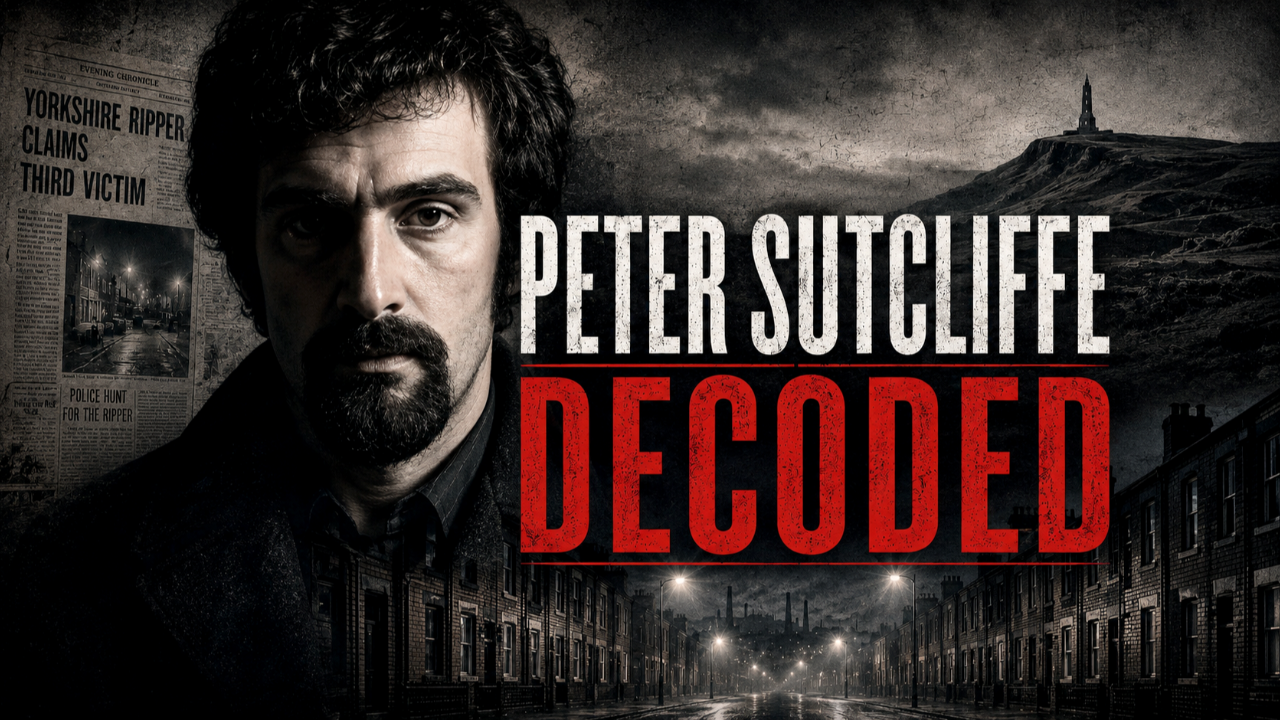
Peter Sutcliffe, known to the world as the Yorkshire Ripper, was a Bradford lorry driver who murdered thirteen women and attempted to kill at least seven others between October 1975 and November 1980. Born in Bingley in 1946, he hid behind a quiet, almost forgettable persona while running the most brutal serial murder campaign in modern British history. The largest manhunt in UK policing failed to catch him for over five and a half years. Two uniformed officers from South Yorkshire Police finally arrested him on a Sheffield driveway in January 1981.
That is the surface. That is the press version. What follows is what the press almost never gets to.
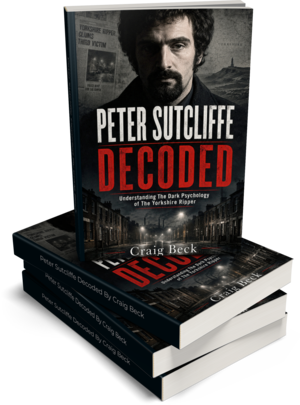
Get the full psychological breakdown in Peter Sutcliffe Decoded on Amazon today.
Who Was Peter Sutcliffe
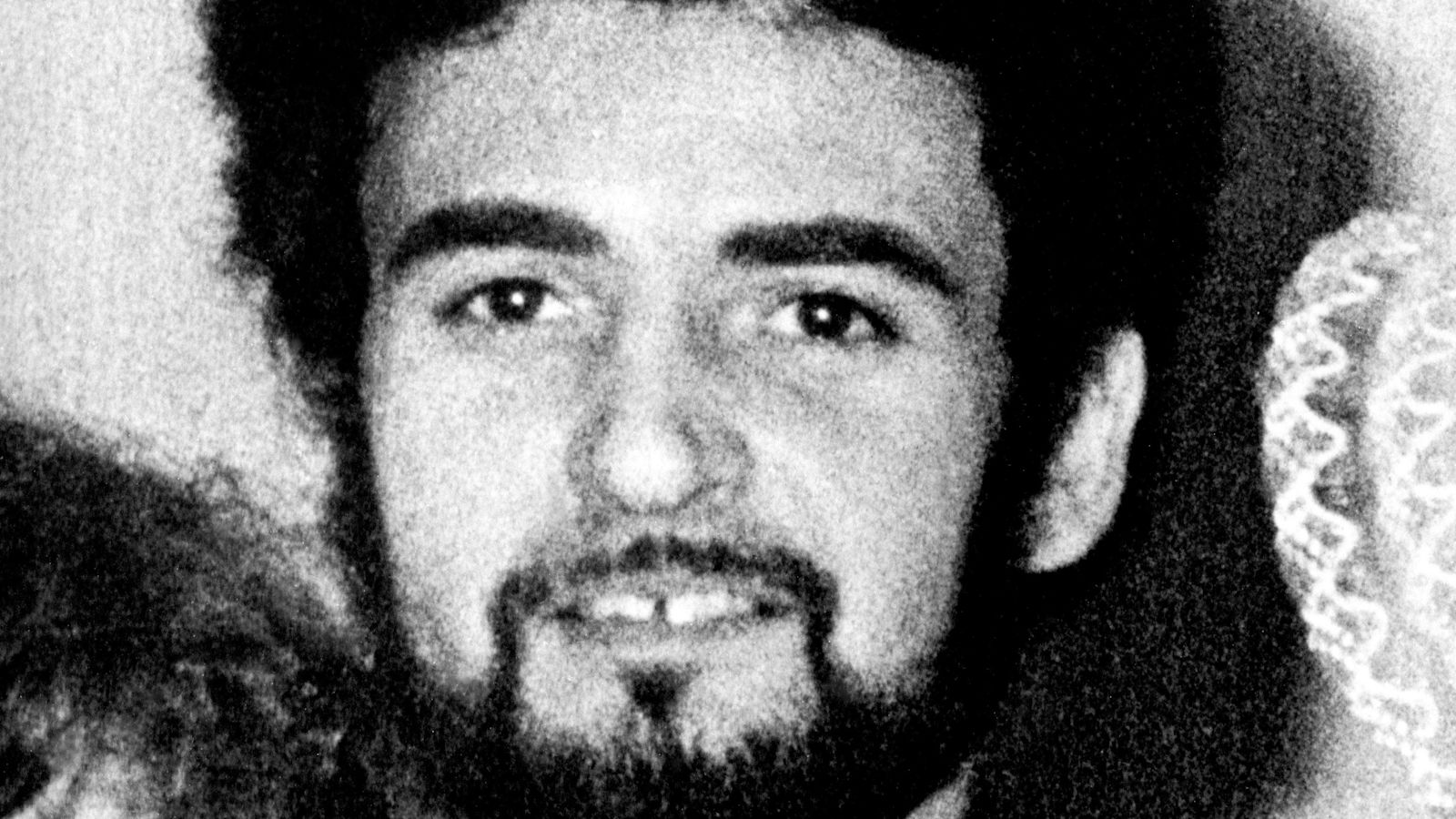
 To anyone who knew him during the murders, Peter Sutcliffe was the kind of man you forgot the moment he left the pub. He drove lorries for a Bradford haulage firm. He went to chapel on a Sunday. He pushed his wife's shopping trolley around Asda on a Saturday morning. He had a soft, slightly hesitant voice. He answered every question politely. He held doors open for the women he later went home and tried to kill.
His wife, Sonia, was a primary school teacher of Czech and Polish heritage who had been diagnosed with paranoid schizophrenia in 1972, nine years before his arrest. They lived in a tidy semi on Garden Lane in Heaton, a respectable district of Bradford. They saved their money. They argued, in the polite way that small, careful marriages of the 1970s argued, about the price of a new boiler. The neighbours described them with the same word everybody who ever met Sutcliffe used about him. Ordinary.
That word is, I think, the most important word in the entire case file. The word is not a mask description. The word is the honest surface down description of a man with almost no other internal content. To understand why, you must walk a long way back from the playing fields of Leeds and into the small terraced house in Bingley where the wiring was laid.
The Bingley Boy Who Watched From the Corner
He was born on 2 June 1946, the eldest of six, to John and Kathleen Sutcliffe. John was a baker, a labourer, a tenor in the church choir, and the most enthusiastic philanderer in the postcode. Kathleen was small, gentle, devout, and entirely overwhelmed. The household ran on John's voice. The smaller bodies in the room learned, very young, to make themselves smaller still.
Peter clung to his mother. He hid from his father. He refused school for weeks at a time. He was bullied at St Joseph's primary for being weedy, silent, and unable to fight back. He developed, in the absence of any safer route to belonging, the habit of stepping outside the action and watching it from a corner. He watched at the school gate. He watched on the moors above the village at dusk, with a torch, peering at courting couples through the windows of parked cars. He watched at Bingley Cemetery, in the years after he left school, where he worked as a grave digger and climbed down into open graves to look at faces nobody else was permitted to see.
You can read most serial murder cases without the watching habit appearing on page one. You cannot read this one. The trick of watching becomes, in his case, the workshop in which the fantasy of violence against women would later be constructed. The privacy of being unseen is the room in which every later decision was rehearsed.
The Night That Broke the Architecture
In the summer of 1969, when Peter was twenty three, his father set fire to whatever fragile inner world the boy had managed to build. John had convinced himself that Kathleen was conducting an affair with a local man. Rather than confront her in private, he engineered a public unmasking at a Bingley hotel. He invited the grown family. He produced Kathleen's overnight bag in front of her sons and daughters. He pulled out her nightdress and her underwear and held them up as evidence of her supposed betrayal.
Peter sat there and watched the only person whose approval he had ever been able to count on dismantled in public by the only person whose approval he had ever wanted. Whatever was already loose in his head after years of bullying and small humiliations came off its hinges that evening and never quite found them again. Mother as madonna became mother as liar. The category called woman became the category called deceiver. The fault line was set. The rest of his adult life would run along it.
The Dark Triad in a Quiet Lorry Driver
If you want a single framework for understanding what happened next, you can do worse than the dark triad of psychopathy, narcissism, and Machiavellian cunning. Take any one of those traits away from a man like Sutcliffe and you get a violent thug who is caught inside a fortnight. Plait the three together, and you get a figure who can sit beside off duty policemen in a pub one evening and split a woman's skull on a school field a few hours later, then drive home and butter his toast without his hand shaking.
Psychopathy gives him the emotional flatness. He registers another person's suffering the way an accountant registers a figure on a spreadsheet. Narcissism gives him the conviction that his own urges are sacred, that women on a Leeds street corner exist as raw material for his needs. Machiavellianism gives him the cunning, the patience, the talent for blending in. He had all three in abundance. He also had something else underneath them that the clinical language never quite captures. A long, slow, patient hatred for women, brewed in the kitchen of a Yorkshire childhood and refrigerated in his coat pocket every time he went out at night.
How the Yorkshire Ripper Hunted His Victims
His method was deceptively simple. He drove. He looked. He picked a woman walking alone in a red light district or a quiet residential street. He pulled in, wound down the window, and offered a lift or asked a question with the polite, helpful tone that his witnesses always remembered first. He waited until she had turned her back. He brought a ballpein hammer down on the crown of her skull. He stabbed her with a Phillips screwdriver in the chest, the abdomen, the breasts. He posed the body. He drove home.
The thirteen women he was convicted of killing include Wilma McCann in Leeds in October 1975, Emily Jackson in Leeds in January 1976, Irene Richardson in Leeds in February 1977, Patricia Atkinson in Bradford in April 1977, Jayne MacDonald in Leeds in June 1977, Jean Jordan in Manchester in October 1977, Yvonne Pearson in Bradford in January 1978, Helen Rytka in Huddersfield in January 1978, Vera Millward in Manchester in May 1978, Josephine Whitaker in Halifax in April 1979, Barbara Leach in Bradford in September 1979, Marguerite Walls in Pudsey in August 1980, and Jacqueline Hill in Leeds in November 1980.
 The victim profile in the early years skewed towards women on the kerbs of the red light districts. The press, with the smug moral grammar of the period, called them working girls. The killer counted on the police treating them with the same dismissive shrug. He was, for several years, exactly right. Then, in June 1977, he killed a sixteen year old shop assistant called Jayne MacDonald who had been walking home from a night out, and the country's frame of who counted as a victim cracked. By the time he killed a third year university student called Jacqueline Hill in November 1980, the cracked frame had collapsed entirely.
The Wearside Tape That Bought Him Eighteen More Months
The single greatest gift to Peter Sutcliffe in his entire career as a killer was not his soft voice or his lorry driver's anonymous routine. It was a cassette tape posted to Assistant Chief Constable George Oldfield in the summer of 1979 by an unemployed labourer in Sunderland called John Humble.
The tape, an obvious hoax to anyone with a steady eye on the evidence, claimed to be from the Ripper. The voice on it had a thick Wearside accent. Oldfield, a tired, decent, deeply invested old fashioned detective, took the tape as authentic and built a national publicity campaign around it. Posters went up at every petrol station. A telephone line called Dial a Murderer was set up so that the public could ring in to hear the voice. The inquiry, in an unwritten but iron clad rule, began eliminating any suspect who did not have a Sunderland accent.
Peter Sutcliffe was interviewed nine separate times by nine separate teams of detectives between 1977 and 1980. He spoke with a Yorkshire accent. He was eliminated each time. The tape, in the most precise and depressing sense, bought him eighteen extra months of clear road. Three more women died because of it. The full case archive at the BBC's coverage of the Yorkshire Ripper inquiry shows how completely the investigation lost itself.
The Driveway in Sheffield That Finally Caught Him
He was caught, in the end, by accident. On the evening of 2 January 1981, two uniformed officers from South Yorkshire Police pulled into Melbourne Avenue in the Broomhall area of Sheffield on a routine vice patrol. They spotted a brown Rover V8 in the driveway of an office building called Light Trades House. Inside were a man and a woman. The woman, Olivia Reivers, was a local sex worker. The man, who gave his name as Peter Williams, claimed she was his girlfriend.
The officers noticed something the largest inquiry in British history had missed for five and a half years. The number plates on the front of the Rover had been stuck to the body with two strips of black insulating tape. They radioed the registration in for a check. The plates belonged to a brown Skoda in a yard in Dronfield. The Rover was a different vehicle altogether.
Sutcliffe asked, very politely, if he might use the toilet at the side of the building before they took him to the station. Sergeant Bob Ring, busy on the radio, said yes. Sutcliffe walked round the side of Light Trades House, stepped behind a green oil storage tank, pulled a chamois leather pouch from inside his coat, and pushed it down into the gap between the tank and the wall. The pouch contained the hammer he had been using for six years.
It took Sergeant Ring a further day and a half to remember the toilet break and walk back to the building. The hammer was sitting where the killer had left it. The arrest, when it finally took, owed absolutely nothing to the inquiry that had been hunting him. Two ordinary officers, doing the most ordinary part of their job, had outperformed thousands of detectives, twenty five thousand suspect interviews, and a four million pound budget.
The Borrowed Defence at the Old Bailey
The trial in May 1981 was its own piece of psychological theatre. The defence attempted to plead diminished responsibility on the grounds of paranoid schizophrenia. Four senior psychiatrists supported it. The judge, Sir Leslie Boreham, refused to accept the plea bargain and sent the case to a jury.
What none of the four psychiatrists had spotted, but the jury saw through inside six hours, was that the symptoms Sutcliffe described, the divine voices, the chosen mission to clean the streets, the radio messages from God, were the symptoms his wife Sonia had genuinely suffered through her 1972 psychotic break. He had borrowed them wholesale. He had been a man with no inner content of his own from a very early age, and when asked to describe his own madness, he reached, by reflex, for the nearest available script. The script belonged to the woman who had been ill in the next room of his marriage. The jury rejected the defence by ten votes to two and convicted him on all thirteen counts of murder.
What Peter Sutcliffe Teaches Us About Spotting the Quiet Predator
If you take one thing from the Sutcliffe case, take this. The dangerous men in our culture do not announce themselves. They do not shout. They do not posture. They blend. They speak softly. They hold doors. They volunteer for the church flower rota. They drive carefully inside the speed limit. They are, by every measure visible to the people who pass them in the supermarket queue, the men you would least suspect of anything at all.
The lesson the case offers is unromantic. The quiet man with no apparent interior is the man worth watching more closely than the obvious thug. The polite voice is the camouflage. The soft helpful tone is the lure. And the absence of a strong, identifiable inner self in a grown man is, in the rare cases it shows up, a warning sign no clipboard psychiatrist ever puts on the standard checklist.
You can read more about how childhood patterns shape adult predators and apply the same psychological frame to other notorious cases like Ted Bundy. Each case is its own architecture. Each one starts in the same place. A small boy. A loud father. A silent mother. A privacy that fills, over decades, with the wrong content. For deeper reading on the clinical pattern, the Psychology Today overview of serial killer profiles remains a useful entry point.
"Beck doesn't just tell you what Sutcliffe did. He tells you why his neighbours never noticed. The vacancy framework in this book is the most original take on the Ripper case I have read in twenty years."
Sarah Mitchell, Austin, Texas
"I have read everything ever published on the Yorkshire Ripper. This is the first book that made me see the man, rather than the case. Beck pulls the wiring out and lays it on the table."
James Henderson, Portland, Oregon
"Halfway through I had to put it down and pour a drink. Beck writes about psychology the way a good detective interviews a suspect, patiently, without ever raising his voice. Unmissable."
Linda Carrera, Buffalo, New York
Frequently Asked Questions
How many women did Peter Sutcliffe kill?
Peter Sutcliffe was convicted of thirteen murders and seven attempted murders at the Old Bailey in May 1981. The thirteen confirmed victims were killed between October 1975 and November 1980 across Yorkshire and Greater Manchester. Several investigators, including those involved in the later Byford review of the inquiry, have argued that he was probably responsible for additional attacks in the late 1960s and early 1970s that were never officially attributed to him. Sutcliffe denied any further victims until his death in November 2020.
Why was Peter Sutcliffe called the Yorkshire Ripper?
The press began calling him the Yorkshire Ripper in early 1977 because the pattern of his crimes, the hammer blows to the head followed by stab wounds and the posing of bodies in public places, reminded reporters of the original 1888 Whitechapel Ripper case. The geographic concentration of his early killings in West Yorkshire fixed the nickname in the public memory. Sutcliffe himself rejected the comparison in later interviews, preferring the language of a divine mission to the language of imitation.
Was Peter Sutcliffe really schizophrenic?
The jury that convicted him in 1981 did not believe so, and rejected the diminished responsibility defence by ten votes to two. He was reassessed inside the prison system in 1984 and transferred to Broadmoor Hospital, where staff treated him as a paranoid schizophrenic for over thirty years. The most plausible reading is that the symptoms he reported were lifted from his wife Sonia's genuine 1972 diagnosis, and that the defence was a calculated performance rather than a clinical reality. The truth, characteristically for him, sits somewhere in the middle and refuses to be separated from either side.
About the Author
 Craig Beck is the world's foremost expert on persuasion and human behaviour. A certified NLP Master Practitioner, former UK broadcaster, and bestselling author of over one hundred books, he has spent two decades pulling apart the question of why people say yes. More than a million readers around the world have used his work to understand the hidden mechanics of influence, decision making, and motivation. He does not teach theory. He shows you how the wiring of humanity really works, one case at a time.
Last updated 16 May 2026.