

Green River Killer Decoded: The Psychology, the Victims, and the DNA Breakthrough
May 15, 2026Gary Ridgway Decoded: Inside the Mind of the Green River Killer
 For twenty years, the most prolific serial killer in American history sat in the third pew of a Pentecostal church on Sundays, painted trucks at the same factory on weekdays, and went home in the evenings to a wife who packed his lunch. Gary Leon Ridgway, the man the world would learn to call the Green River Killer, murdered at least forty-nine women between 1982 and 2001 in the south end of King County, Washington. He passed a polygraph in 1987. He attended the funerals of his own victims. He looked, by every visible measure, exactly like the man two doors down from your own house. The question every true crime reader eventually asks about him is the same. How did he do it for so long? The answer is not what the headlines told you.
Want the full breakdown? Get Green River Killer Decoded on Amazon.
Who Was Gary Ridgway
Gary Leon Ridgway was born in Salt Lake City on the 18th of February 1949 and raised in McMicken Heights, a working-class neighbourhood near SeaTac airport south of Seattle. He had two brothers, a passive bus-driver father, and a mother whose dominance was the central weather system of the household. His IQ, when finally tested, came back at around eighty-two. He left high school slow, mocked, and overlooked. He served two years in the United States Navy during the Vietnam era. He came home, married three times, fathered one son, and worked the same job at Kenworth Truck Company for almost thirty years. None of that, on any reasonable summary, predicts a serial killer. And yet, by the time he was caught in 2001, he had killed more women than any other American in recorded history.
The disconnect between the resume and the reality is the entry point for every honest analysis of him. Where Jeffrey Dahmer was unsettling and Bundy was charming, Ridgway was forgettable. The most chilling thing about him was, and remains, how aggressively normal the surface looked.
The Childhood That Built the Green River Killer
Every long-running predator has a childhood you can read backwards through. Ridgway's begins with his mother, Mary Rita. She was a small, sharp, controlling woman who managed the household with an iron grip. Her middle son was a chronic bedwetter into his early teens. She handled the problem by stripping him, bathing him, and washing his genitals in front of his older brother, often into his thirteenth year. The collision in his head between shame, sexual confusion, dependence, and rage was welded into a single emotional knot he was never able to untie.
At sixteen, he led a six-year-old boy into the woods and stabbed him in the side with a knife. The boy survived. Ridgway walked away laughing. When pressed, he said he had wanted to know what it would feel like to kill someone. The statement should have set off every alarm in the system. Nobody pressed harder. The family handled it privately. He went back to school and quietly built, over the next fifteen years, the fantasy architecture that would eventually break out of his head and into the woods of south King County.
For more on how childhood damage shapes the adult predator, see Forensic Psychology Decoded, where the same patterns surface case after case.
The Dark Triad Hiding in a Truck Painter
The triad of traits that drives nearly every long-term predator was running quietly in Ridgway for decades. Psychopathy gave him the empty floor where empathy should have stood. Narcissism placed him at the centre of his own story, where the women he killed registered as supporting cast at best. Machiavellianism handed him the cold strategic patience to plan, lure, kill, and dispose without ever losing sleep over any of it. Together those three made him, in the dry clinical sense, the perfect candidate for what he became.
What set him apart from his peers was a fourth trait the literature has only recently started taking seriously, which is social blandness. Bundy had charm. Dahmer had strangeness. Ridgway had nothing. He was the man whose presence at a meeting you would struggle to remember the next morning. That blandness, which had been the engine of his humiliation at school, became the most valuable asset he ever owned. It allowed him to be unseen even when he was being seen. Police interviewed him at his own kitchen table in 1987 and walked away convinced he was not their man. The blandness, on that morning, had done its work.
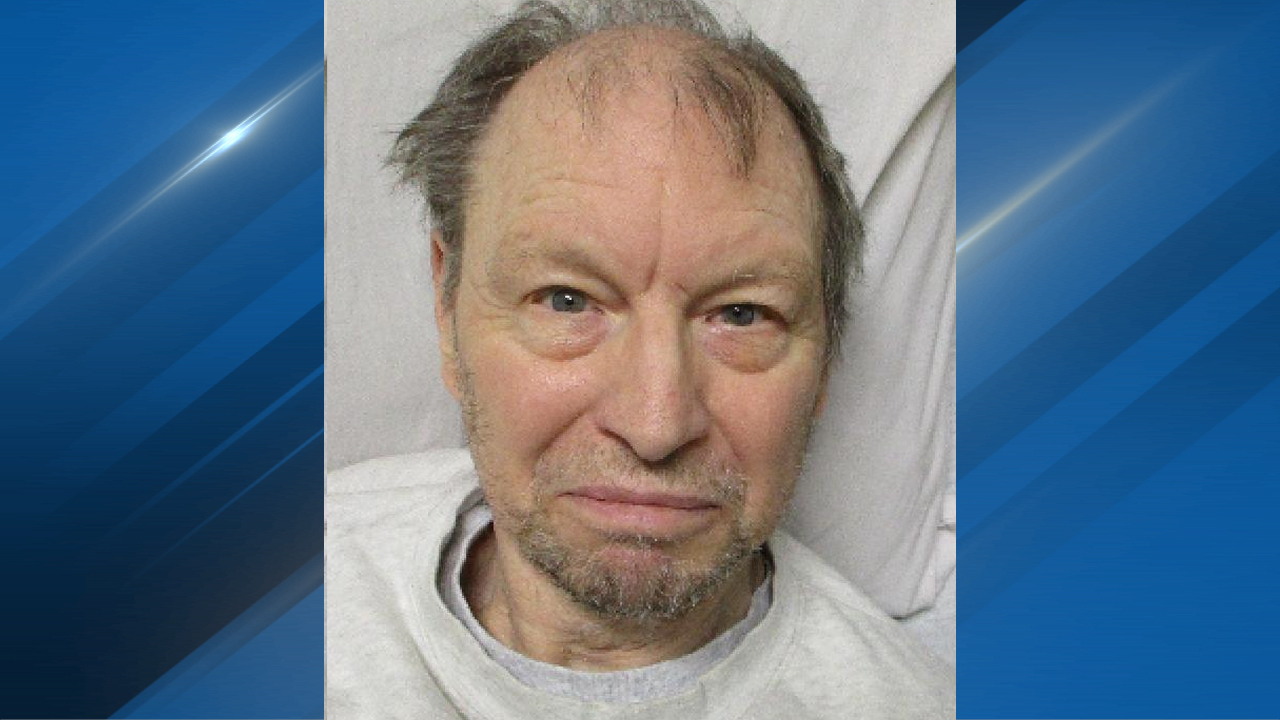
How Gary Ridgway Hunted the Women of Pacific Highway South
His routine was, by his own later admission, almost embarrassingly simple. He would finish his shift at the truck factory in Renton, drive south to the corner economy of Pacific Highway South, and slow his maroon Ford pickup beside a young woman standing on the kerb. He would smile. He would fold a few dollars over his thumb. He sometimes kept a photograph of his young son on the dashboard, where a wary woman could see it and read it as evidence that the driver was harmless. The young woman would relax. The young woman would climb in. The next twenty minutes followed a script he had rehearsed in his head for two decades.
He preferred to strangle from behind. He told the detectives later that looking into the face was, in his own word, messy. He killed many of his victims in his own bedroom, slept beside the bodies, sometimes had sex with them afterwards, and drove them out at first light to the wooded slopes he had personally surveyed for privacy. He returned to those sites repeatedly. He thought of the dead as his. The killing was, to him, less a crime and more a craft.
Want the chapter where I dismantle his hunting routine in full? Pick up Green River Killer Decoded here.
The Cotton Swab That Caught Him
Here is the small detail that, more than anything else, explains why he was eventually caught. In April 1987, three King County detectives sat at his kitchen table, asked him to take a polygraph, and asked for a saliva sample. He provided both. The polygraph cleared him. The saliva sample was wiped onto a cotton swab, bagged, labelled, and dropped into a refrigerator at the King County crime lab. There was, in 1987, no technology that could pull a useful profile off it. The detective who took the sample logged it anyway. The technician who stored it kept it cold for the next fifteen years.
 By 2001 the science had caught up. PCR amplification and short tandem repeat analysis allowed forensic scientists to read a clean genetic signature off the swab and match it to the semen on the bodies of three of his earliest victims. The match arrived on the desk of a quiet detective named Tom Jensen, who had been working the case alone in a filing cabinet for almost twenty years. The arrest came on the 30th of November 2001 at the end of his shift in the Kenworth car park. He did not run. He did not speak. He had spent his whole life waiting for someone to look at him properly. The FBI archive of famous cases still uses the Green River investigation as a teaching example of patience and forensic evolution.
The Architecture of Sustainability
This is the angle that sets the Green River case apart from every other long serial killer case in American history. Most predators eventually collapse because the killing crowds out the rest of the life. Bundy stopped attending law school. Dahmer stopped showing up at work. Ridgway never collapsed. For twenty years he killed women on the south end highway corridor while also keeping a job, a wife, a son, and a church congregation in steady working order. The ordinary life did not slip.
The reason it did not slip is the reason every other reading of him has missed. The ordinary life was not camouflage. It was the load-bearing structure of the killing. The marriage was not a costume hiding the truth, it was the place he rested between hunts. The job was where his hands stayed busy on the days he did not need them for anything else. The church was the institution that supplied him, every Sunday, with the small dose of moral self-image he needed to keep believing he was a man who could be forgiven. Strip any of those supports out, and the killing has nowhere to live. The killing rode on top of the architecture. The architecture, not the killing, was what kept him going.
For a fuller exploration of how the same kind of architecture appears in other long-running predators, see the breakdown of Harold Shipman Decoded, the trusted English doctor who killed for thirty years inside the same carefully maintained ordinary structure.
What Gary Ridgway's Story Teaches About Spotting Predators
If you want to take something useful away from his case, here it is. Do not look for the obvious signs. The signs will not be there. He did not have wild eyes. He did not have an unsettling laugh. He did not give off the small surface tells the films have trained us to spot. He looked, by every social register the rest of us read, like the most boring man in the room. The detection of men like this is, by every honest reading of the case, not a matter of social intuition. It is a matter of evidence. It is a matter of paying attention to the structure, not the face.
The married man whose marriage does not appear to make him happy and yet endures for thirty years. The employee whose job he has held for three decades without complaint and without promotion. The churchgoer who attends without ever quite engaging. The neighbour whose routines are maintained with the kind of devotion that would be catastrophic to interrupt. None of those features are evidence of anything on their own. Plenty of ordinary lives are built on the same materials. But when something is wrong, when the predator is real, the architecture is the load-bearing structure underneath. You learn to look at the structure once you have read enough cases. This one teaches it harder than most. A useful supplement is the literature catalogued at the National Institutes of Health on the behaviour sequence analysis of serial killers, which maps the long developmental arcs that produce men like him.
The Question Nobody Asks About Gary Ridgway
Here is the question that almost no popular account of him bothers with. Why did the women he killed look, on paper, so similar to his own mother? Young women. Sex workers, in his framing, or what his mother would have called wicked women. Women he could dominate. Women whose deaths he could justify, in his sealed religious accounting, as a service to God. The answer the case keeps offering is the answer most readers do not want to hear. The killings were, on some level he himself never quite admitted, the slow private working out of the rage his mother had installed in him as a boy. He could not kill her. He had been too afraid of her his whole life. He killed her surrogates instead, by the dozen, for twenty years, until the science finally caught up with him.
That is the reading that pulls every loose end together. The bedwetting. The bath. The stab in the woods. The transactional Vietnam years. The two failed marriages. The hatred of women working corners. The strangulation from behind. The compulsion to revisit the bodies. The tears when he was forgiven by a stranger in a courtroom in 2003. The whole arc, when you read it with the right frame, is one long argument with a woman who had died, untouched, in 2001. He killed her in fifty other bodies, on fifty other evenings, in fifty other woods. He never knew that was what he was doing. Most of them never do.
Ready for the full chapter-by-chapter dismantling of the psychology, the victims, and the DNA breakthrough? Read Green River Killer Decoded on Amazon today.
What Readers Are Saying
"I have read every major book on the Green River case. This is the first one that explains what was wrong with him. The architecture chapter alone is worth the price."
— Marcia D., Portland, Oregon
"Beck writes like he knows the man. The childhood section made me put the book down twice. Devastating and brilliant."
— Tony R., Phoenix, Arizona
"The clearest psychological profile of a serial killer I have ever read. He decodes Ridgway in a way the older books never quite did."
— Linda K., Charleston, South Carolina
About The Author
 Craig Beck is the world's leading authority on persuasion and human behaviour. A certified NLP Master Practitioner, former British broadcaster, and bestselling author of over one hundred books, he has spent more than two decades reverse-engineering the question of why people say yes. More than a million readers worldwide have used his work to understand the hidden mechanics of influence, decision making, and motivation. He does not teach theory. He shows you how the wiring of humanity functions, then steps back and lets you draw your own conclusions.
Frequently Asked Questions
How many women did Gary Ridgway kill?
He pleaded guilty to forty-eight murders in 2003 and to a forty-ninth, Rebecca Marrero, in 2011 after her remains were found near Auburn. His own private estimate, given during the 188 days of debriefing in 2003, ranged as high as ninety. The bones of many of those additional victims have never been recovered. The official Washington state record lists forty-nine confirmed convictions, but most investigators on the original case believe the true count is significantly higher.
Why did Gary Ridgway escape capture for almost twenty years?
Several reasons stacked together. He targeted vulnerable women whose disappearances were not aggressively pursued. He used the I-5 corridor to cross jurisdictional lines that fragmented the investigation. He had no charismatic profile that drew attention. He kept his ordinary life so steady that nobody around him suspected. And the forensic science that finally caught him, short tandem repeat DNA analysis, did not exist in usable form until the late 1990s. The case ultimately turned on a single saliva swab that had been collected in 1987 and stored for fifteen years.
Where is Gary Ridgway now?
He is serving forty-nine consecutive life sentences without the possibility of parole at the Washington State Penitentiary in Walla Walla, where he has been since December 2003. He is held on the protective custody wing, attends a small chapel service on Sundays, and has given a handful of brief interviews to journalists and criminologists over the years. He is now in his late seventies and, by every report from inside the prison, in declining health.
Last updated 15 May 2026.