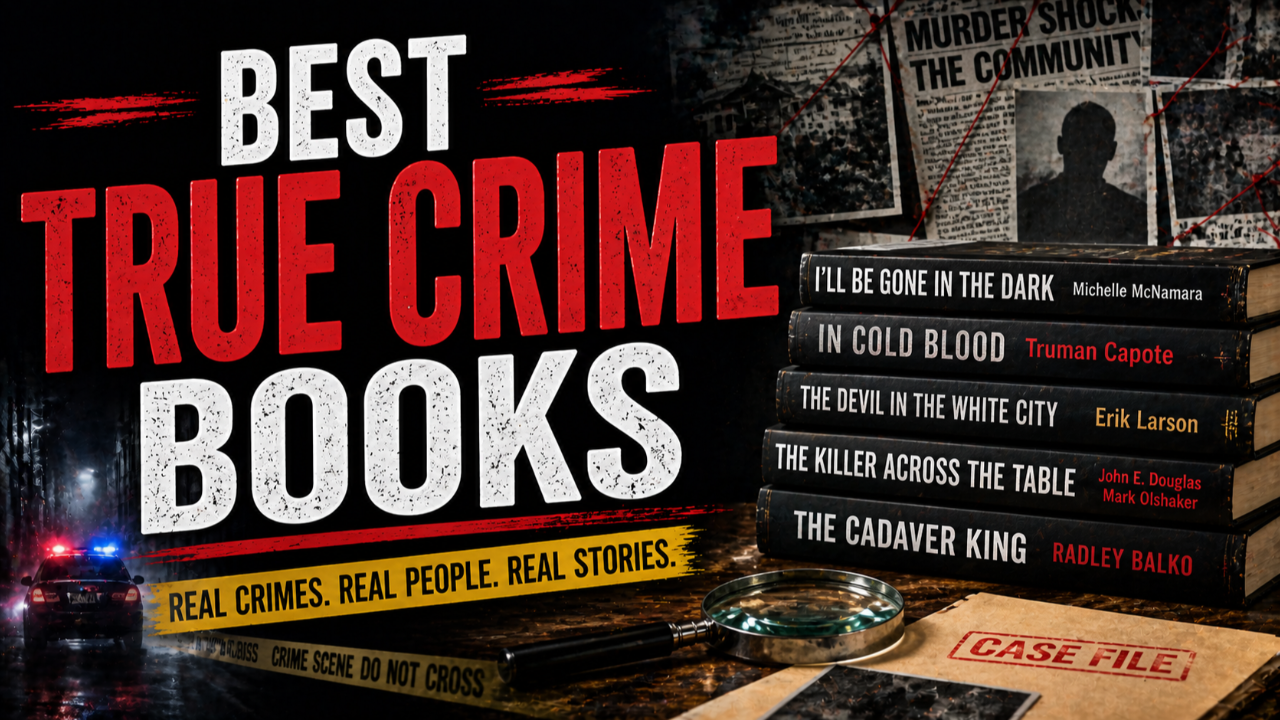
Best True Crime Books That Decode The Killer's Mind | Craig Beck
May 01, 2026Best True Crime Books
The best true crime books do not hand you a body count and call it insight. They crack open the mind that produced the violence. They study childhood damage, dark triad traits, fantasy rehearsal, manipulation tactics, and the social camouflage that lets predators sit near you on a bus without ringing a single alarm bell. Most volumes in this genre are paperwork with blood splattered across the pages. The good ones read like psychological autopsies. If you want titles worth your evenings, you want writers who explain why ordinary lives turn lethal.
Why Most True Crime Books Cheat You Out Of Insight
 Most volumes in this section are doing the bare minimum. They lay out a timeline. They describe a corpse. They quote a detective. They give you the trial. They wrap it up with a sentence pretending the lesson was obvious all along. That is not journalism. That is a magazine feature stretched into 300 pages and sold at airport price.
The deeper problem is taste. A lot of writers mistake cinematic detail for understanding. The chase. The arrest. The wig the killer wore in court. Fine, if all you want is something to scroll through on a wet Sunday. If you want the wiring, you must look earlier, longer, and far more uncomfortably than most authors are willing to. You must ask why a child grew up dreaming about pain, why an adult learned to mirror normality with surgical accuracy, and why a community kept excusing the warning signs until the bodies turned up under the floorboards.
That is where the best true crime books earn their place on a shelf. They refuse to flinch from the violence and they refuse to glorify it. They follow the thread back to the mind that authored every choice along the way.
The Psychology That Separates Great True Crime From Filler
A serious true crime book is a psychological autopsy. It examines family dynamics, humiliation, narcissism, compulsive fantasy, charm, denial, and the strange little lies people tell themselves so they can keep eating dinner next to evil. It treats violence as the end of a long sentence, never the only word.
The dark triad shows up again and again in this work. Psychopathy strips away empathy and remorse, leaving the victim as an object on a shelf. Narcissism turns the crime into a private opera, with the killer cast as both star and director. Machiavellianism supplies the cold strategy: the planning, the alibi, the smile rehearsed in front of a bathroom mirror until it becomes automatic. Skilled writers can name those traits without lecturing you. They show the wiring through behaviour, then leave you to feel the chill in your own kitchen. Research published by the National Institutes of Health on serial offender life patterns confirms how clearly this triad maps onto repeat killers, and the smartest authors lean on that science instead of guessing.
That is the difference between a book you forget by Friday and one that quietly rewires your social radar for years. For a deeper survey of the field, Craig's guide to the best dark psychology books sits alongside this one as required reading.
Why Readers Keep Coming Back To True Crime
People like to pretend the appeal is purely intellectual. It is not. Part of the draw is fear with a safe seat. You stare into the abyss while your kettle boils. Cosy little arrangement, really.
The deeper hook is pattern recognition. Readers are quietly trying to answer a private question: how do I spot the dangerous person before the damage is done? That is why the best true crime books refuse to linger over wounds. Wounds are cheap. What people want is the hidden mechanic, the grooming behaviour, the dead-eyed compartmentalisation, and the way a predator earns trust before spending it like loose change.
Procedural crime writing tells you how a case was solved. Psychological crime writing tells you how the case became possible in the first place. One is a puzzle. The other is a warning label. And the warning label is what keeps readers scrolling at three in the morning, telling themselves they will sleep eventually. The American Psychological Association makes this point clearly in its conversation with forensic psychologist Louis Schlesinger, where he describes how the public's hunger for these stories is really a hunger for protection.
The Different Schools Of True Crime Writing
Pretending all true crime books are doing the same job leads to bad recommendations and disappointed readers. Some titles are investigative, built around fresh reporting and unearthed evidence. Some are courtroom-driven, focused on legal strategy, jury psychology, and the theatre of cross-examination. Others are biographical, tracing a killer's life from early damage to final collapse. Each school has its place, and each can be done brilliantly or lazily depending on the author behind it.
Then there is the category most readers are quietly hunting for, even if they would rather not admit it: the psychological deep dive. These books care less about body counts and more about mental architecture. They ask why one person becomes a manipulator, another a compulsive predator, and a third a public charmer hiding private rot. Pieces like Craig's forensic psychology versus pop true crime piece sit firmly in this camp, and they tend to leave a far longer aftertaste.
If you want adrenaline, pick the investigative route. If you want understanding, choose the psychological one. If you want both, hunt for authors who can move between the facts of the case and the inner logic of the offender without turning the whole thing into tabloid mush. That balance is harder than it looks. Too much theory and the book drifts into armchair diagnosis. Too much reporting and it goes emotionally flat.
The Dangerous Myth Of The Obvious Monster
The most damaging idea in popular crime writing is that killers are easy to spot. They are not. If they were, half of the books on these shelves would not exist and a lot of victims would still be alive somewhere watering tomatoes.
Many predators function very well in public. They mirror normality. They borrow empathy without owning much of it. They use status, humour, helpfulness, and confidence as camouflage. In persuasion terms, they understand influence long before their victims understand threat. Ted Bundy turned approachability into a weapon. Dennis Nilsen offered loneliness a kindness it could not refuse. Harold Shipman wore a stethoscope and a bedside smile while the body count climbed in plain sight on his patient list.
So, the most unsettling true crime books focus on the gap between appearance and reality. A respected professional. A helpful neighbour. A charming boyfriend. A harmless eccentric. Then the mask slips and everyone repeats the same doomed sentence: "He seemed so normal." Of course he did. That was the entire point. The mask was the operating system.
How To Pick The Best True Crime Books Worth Your Time
If a book promises shock, be suspicious. Shock is cheap. Understanding is expensive. Look for authors who spend real time on the inner world of the offender without glamorising him. That means examining family dynamics, early humiliation, fantasy escalation, social performance, and the slow corrosion of empathy. It also means treating victims as people rather than props in someone else's story.
Pay attention to how an author handles certainty. Honest crime writing admits where motive is inferred rather than proven. Sometimes the evidence is rich enough to map a clear psychological pattern. Sometimes it is not. Honest writing leaves room for that, instead of forcing every killer into a tidy box with a label glued on the front.
Voice matters too. This genre attracts a flood of sensational nonsense because murder sells. A blunt, intelligent voice cuts through the noise and makes a case feel uncomfortably real without wallowing in the mess. When that voice also understands persuasion, denial, and self-deception, the result is far more disturbing than any lurid crime scene description ever managed. Browse the full true crime archive for examples of writers who do this without resorting to gore as decoration.
What The Right Book Teaches You About People
At their best, true crime books are education sharp enough to entertain. They show how manipulation works. They expose the stories people tell themselves to excuse the inexcusable. They reveal how status hides pathology and how charm functions as a lockpick.
Once you understand the psychology of coercion, narcissism, fantasy, and emotional detachment, you start spotting smaller versions of the same machinery everywhere. The boss who weaponises insecurity. The friend who flatters you while quietly keeping score. The partner who gaslights, then gifts. Not every manipulator becomes a killer, thank God for small mercies, yet the structure of influence stays worryingly consistent across them all.
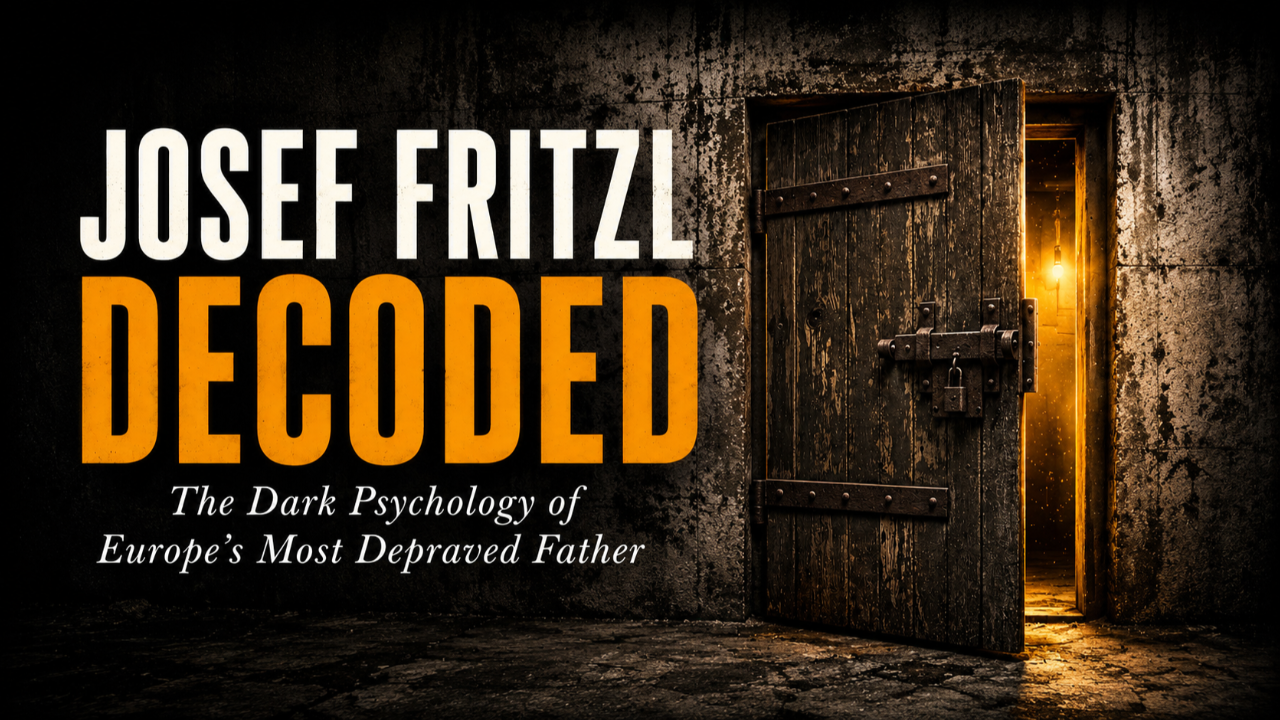
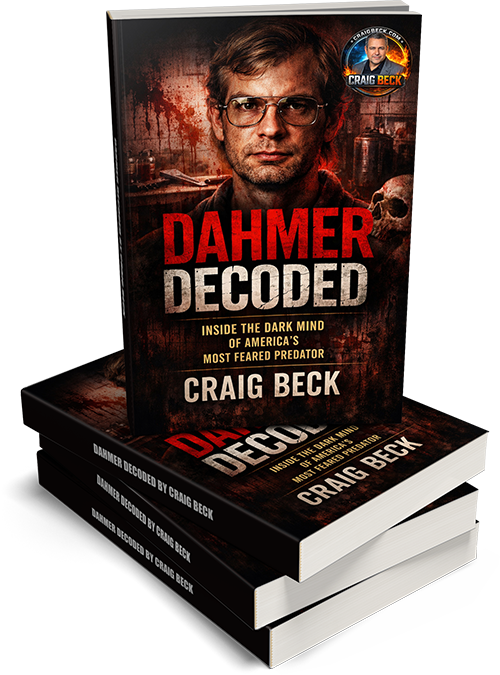
So, the right true crime book stays with you long after the killer is buried. It does more than report what happened in some distant case file. It teaches you how darkness learns to speak in a human voice, and that knowledge has a way of saving you from the smaller predators who never make headlines and never see the inside of a courtroom. If you want a single title that carries that lesson with bone-rattling clarity, the Dahmer profile is a good place to start before you reach for the longer audiobook.
What readers are saying. "I've read every popular true crime book on the market and most of them blend together by chapter three. This one stayed with me for weeks. Craig Beck explains the why with the kind of clarity that almost feels intrusive. Five stars and a slightly worse night's sleep." Marcus Holloway, Denver, Colorado.
"I picked it up expecting another grim parade and got a psychology lesson instead. The way Beck unpacks fantasy escalation and emotional detachment is sharper than anything I read in college. I now hand a copy to anyone who tells me they 'love true crime' to see if they can handle the real stuff." Janelle Ortiz, Tampa, Florida.
"My husband bought it for me as a joke after I binged a documentary, and I read it in two sittings. It is dark, witty, and unflinching. Beck writes like a friend who happens to know exactly how a monster is built. I have already pre-ordered the next one in the Decoded series." Rebecca Lindstrom, Minneapolis, Minnesota.
About The Author
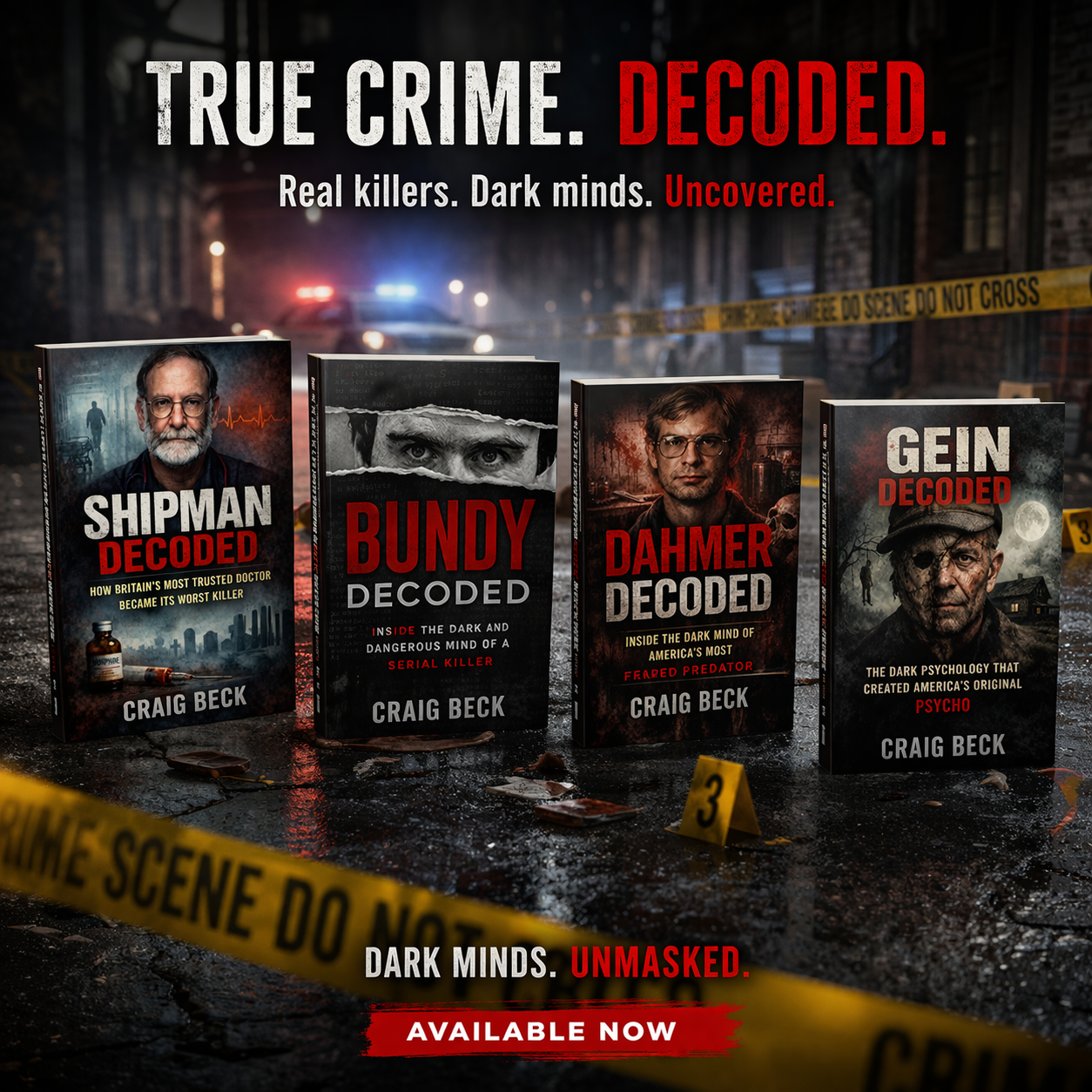
 Craig Beck is widely regarded as the world's foremost authority on persuasion and human behaviour. A certified NLP Master Practitioner, former UK broadcaster, and bestselling author of more than one hundred books, he has spent over two decades reverse engineering the question of why human beings say yes. More than a million readers across the globe have used his work to understand the hidden mechanics of influence, decision making, and motivation. He does not teach theory. He shows you how the wiring of humanity behaves once the lights go out and the smiles drop. His Decoded audiobook series applies the same lens to history's most disturbing minds.
Last updated: 1 May 2026.
Frequently Asked Questions About The Best True Crime Books
What makes the best true crime books different from ordinary ones?
The best true crime books move past the timeline and dig into the psychology that produced the crime. They study childhood damage, fantasy escalation, dark triad traits, and the social mask the killer learned to wear. Ordinary true crime books rely on shock, pace, and case detail. Quality titles lean on motive, manipulation, and mental architecture. If a book leaves you understanding how the predator thinks, you have found the good stuff.
Are true crime books safe to read or do they glorify killers?
Done badly, they glorify. Done well, they educate. Responsible writers refuse to turn killers into anti-heroes. They show the cruelty, the entitlement, and the cowardice underneath the legend. They also keep victims at the centre of the story rather than reducing them to plot points. Reading psychologically grounded true crime sharpens your radar for manipulation in everyday life, which is far more useful than romanticising any monster behind bars or beneath one.
Where should a beginner start with serious true crime reading?
Start with a single subject rather than a sprawling anthology. Pick a notorious offender whose psychology has been heavily studied, then read one well-reviewed psychological profile of that person. Sit with it. Notice how the author maps childhood, fantasy, and behaviour rather than just listing crimes. From there, branch out to other subjects and other writers. This approach builds pattern recognition fast, which is the entire payoff of reading true crime in the first place.