Psychology of Donald Trump Decoded: The Persuasion Mind | Beck
Apr 30, 2026The Psychology of Donald Trump Explained
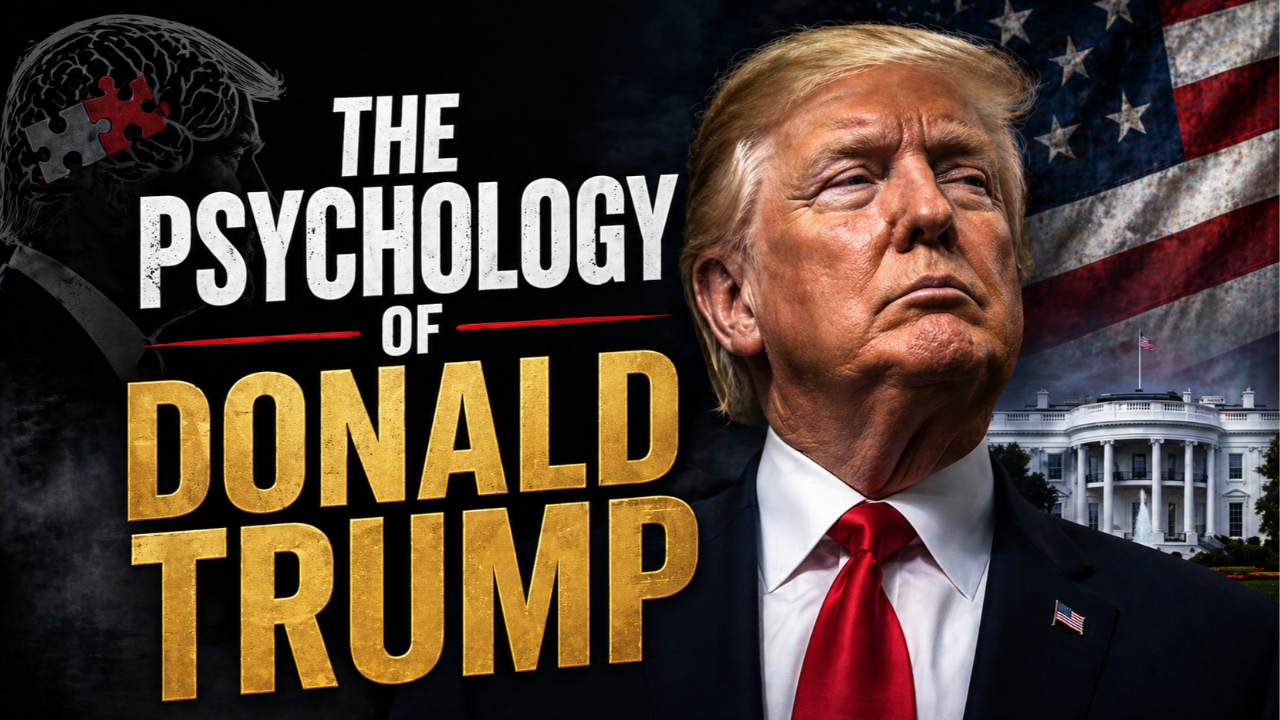
The psychology of Donald Trump is best understood as a live-fire demonstration of appetite, dominance, grievance, and persuasion firing through a single human mechanism. He operates as a textbook study in how attention can be weaponised, how resentment can be converted into shared identity, and how a simple binary narrative can outpace a complex policy paper every single time. Critics keep waiting for shame to slow him down. Shame requires different wiring. What you see is consistent with a mind organised around external reinforcement, status defence, and crowd-level persuasion. The list below decodes the pattern.
 Say what you like about him, the psychology of Donald Trump is never boring. It is dominance, spectacle, charm, denial, and raw psychological leverage playing out on the world stage in real time. Most observers waste hours arguing over whether he is a genius, a con artist, a patriot, a menace, or all four before lunch. The sharper question is much simpler. What kind of mind produces this pattern again and again, regardless of the political weather around it? That question pulls you out of the partisan shouting match and into something more useful. Pattern recognition. Trump is psychologically interesting not because he is polarising. Plenty of public figures are divisive.
He is interesting because he functions like a human trigger mechanism. He can make one crowd feel protected, another feel enraged, and both feel unable to look away. That kind of effect does not happen by accident, and it is worth taking apart slowly.
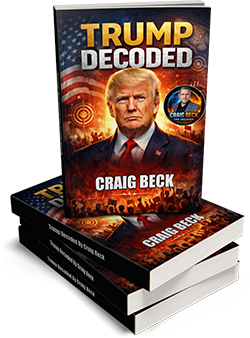
Want the full Craig Beck breakdown? Grab Trump Decoded: The Psychology Behind America's Most Persuasive President on Amazon now.
The Psychology of Donald Trump Starts With Appetite
At the centre of the Trump persona sits appetite. Not ambition. Appetite. He does not appear wired for moderation, reflection, or tasteful restraint. He goes bigger, louder, harder, even when common sense suggests taking the exit ramp and going quiet for a week. That pattern matters because it points to a personality built around external reinforcement rather than internal contentment. In plain English, he seems to need visible, repeated proof of power. Crowds. Headlines. Television ratings. Public displays of loyalty. Visible enemies losing in real time. The stage is not a place he visits. It is closer to oxygen. Pull the audience away and a great deal of the machinery loses fuel.
This is why critics who expect humiliation to tame him keep ending up disappointed. Shame only works if the person's internal compass is built to process it the usual way. Trump often looks less like a man slowed by embarrassment and more like a man energised by conflict. Negative attention still counts as attention. In some personality structures, being attacked simply confirms importance. The insult itself becomes evidence of significance, which is one of the more confusing dynamics for opponents trained to think reputation operates as a brake.
Narcissism Without the Cartoon Costume
The word narcissist gets tossed around so often it has become verbal wallpaper. In the case of Donald Trump, though, it is not an empty insult. It is a useful frame, provided you use it properly. Narcissism is more than vanity or fondness for one's own reflection. It is a defensive architecture. Grandiosity on the outside, fragility underneath, and a relentless need to keep the structure from cracking in public view. Trump's behaviour fits several parts of that pattern. He inflates victories, rewrites defeats, demands loyalty, attacks critics with unusual ferocity, and treats disagreement as betrayal. Classic narcissistic territory. Not proof of a clinical diagnosis from a distance, since anyone selling that certainty is selling snake oil. As a behavioural map, however, it is hard to ignore.
Here is the part most commentators miss. Narcissism is often less about self-love and more about self-protection. The swagger is armour. The exaggeration is plaster smeared over a wall that cannot be allowed to show a single crack. If the image slips, even briefly, rage rushes in to defend it. That mechanism would explain the speed and ferocity of his counterattacks. To an ordinary ego, criticism is irritating. To a narcissistically organised ego, criticism can register as something close to annihilation, and the response is usually disproportionate by design. The American Psychological Association maintains a useful overview of the wider personality literature here if you want the academic backbone behind that frame.
Why Dominance Beats Consistency in His Playbook
Many analysts still assess Trump as though he were trying to be logically consistent. He often is not. He is trying to be dominant. Those are two completely different games, played with two completely different scoreboards. Dominance-based communicators do not win by sounding tidy. They win by controlling emotional temperature. They set the rhythm. They name the enemy. They force everyone else to react around them. Trump does this almost instinctively. He throws an outrageous statement into the room, watches it convulse, then uses the convulsion itself as proof he holds power. It is schoolyard psychology with a private jet and a press pool.
This is why fact-checking alone rarely damages him as much as opponents hope. Facts matter in courtrooms, history books, and policy papers. In psychological combat, momentum matters as well. Trump is often playing for emotional position, not intellectual agreement. If he can make supporters feel he is strong while making his enemies look flustered, he has already won half the round before the truth squad has even loaded its slides. Wider work in behavioural profiling shows the same dynamic in figures who have built power on presence rather than coherence.
The Salesman's Mind Behind the Politician
The psychology of Donald Trump becomes much clearer when you view him as a persuasion animal first and a politician second. Long before politics, he built a public identity around branding, projection, and the careful manipulation of perception. In that world, image is not decoration. Image is reality for most people most of the time, and he has spent decades training that muscle. He understands a brutal truth that polite society hates admitting. People do not buy facts first. They buy stories, certainty, energy, and emotional relief. Trump sells all four, often inside a single sentence. He speaks in stark binaries. Winners and losers. Loyal and disloyal. Strong and weak. Great and terrible. That stripping out of complexity replaces nuance with emotional clarity, and emotional clarity is what stressed audiences crave.
That simplicity is rarely intellectually honest. It is psychologically effective. Confused people cling to certainty. Frightened people rally behind confidence. Angry people adore permission. Trump provides all three in rotation, sometimes in a single rally line. If you have ever wondered why polished policy speeches lose to short, punchy slogans, the Craig Beck blog archive covers that mechanism in depth. The mind under pressure does not want a footnote. It wants a flag.
Curious how that selling machine was built? Trump Decoded walks you through every move, in book and audiobook on Amazon.
The Grievance Engine That Welds the Crowd Together
One of the most powerful elements in the psychology of Donald Trump is his relationship with grievance. He does not merely express resentment. He weaponises it, packages it, and hands it back to the audience as identity. This is where the bond with supporters becomes unusually strong. He goes further than the standard "I feel your pain." He says, in effect, "They mocked you, cheated you, ignored you, and I am going to make them pay attention." That is not policy language. That is emotional revenge language, and it works because it transforms private frustration into collective meaning, almost like a shared liturgy.
Grievance is psychologically potent because it flatters as it enrages. It tells people their suffering is not random or partly self-inflicted. It was caused by villains. Better still, it suggests they are morally right to feel furious. Trump channels that mechanism brilliantly. He hands resentment a microphone, and then acts shocked when the building starts shaking. Craig Beck's coaching work on persuasion explores why grievance frames stick longer than aspirational ones, especially in audiences who feel the ladder has been pulled up behind them.
Why Scandal Slides Off the Trump Persona
Another reason Trump confounds opponents is that he appears unusually resistant to the psychological rules that govern most politicians. Scandal that would sink a conventional candidate often slides off him or even hardens loyalty around him. The reason is not magical. His supporters have already factored chaos into the product they bought. If you buy a polished, conventional leader, scandal feels like a defect. If you buy a wrecking ball, noise is part of the feature set. His unpredictability is rarely a liability with the base. Sometimes it is the brand promise itself, and the brand has been priced accordingly.
There is also a deeper layer worth naming. People who identify with a leader emotionally do not process criticism neutrally. They experience attacks on him as attacks on themselves. That means every indictment, every media salvo, every public condemnation can reinforce tribal loyalty rather than weaken it. The mechanism is primitive and powerful. Threat from outside strengthens the bond inside. Psychology Today's overview of narcissistic dynamics is a fair, jargon-light primer if you want to read further on why this loyalty pattern is so stubborn.
The Child Behind the Adult Persona
You cannot do an honest psychological reading without asking what early wiring might produce this adult machinery. No armchair diagnosis here. Just pattern recognition, which is the only ethical move from a distance. Personalities organised around grandiosity, dominance, revenge sensitivity, and relentless image control often have older injuries underneath the surface. Sometimes it is conditional approval from a powerful parent. Sometimes it is emotional coldness in the home. Sometimes it is a childhood environment where vulnerability felt dangerous and visible admiration felt like survival itself. The biographical specifics are debatable. The recurring mechanism is not.
If a child learns that worth depends on winning, appearing strong, and never conceding weakness, you usually get an adult who treats every interaction as a status contest. Mercy looks like surrender. Apology feels like death. Reflection becomes risky because it might expose old pain that has been sealed off for decades. That is not an excuse for the behaviour. It is an explanation of the engine that drives it, which is what useful psychology offers, while pop commentary just throws labels at the screen and calls it analysis.
Why the Psychology of Donald Trump Stays Hypnotic
Trump holds attention because he compresses several archetypes into one figure. The rich man. The rebel. The bully. The comic. The martyr. The father figure. The avenger. The salesman. Most public figures pick a single mask and wear it until it cracks. Trump cycles through them at speed, which keeps both admirers and critics locked in the room. He also understands television-level persuasion better than many policy professionals understand the people they claim to represent. He knows rhythm. He knows repetition. He knows that a well-placed nickname can demolish an opponent more efficiently than any position paper, even one written by a Nobel laureate. The Craig Beck audiobook catalogue dissects that pattern across dozens of public figures.
If you study persuasion long enough, you stop being shocked by this. Human beings are not ruled mainly by spreadsheets. We are moved by status, story, tribal belonging, fear, hope, humiliation, and the promise that someone strong will kick down the door on our behalf. Trump did not invent that circuitry. He learned how to play it like a piano with a missing conscience. There is, of course, a trade-off. The same traits that produce magnetism can produce instability. The same refusal to yield that looks like strength to supporters can look like recklessness to everyone else. The same talent for personal myth-making can become a prison, because once you are trapped inside your own legend, ordinary reality starts to feel like a personal insult. That may be the final uncomfortable truth here. The psychology of Donald Trump reaches well beyond one man. It is also about the public appetite that keeps rewarding him, the cultural ache that prefers a fighter to a saint, and the universal human craving to be told the story is simple, the enemy is real, and somebody big is finally on your side.
Ready to see every persuasion lever pulled apart? Get Trump Decoded: The Psychology Behind America's Most Persuasive President on Amazon, in book and audiobook.
What Readers Are Saying
"I have read a dozen books trying to understand Trump's grip on people. This is the first one that explained it without picking a political team. Cleared up years of confusion in one weekend." Eleanor Marsh, Cardiff.
"Craig narrates the audiobook himself and that voice carries the analysis brilliantly. I now hear the persuasion levers being pulled in every interview." Theodore Bryant, Sheffield.
"Bought it expecting a hit piece or a love letter. Got a scalpel instead. The chapter on grievance alone is worth the price." Anika Patel, Nottingham.
About the Author
 Craig Beck is the world's foremost authority on persuasion and human behaviour. A certified NLP Master Practitioner, former broadcaster, and bestselling author of more than a hundred books, he has spent over two decades reverse engineering why human beings say yes. More than a million readers around the world have used his work to understand the hidden mechanics of influence, decision making, and motivation. He does not teach theory. He shows you how the wiring of humanity truly fires, and how that same wiring is being used on you every day by people who have studied it more carefully than you have.
Last updated April 30, 2026.
Frequently Asked Questions
What is the dominant trait in the psychology of Donald Trump?
The strongest recurring trait is appetite for visible reinforcement. Crowds, ratings, public loyalty, and visible enemies losing in real time. Most analysis focuses on narcissism or grievance, which are accurate frames, but appetite for external proof of power sits beneath both. Remove the audience and the engine slows considerably. That craving for live evidence of dominance shapes almost every choice he makes in front of a camera or a microphone.
Is it ethical to analyse the psychology of Donald Trump from a distance?
Clinical diagnosis from afar is unethical and rejected by professional bodies, including the American Psychiatric Association under the Goldwater Rule. Pattern recognition is different. Observers are entitled to study public behaviour, persuasion mechanics, and rhetorical patterns of any high-profile figure. The honest line is to describe what is visible without claiming a diagnosis. Craig Beck's work stays on the right side of that line, treating Trump as a persuasion case study rather than a private patient.
Why does scandal not damage Donald Trump like other politicians?
Because his supporters factored chaos into the product they bought from the start. Conventional politicians sell composure, so a scandal looks like a defect. Trump sells disruption, so noise is part of the feature set. Beyond that, when followers identify emotionally with a leader, attacks on him are processed as attacks on them, which strengthens loyalty rather than weakening it. The mechanism is primitive, predictable, and completely consistent with crowd psychology research.