Decoding Public Figures: The Psychology Behind the Mask | Craig Beck
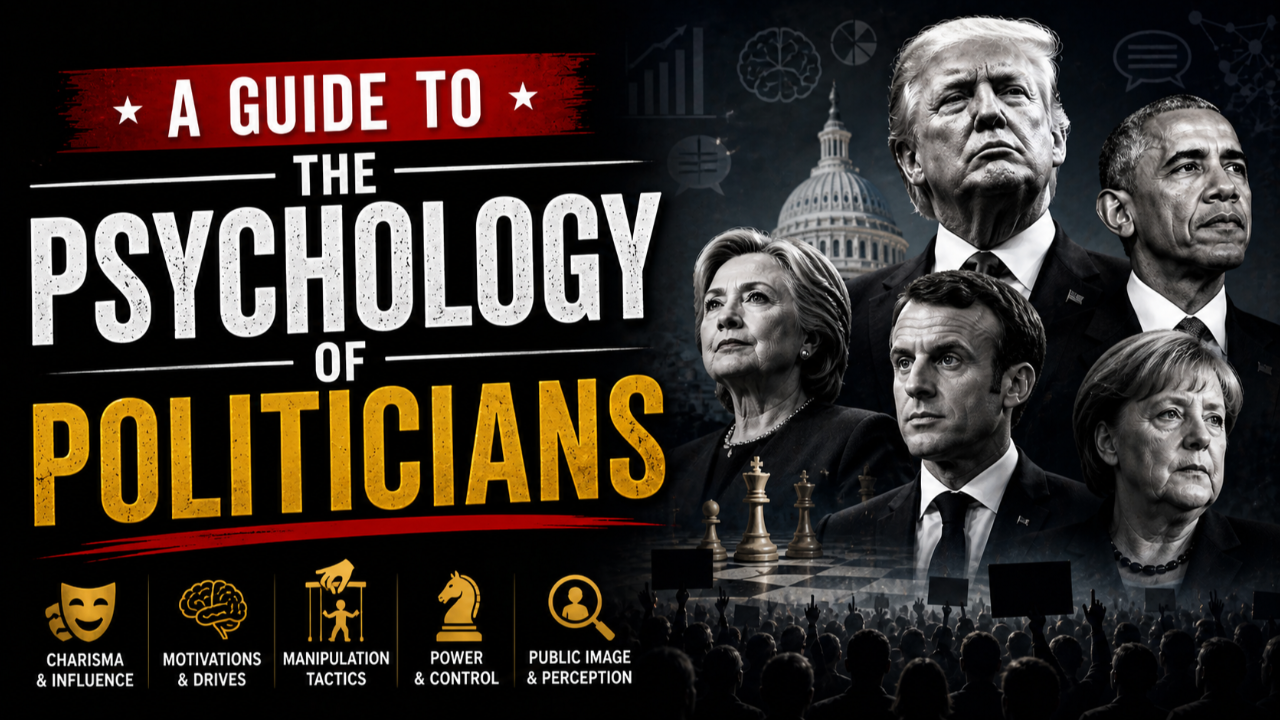
May 01, 2026 Decoding public figures means reading them through behaviour, motive, and stress response, not the press release. The famous face you see is a curated product, polished and tested until it triggers loyalty, envy, or trust on cue. To read them properly, you ignore the script and study the gap between what they claim and how they act when the applause stops. Watch who pays the price for their ambition, what they protect at all costs, and which traits leak out when control slips. Do that, and the magic trick collapses into something far more useful: a clear view of the wiring.
Most people watch celebrities, politicians, gurus and influencers the way children watch a magic trick. They see the smile, the timing, the polished line, and they miss the hand slipping the card up the sleeve. A practical guide to decoding public figures starts there, not with gossip, not with worship, and certainly not with the fairy tale that fame reveals character. Fame usually hides it. The first awkward truth is this: the public persona is not the person. It is the costume that gets rewarded. So, that is what they sell.
If you want to read them accurately, stop asking, "Do I like this person?" That question is rubbish. Better questions are these. What need are they feeding in the audience? What image are they protecting at all costs? And what pattern shows up when the mask slips for half a second? Get those three right and you stop being food for the persuasion machine.
Want the full psychological autopsy of the most persuasive politician of the modern era? Pick up Trump Decoded: The Psychology Behind America's Most Persuasive President on Amazon today.
Why Decoding Public Figures Is a Survival Skill
This is not a parlour game for cynics. It is practical psychology with real consequences. Public figures shape elections, buying habits, moral panics, social trends, and the stories we tell ourselves about success. If you cannot decode influence, you become rent for it. Every advertising pound, every campaign donation, every fan dollar lives or dies on the public's ability to confuse confidence with character.
The danger is rarely cartoon villainy. The cartoon monster is easy to spot. The genuine problem is the polished operator who looks trustworthy because they have rehearsed looking trustworthy for thirty years. Charm is not proof of integrity. In many cases, it is the camouflage. I spent two decades on radio, sat across tables from politicians, athletes, recording artists and household names. The ones who unsettled me most were never the loud ones. They were the calm operators with the perfect handshake and the eyes of a poker player calculating angles before you finished your sentence.
Public success quietly selects for specific traits: image control, message discipline, emotional intelligence, and a healthy splash of narcissism. Those traits build empires. They also build wreckage. Often both, and often at the same time. If you have ever sat in front of the news baffled by why a clearly damaged person keeps winning, the answer is that the system was built to reward exactly that flavour of damage.
The Gap Between Image and Behaviour
The cleanest place to begin is the mismatch. Anyone can claim they value honesty, family, justice, innovation, service, or truth. Those words are cheap and tested. Public figures know which words trigger loyalty, and they buy them by the kilo. The real evidence is behavioural consistency under pressure. What do they do when criticised, cornered, contradicted, or denied admiration? That is where the wiring leaks out.
A grounded person can tolerate scrutiny without instantly reaching for revenge, self-pity, or theatrical victimhood. A fragile ego cannot. It must control the narrative, punish dissent, and reframe every setback as betrayal. Watch closely enough and you stop seeing a leader. You start seeing a child in expensive clothing, panicking because the room is no longer clapping.
Persuasion researchers have shown for decades that the principle of consistency is one of the most powerful tools of compliance, which is why polished public figures repeat their image until it sounds like a fact. The audience trusts repetition more than evidence. People remember how you made them feel, not the contradictions piling up on the floor. If you have ever wondered how an obvious fraud keeps a devoted fanbase, that is your answer. Feeling outranks accuracy until something forces a reckoning.

The Dark Triad Hiding Behind the Smile
Forensic psychologists have a useful little cluster called the Dark Triad: psychopathy, narcissism, and Machiavellianism. Most public scandals, broken marriages, sacked staffers, and ruined careers can be traced back to some blend of these three. You do not need a clinical diagnosis to see them in the wild. You need a slow news week and a willingness to watch the same person on three different platforms.
Narcissism shows up first because it is loudest. The grandiose claims, the relentless self-reference, the fragile rage when contradicted. Machiavellianism is more sly: the strategic alliances, the loyalty tests, the carefully timed leaks, the friends discarded the moment they stop being useful. Psychopathy is the quietest of the three and the most dangerous, because it removes the brake. Empathy fades, remorse evaporates, and other people start to look like furniture you can rearrange.
Plenty of normal high achievers carry traces of these traits. That is not the issue. The issue is concentration. When all three stack inside the same personality, you get someone who can lie without flinching, plan without conscience, and posture without shame. The American Psychological Association's work on personality has documented how these traits cluster in leadership selection, which means the system that produces public figures sometimes rewards exactly the people you would not trust to look after a goldfish. My piece on forensic psychology versus pop true crime digs deeper into how this gets ignored on television.
If you want to see this scalpel applied to the most studied politician of the decade, Trump Decoded: The Psychology Behind America's Most Persuasive President is waiting for you on Amazon.
Four Tells Most People Walk Straight Past
Charm Used as a Weapon
Charm is lovely when it is natural. It becomes sinister when it is strategic. Public figures who weaponise charm do not simply connect. They calibrate. They mirror language, posture, and values at speed. They seem uncannily relatable because they are reading the room like a predator reads movement in long grass. That does not make them evil by default, but it does mean you should pay attention to when the charm appears and when it vanishes. If kindness only shows up in front of cameras, on stage, or around useful people, that is not warmth. That is tactics with good lighting.
Compartmentalisation
This is the psychological trick that lets a person hold two identities without feeling the moral collision between them. The adored family man who lives like a tyrant backstage. The compassionate activist who treats subordinates like office furniture. The spiritual guide who cannot survive five minutes without admiration. Compartmentalisation is practically the rent for public life. The issue is degree. Healthy people have some separation between private and public selves. Unhealthy people build soundproof walls between them and forget there is anything on the other side.
Narrative Addiction
Some public figures are not chasing success. They are chasing a storyline in which they remain the hero, the martyr, or the misunderstood genius. Once you spot this, their decisions make far more sense. They will choose drama over stability because drama keeps the story alive. They will pick public feuds, grand declarations, dramatic exits, and miraculous reinventions because ordinary accountability feels like death to a person addicted to narrative significance. You can see this pattern in everyone from disgraced televangelists to celebrity tycoons. Quiet competence cannot compete with a good third act.
The Reaction to Loss of Control
This is the one to watch most carefully. How does a public figure behave when the script breaks? Do they get clearer and calmer, or more erratic and punitive? Do they answer the criticism, or attack the critic's motives, sanity, appearance, class, or loyalty? Nothing reveals hidden structure faster than loss of control. Under pressure, the polished identity stops smiling and the primitive machinery starts thumping. That is when you finally see what you are dealing with, and it is rarely the version on the magazine cover.
Motive Always Outranks Message
The amateur studies statements. The professional studies incentives. If you want to decode someone, do not get hypnotised by what they claim to stand for. Ask what they gain by saying it. Money is obvious, but it is not the only fuel. Status, immunity, sexual access, devotion, relevance, revenge, belonging, and the narcotic of being admired can drive behaviour just as ferociously.
The public is oddly naive about this. People imagine corruption begins when cash changes hands. Nonsense. Plenty of public figures would burn down their own credibility for applause alone. Human beings will do extraordinary things to avoid feeling insignificant. Former FBI behavioural analysts have spent decades pointing out that body language betrays motive long before words do. Watch the micro-expression when a question lands wrong. Watch the eyes when praise arrives. Motive lives in the face for a fraction of a second before the script catches up.
So, some figures escalate over time. The first version of the persona worked, so they turn the volume up. Then they must keep escalating to hold attention. Soon the original mission is gone, replaced by performance maintenance. They are no longer expressing beliefs. They are feeding the machine that rewards outrage, certainty, and spectacle. My deeper breakdown of one such figure here goes into how persuasion and grievance can fuse into something almost unstoppable on a public stage.
A Field Method for Reading the Famous
If you want a usable system for decoding public figures, keep it brutal and simple. Separate the role from the person first. The role is the brand: reformer, genius, rebel, patriot, savior, truth-teller, family icon. Then ask what emotional need that role satisfies in the audience. People do not follow public figures only for information. They follow them for identity, reassurance, permission, and fantasy. Understand the need, and you understand the marketing.
Next, look for repetition. Not isolated scandals, patterns. Anyone can have one bad interview, one foolish decision, one ugly week. But repeated contempt, repeated vanity, repeated blame-shifting, repeated reinvention, repeated manipulation of sympathy, and now you are looking at structure rather than accident. Then compare words across time. Inconsistency alone is not damning, because people change, and they should. But when every shift magically aligns with personal gain, the transformation is rarely a spiritual awakening. It is opportunistic molting.
Finally, study who pays the price for their ambition. This is where the mask usually tears. Do associates get discarded? Do critics get smeared? Do followers get milked for loyalty while the figure dodges accountability? You can learn a great deal about someone by examining the wreckage orbiting their success. Reputation is a lighthouse beam, but the rocks beneath it tell the real story. Friedrich Nietzsche warned that those who fight monsters often become them, and every era of public life proves him right at least once a decade.
Your Own Hunger Is Half the Trick
Here comes the part most readers hate, because it ruins the fun of pretending the problem is always out there. You do not decode public figures from a position of pure objectivity. You bring hunger with you. If you crave certainty, you will overtrust the decisive. If you crave rescue, you will worship the confident. If you crave rebellion, you will excuse the reckless. The public figure is only half the story. The audience completes the circuit.
That is why manipulative personalities can appear almost supernatural. They are not reading minds, they are reading unmet needs. They sense loneliness, resentment, aspiration, and fear, then package themselves as the answer. The product is you, sold back to you, with their face on the box. Once you understand that, you stop blaming the famous for being seductive and start asking why you keep buying the same brand of seduction. A short reading list on dark psychology and influence can save you a lot of disappointment if you want to push this further.
What Decoding Public Figures Buys You
It does not make you cynical. It makes you harder to fool. Once you stop confusing visibility with virtue, plenty of things become obvious. You see when remorse is theatre. You see when confidence is compensation. You see when relatability has been manufactured in a boardroom. And just as importantly, you see when someone is imperfect but coherent. A flawed human being rather than a hallucination in good makeup.
That is the real skill. Not sneering at everyone famous. Not declaring every ambitious person a monster. Just learning to spot the fault lines before the building collapses on top of your attention, your trust, or your wallet. Reading a strategist like Putin or a wartime leader like Churchill through the same psychological lens shows how universal these patterns really are. The names change. The mechanics rarely do.
Public figures are not puzzles because they are famous. They are puzzles because the world rewards masks, and most people fall in love with the mask. If you can train yourself to watch motive, contradiction, stress response, and collateral damage, you stop being an audience member and start becoming an observer. That is a far safer seat in the house, and it is the seat from which every smart consumer of news, politics, and culture should be watching from now on.
What Readers Are Saying About Trump Decoded
"Five stars. Beck doesn't pull punches. He explains why power-hungry personalities operate the way they do without sounding like a textbook. I read this in two sittings, and I cannot watch a press conference the same way again." Marcus Reyes, Phoenix, AZ.
"I have read every persuasion book on the market. Trump Decoded is the only one that explains the mechanics behind the megaphone. Brilliant work, blunt and funny in places I did not expect." Diane Whitfield, Charleston, SC.
"Beck is the only author writing about modern American politics with this much psychological clarity. Sharp, witty, and uncomfortably honest. Recommended to anyone who watches the news and feels something is off." Daniel Kowalski, Milwaukee, WI.
Ready to see the playbook in full? Trump Decoded: The Psychology Behind America's Most Persuasive President is available on Amazon now. One read and the news stops feeling random.
Frequently Asked Questions
What does decoding public figures actually involve?
Decoding public figures means looking past the polished image and reading the psychology underneath. You study behaviour, motive, and stress response instead of statements. You ask what need the persona satisfies, what pattern shows up under pressure, and who pays the price for their ambition. Once you start watching the mismatch between words and actions, the persuasion machinery becomes visible, and you stop being an easy mark for charm or theatrical confidence.
Are most public figures dangerous or manipulative?
No, and assuming so is lazy. Plenty of public figures are imperfect, ambitious, often vain, but fundamentally coherent. The point of decoding is not to brand everyone famous as a villain. It is to spot the warning signs early so you can tell the difference between someone with a flawed personality and someone whose entire public identity is a calculated weapon aimed at your trust. Pattern beats panic every time.
Can I learn to spot manipulation in real time?
Yes, with practice. Train yourself to watch reaction rather than performance. Notice when charm appears and disappears. Track who gets attacked and who gets praised, and how that aligns with the figure's interests. Listen for narrative addiction, blame-shifting, and the language of victimhood from people who hold real power. The more you watch behaviour over time, the harder it becomes to fool you in the moment.
About the Author
 Craig Beck is the world's foremost authority on persuasion and human behaviour. A certified NLP Master Practitioner, former British broadcaster, and bestselling author of more than one hundred books, he has spent two decades reverse-engineering the question of why people say yes. Over a million readers worldwide have used his work to understand the hidden mechanics of influence, decision-making, and motivation. He does not teach theory. He shows you how the wiring of humanity really runs. Read more about his work on the official Craig Beck author page.
Last updated: 1 May 2026.