
Short Man Confidence Rewired: How Hypnosis Builds Real Presence
May 11, 2026Short Man Confidence Rewired: How Hypnosis Builds Real Presence
You walked into the meeting room first, the way you always do, deliberately positioning yourself by the window so the natural light worked in your favour. The bigger lads from the client team filed in one by one. Six foot two. Six foot four. Each one shook your hand from a slight angle above. By the time everybody was seated you had already done the small internal calculation you have been doing in rooms like this since you were fourteen. They are taller. They are taking up more space. You are going to have to bring more energy, more volume, and more presence just to be properly in the room. Welcome to short man confidence, the quiet tax you have been paying in every meeting, every party, and every first date of your adult life. The room never asked you to pay it. You have been paying it anyway.
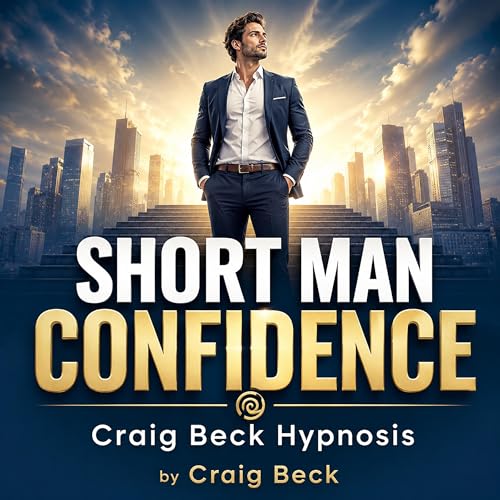 Short man confidence is rarely about height itself. It is about the meaning your subconscious has attached to height over the course of a life. Society carries biases. So does your nervous system. The world's bias might affect a single first impression by a small margin. The internal bias is affecting every interaction at high volume, because you arrive in every room expecting to be diminished. The leverageable variable is internal. Hypnosis works on short man confidence because it dissolves the internal discount at the level where the discount actually lives.
Ready to walk into the room without the tax? Download Short Man Confidence: Craig Beck Hypnosis and start retraining the part of you that has been quietly subtracting from itself before anyone else has had a chance to.
Why Short Man Confidence Has Nothing to Do With Inches
The conventional advice for shorter men is delivered with the well-meaning uselessness of somebody who has never been on the wrong side of an average. Wear good shoes. Stand up straight. Be the loudest in the room. Lift weights. Wear vertical stripes. Each of these treats height as something to be compensated for, which means each one quietly confirms that height is the problem to begin with. The premise is the issue. The premise hands the bias victory before the conversation has even started. You spend your life carefully camouflaging a feature that was only being weighted negatively in the first place because you were treating it negatively.
The genuinely confident shorter man does not stand up straighter than tall men, dress more carefully than tall men, or speak louder than tall men. He does something different and quieter. He walks into rooms as if his height is the most uninteresting thing about him, because to him it is. The room follows the lead. People take their cue from how you stand inside your own skin, and your skin contains everything. A man at peace with his own dimensions reads as commanding regardless of those dimensions. A man at war with them reads as small regardless of his actual height. The variable is the peace, not the inches.
The Hidden Wiring Behind the Internal Discount
Somewhere in your development, your subconscious noticed that height correlated with certain social outcomes and quietly drew a conclusion. Tall equals strong, capable, attractive, dominant, in charge. Short equals the absence of all of that. This conclusion was not original to you. It was absorbed from the surrounding culture, which has been broadcasting these associations through every film, every advertisement, every casting decision, every politician's photograph, and every dating app design choice for the entirety of your life. By the time you became an adult, the equation was so familiar that it had been mistaken for objective truth rather than a culturally constructed bias.
The trouble is that the equation is wrong. Real research on presence, charisma, and leadership consistently identifies psychological qualities such as warmth, calm, decisiveness, and emotional intelligence as the dominant predictors of social and professional success. According to research summarised by the American Psychological Association, height effects are real but modest, typically explaining only a small percentage of the variance in income, leadership selection, or relationship outcomes, with personality and behaviour explaining a far larger share. Your limiting beliefs about what your height supposedly costs you sit on top of this, generating internal discount that the actual world rarely produces at anything like the volume your subconscious has been applying.
What Your Subconscious Has Decided Height Proves
If you could ask the part of you that flinches before entering a tall room what it expects the room to do, you would hear a remarkably specific catalogue of forecasts. People will respect you less. Women will dismiss you faster. Other men will not take you as seriously. The boss will pass over you for the promotion. The handshake will be slightly patronising. The first date will end politely with no second date. Every one of these forecasts becomes a quiet expectation, and quiet expectations have a strange way of shaping the very interactions they predict. The room is responding to who you are showing up as, and you are showing up as the man who has already been diminished.
 This is the cruel irony at the centre of the issue. The internal forecast acts as a self-fulfilling prophecy. The man who walks into a room expecting respect tends to receive it. The man who walks into a room half-bracing for dismissal tends to project the very quality that elicits dismissal. People are not consciously assessing your height most of the time. They are reading the field of presence, certainty, and ease that you bring with you, and that field is being shaped by the inner story you have been telling yourself about what your height is supposedly costing you. Until the story changes, the field continues to broadcast the same signal regardless of how good your shoes are.
The External Bias That You Have Quietly Internalised
Yes, the world has biases. Tall men do, on average, earn slightly more, get hired more often, and are selected as leaders more frequently. These effects are real and worth naming honestly. They are also significantly smaller than the popular imagination assumes, and they are dwarfed by the effects of confidence, competence, and presence. The tall man with poor inner game underperforms the shorter man with strong inner game in almost every domain that has been studied. The tall man is not winning because of his height. He is winning because the height has often spared him the early developmental challenge of having to develop inner confidence in spite of an external setback. The shorter man, having developed that inner game from necessity, frequently outperforms once the internal discount is removed.
According to research published by the National Center for Biotechnology Information, perceived dominance, leadership potential, and attractiveness are all more strongly predicted by behavioural and postural cues than by physical stature alone. Translation. The taller man's advantage is real but small. Your supposed disadvantage is mostly the internal discount you have been adding on top. Remove the discount and the playing field rebalances faster than most shorter men have ever allowed themselves to believe possible.
How the Compensation Trap Makes the Problem Worse
Most shorter men, somewhere along the line, develop a compensation strategy. Become the loudest. Become the most aggressive. Become the most successful. Become the funniest. Become the most well-dressed. Become the man who arrives in the most expensive car. Each strategy makes a kind of sense as a youthful response to perceived inequality. The trouble is that the compensation strategy quietly confirms the original equation. The world reads the compensation as compensation. The strain shows. The performance feels effortful. And the inner story remains intact, because no amount of external achievement can fill the original hole if the hole was dug by a belief about your own inadequacy.
The famous historical and contemporary commanders, business leaders, and statesmen who happened to be shorter than average did not succeed by becoming louder or more aggressive than their taller peers. They succeeded by being more present, more decisive, and more comfortable inside their own skin than the rooms they walked into. Their height became part of their distinctive presence rather than something they were quietly apologising for. The compensation trap forces you to spend your life trying to outrun the perception. The genuine fix involves no running at all. It involves standing still, in your actual dimensions, and discovering that the standing still is itself the strongest move available to you.
Done seeing the trap? Time to step out of it. Try Short Man Confidence: Craig Beck Hypnosis and let your subconscious release the discount it has been quietly applying for decades.
How Hypnosis Reprograms the Internal Story
Hypnosis is uniquely effective for short man confidence because the internal discount that drives it lives precisely in the layer of mind hypnosis is designed to reach. It is not stage trickery. It is not surrender of free will. Hypnosis is a focused state of relaxed attention, scientifically observable, in which the protective filter between conscious thought and the deeper machinery softens, and new instructions can be loaded directly into the part of you that has been running the discount. Your conscious mind does not need to win an argument with the inner story. The work happens in the layer beneath the argument.
If you have ever been sitting in a park with a book and felt the breeze and the warmth lull you into a state where the words on the page stopped registering for a while, you have already touched the threshold of trance. The brain enters states like this many times a day. Hypnosis steers you into one deliberately and uses the open channel to do something targeted. For short man confidence, that means dissolving the equation between height and worth, retraining the inner story your subconscious has been running about what your dimensions supposedly prove, and installing a new default in which presence, certainty, and ease are the qualities you broadcast regardless of where the top of your head sits in any given room.
Identity is the deepest leverage point. Most confidence advice tries to change behaviour while leaving the underlying identity of "shorter man at a disadvantage" untouched. Behaviour change without identity change is fragile, because the next tall room will collapse it. Hypnosis goes underneath the behaviour and updates the file labelled "who I am inside my own height." Once that file shifts, the discount stops being applied automatically, and your full presence becomes available to every room you enter. Neuroplasticity, the brain's lifelong ability to rewire itself, rewards consistent input. The new pattern hardens with each session.
What Happens While You Listen
The Short Man Confidence recording opens with a slow, careful induction. The breath lengthens. The body settles. The mental commentary that has been running comparisons against every taller man you have encountered today finally falls silent. Brainwave activity moves from the rapid beta of waking thought into the slower alpha and theta frequencies associated with deep meditation and the threshold of sleep. The doorway to the subconscious quietly opens, and the real work begins.
The script then guides your unconscious mind through a series of structured suggestions designed to release the internal discount. Carefully sequenced language invites the part of you that has been quietly subtracting from itself to recognise the worth of who you are independent of any single physical dimension, to release the equation between height and value, and to step into a sense of presence that does not require compensation, performance, or apology. Visualisation walks you through the felt experience of entering a tall room with calm certainty, shaking the hand of someone taller without flinching internally, and discovering that your presence holds the space regardless of where the room's eye level lands.
Most listeners report a softening of the internal comparison within the first week of nightly use. By the four to six week mark, rooms begin to feel different in a way that is difficult to describe but easy to recognise. The change is rarely a single dramatic moment. It is more often the slow realisation that you have just spent two hours at a dinner with several taller men and have not run a single comparison against any of them, and you cannot remember when that was last true.
The Question Nobody Asks About Short Man Confidence
Everybody asks how to feel taller. Almost nobody asks who they become once the internal discount is no longer being applied. That second question carries the entire prize.
When the discount finally releases, the surface changes show up first. Meetings stop being unconscious comparisons. Parties become places to enjoy rather than rooms to survive. First dates become conversations rather than auditions. Job interviews stop carrying the small private worry that the hiring panel might be weighing your inches against your CV. The compensation strategies you have been carrying for decades, the loudness, the constant achievement, the careful dress, the rehearsed jokes, become optional rather than required. You start showing up as yourself rather than as the version of yourself you have been performing to overcome your height. The relief of dropping the performance is large.
The deeper change runs underneath. The chronic background tension of comparison dissolves, and the energy that had been consumed by constant inner adjustment becomes available for actually engaging with the world in front of you. Conversations land deeper, because you are listening rather than scanning. Friendships warm. Romantic prospects expand, because attractive people respond to presence and ease more than they respond to inches. Past listeners describe feeling taller, even though no inches have been added, because the body that had been quietly braced against the world finally relaxes into itself. Confidence that does not depend on physical compensation is the most stable kind there is, and it tends to ripple outward into every domain of your life.
And there is a quieter shift that listeners report many months in. The relationship with other men changes. The tall colleague you used to find quietly intimidating becomes just a colleague. The friend who has been six foot four since school becomes just a friend. The world stops being divided into men who have something you lack and men who do not, and starts being a place where you can simply meet other humans on their own terms. The internal opponent you have been competing with for years was always yourself. Retiring that opponent is one of the most freeing changes a man can make in his own head.
None of this requires you to pretend height does not exist or that the world is perfectly fair. The world has its biases. You also have one of your own, and yours is the one you can actually do something about. Hypnosis is the cleanest route, because it speaks to the part of you that has been quietly subtracting from itself, in the language that part actually understands.
Stop letting an internal discount decide how much of yourself you bring into every room. Download Short Man Confidence: Craig Beck Hypnosis and let the system that has been quietly subtracting finally update its records. The version of your presence waiting on the other side of one rewired story is closer than the careful positioning by the window has allowed you to imagine.
What Listeners Are Saying
Adam J., Wichita, Kansas: "I am five foot six and I have been quietly compensating for that fact since I was thirteen. The loudest joke in every group. The most ambitious career path. The most expensive watch. Six weeks of nightly listening to this recording and I caught myself in a meeting last week not running the comparison. I closed the deal that day. My manager pulled me aside to ask what had changed. I told him honestly. He looked thoughtful and asked for the title."
Marco L., Tucson, Arizona: "Five foot five and forty-three years old. I have been performing big-man energy in rooms for thirty years. It is exhausting. Five weeks of using this recording and I had a date last weekend where I did not pre-emptively mention my height, did not bring up my career as compensation, and did not order something taller-looking at the bar. She has texted me three times since. The relief of not performing is genuinely something I had forgotten was available."
Daniel R., Portland, Oregon: "I am five foot four. I have been the shortest in every meeting I have ever attended. I had assumed the inner discomfort was simply part of being me. Eight weeks of nightly listening to this recording and the inner discomfort has gone. Not the meetings. Not the height of the other people. The discomfort. I cannot fully explain what changed. I do know that my career has stopped feeling like I am pushing a boulder uphill against my own physique."
Frequently Asked Questions
Does height really not matter then?
Height has measurable effects, but they are smaller and more nuanced than the popular imagination suggests. Tall men do receive modest advantages in some domains. The effects are dwarfed by the impact of confidence, presence, and competence, all of which are accessible regardless of stature. The recording does not claim that bias does not exist. It targets the internal discount that compounds the external bias, which is the larger and more leverageable variable. Removing the internal discount tends to outperform any attempt to compensate for the external one.
How quickly will I see results?
Most listeners report a softening of the internal comparison within the first seven to ten days of nightly use. Behavioural changes, such as walking into tall rooms without the comparison running, dating without pre-emptively mentioning your height, and noticing yourself being treated with the respect you used to assume was unavailable, tend to settle in over four to eight weeks. The deeper identity shift, in which short man confidence stops being something you perform because you stop being a person who needs to perform it, develops over two to three months. Repetition is the variable that matters most.
Will this make me arrogant or aggressive?
No. The aim of the recording is the opposite. Compensation strategies often produce a kind of loud, slightly forced presentation that lands as overcompensation rather than confidence. Genuine inner confidence is quieter, calmer, and significantly more attractive than performed presence. Listeners report becoming less aggressive, less defensive, and more at ease, because they no longer need to convince anyone of anything. The discount has been removed, and the natural presence underneath emerges without effort or theatre.
About the Author
 Craig Beck is internationally recognised as one of the leading voices in persuasion, behavioural psychology, and the mechanics of inner change. A certified NLP Master Practitioner, clinical hypnotherapist, former UK broadcaster, and bestselling author of more than one hundred books and audio programmes, he has spent two decades dismantling the inner discounts, self-restrictions, and quietly internalised biases that erode people's presence in the world. Over a million listeners around the world have used his hypnosis recordings to retire phobias, break addictions, and rebuild the inner architecture of how they walk into every room. He does not deliver theory from a textbook. He works in the layer underneath conscious thought, where every meaningful change begins. You can read more about his approach on his about page.
Last updated: 11 May 2026