
Fear of Abandonment Rewired: How Hypnosis Quiets the Dread
May 11, 2026Fear of Abandonment Rewired: How Hypnosis Quiets the Dread
They went out with friends for the night and you handled it well, on the surface. You sent the supportive text. You said have a great time. You watched a film. And then somewhere around 9:47pm something inside you began to slip. The first message you sent was casual. The second was slightly less so. By the time the third had gone unanswered for forty minutes, the part of you that had been holding it together had quietly come apart in the kitchen. You knew, intellectually, that they were having a perfectly ordinary evening with people you have met many times. The knowledge made no difference. The dread had its own logic, and the logic concluded, as it always does, that they were never coming back. Welcome to fear of abandonment, the most secret panic carried inside many otherwise capable adults.
 Fear of abandonment is rarely about the current partner. It is about the inability to be alone inside yourself without falling apart. The terror is not really of the person leaving. It is of being left with the raw emotional state that the relationship has been quietly regulating for you, sometimes for years. Hypnosis works on fear of abandonment because it restores the inner companionship that allows aloneness to be tolerable rather than annihilating, at the level where the dread actually lives.
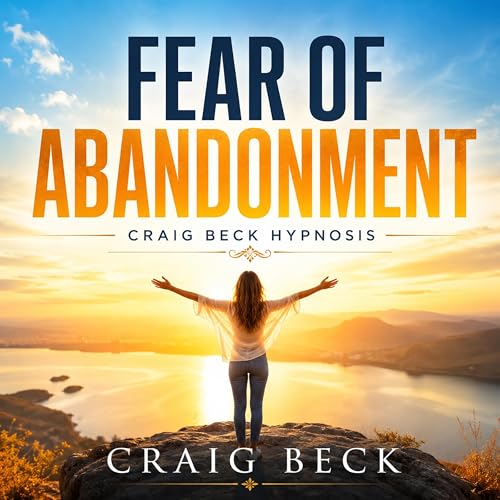
Ready to soften the panic? Download Fear Of Abandonment: Craig Beck Hypnosis and start retraining the part of you that has been bracing for the exit since long before this partner ever appeared.
Why Fear of Abandonment Has Nothing to Do With Your Current Partner
The conventional advice for fear of abandonment is delivered as a series of well-intentioned but useless prescriptions. Communicate your feelings. Practise self-care. Build hobbies of your own. Establish independence. Trust that your partner loves you. Each suggestion treats the fear as a logical concern that better communication can resolve. The fear is not logical. It originates in a part of you that does not consult your conscious mind before sending the dread, and no amount of reassurance from your partner lands in the layer where the dread is being generated. You can have the most attentive partner in the world and still wake at 3am with the certain feeling that they are about to leave you. The certainty has nothing to do with them.
The reason logic keeps losing is that fear of abandonment is not about evidence. It is about a stored emotional template, often installed in childhood, that runs the same script regardless of what your adult life looks like. You can have decades of stable love and the template will continue to predict abandonment, because the template was written before this love existed, and the template does not update from new information once it has been fully formed. Updating the template requires reaching the layer where it lives, which is not the layer where conversations happen.
The Hidden Wiring Behind the Anxious Pull
Inside the human nervous system runs a feature that developmental psychologists call the attachment system, responsible for managing your sense of safety in close relationships. The system was first fully mapped by researchers studying how children behave when separated from a caregiver and then reunited. They identified a pattern called anxious attachment, characterised by intense distress at separation, difficulty being soothed, and persistent worry about the caregiver's availability even when the caregiver was reliably present. The pattern, in many people, persists into adulthood and produces what is now commonly called fear of abandonment in romantic and close relationships.
The pattern almost always traces to a particular kind of childhood environment. Not necessarily an abusive one. Not necessarily a neglectful one. Often a household with inconsistent emotional availability, where love was unpredictable rather than absent. Sometimes warm. Sometimes withdrawn. Sometimes attuned. Sometimes preoccupied with other concerns. According to research summarised by the American Psychological Association, this inconsistent pattern produces a more anxious attachment style than reliable distance does, because the child never learns to predict whether love will be there when needed. Your limiting beliefs about your own lovability, formed in the same window, sit on top of the wiring and supply the abandonment dread with reasons.
What Your Subconscious Cannot Bear to Be Left Alone With
If you could pause yourself mid-panic on an evening when your partner has been away too long and ask the part of you producing the dread what it expects to happen, the surface answer is that they will not come back. The deeper answer, the one rarely articulated, is more troubling. You expect that if they do not come back, you will not survive being alone with what is inside you. The terror is not really about the loss. It is about the prospect of being uncovered, undefended, left with the raw self that has been quietly leaning on this person as emotional scaffolding without either of you fully realising it.
This is the central misunderstanding at the heart of fear of abandonment. The relationship has been doing emotional work for you that the conscious mind has not fully acknowledged. Their presence regulates your nervous system. Their attention reassures the part of you that has needed reassuring since you were small. Their love quietly silences a much older voice that says you are alone in the universe in some deep, unfixable way. When the partner is unavailable, even briefly, even for entirely innocent reasons, the older voice gets louder, and the panic that arrives is the panic of suddenly being asked to listen to it without the volume turned down.
The Protest-and-Withdraw Loop That Pushes Love Away
The cruellest mechanic in fear of abandonment is that it produces two opposing behaviours in quick succession, both of which damage the relationship it is trying to preserve. The first is protest. Increased contact. Repeated texts. Phone calls that get more anxious. Subtle escalation of demand for reassurance. The second is withdrawal. When the protest does not produce the immediate response your nervous system needs, you flip to silence. Cold distance. Sudden refusal to engage. The partner, who was simply at a dinner with friends, comes home to a version of you that has been first frantic and then frozen, and they have no idea which of these moods is the real one.
According to research published by the National Center for Biotechnology Information, this protest-then-withdraw pattern is one of the most consistent features of anxious attachment in adult relationships, and it correlates strongly with relationship instability over time. Partners experience the back-and-forth as bewildering, exhausting, and eventually intolerable. The fear of abandonment, in trying to prevent the loss, produces the conditions in which the loss becomes likely. The very wiring that screams about being left is the wiring that quietly drives partners toward the door.
Done seeing the loop? Time to step out of it. Try Fear Of Abandonment: Craig Beck Hypnosis and let your subconscious learn to be at peace inside itself rather than dependent on someone else's reliable presence.
How Fear of Abandonment Reshapes Every Relationship You Have
The cost of chronic fear of abandonment extends far beyond romantic relationships. The pattern reshapes friendships, family ties, and professional connections in subtle ways most sufferers never fully recognise. The friend who takes three days to reply to a text triggers the same older dread that a partner staying out late triggers. The colleague who seems suddenly distant produces the same low-grade panic that a delayed phone call produces. Each of these is a small ripple of the larger wiring, and across years they compound into a particular kind of social exhaustion. The constant scanning, the constant interpreting of other people's behaviour for signs of impending withdrawal, the constant adjustment of yourself to keep them close, all of it adds up.
And the cost is rarely visible to anybody else. From the outside, you look like a deeply caring friend, an attentive partner, a loyal colleague. Inside, you are running a permanent worry that all of these connections are conditional and could vanish at any moment. The energy you pour into the relationships is the energy of a person fighting to keep them, not the energy of someone simply enjoying them. The strain shows over time, often in fatigue, low mood, or a quiet sense that no amount of love ever quite reaches the bottomless pit at the centre of you. The pit is real, and it is the underlying problem, and it cannot be filled from outside.
How Hypnosis Reprograms the Inner Security
Hypnosis is uniquely effective for fear of abandonment because the attachment template that produces it lives precisely in the layer of mind hypnosis is designed to reach. It is not stage theatre. It is not surrender of free will. Hypnosis is a focused state of relaxed attention, scientifically observable, in which the protective filter between conscious thought and the deeper machinery softens, and new instructions can be loaded directly into the part of you that has been holding the template. Your conscious mind does not need to win an argument with the dread. The work happens in the layer beneath the argument, which is exactly where the dread was first written.
 If you have ever been on a long flight and drifted in and out of half-sleep without really resting, you have already touched the threshold of trance. The brain enters states like this many times a day. Hypnosis steers you into one deliberately and uses the open channel to do something targeted. For fear of abandonment, that means revisiting the original template at the level it was installed, updating the deep belief that you are alone in some unfixable way, and installing a new inner companionship that allows aloneness to feel restful rather than annihilating. The relationship with your own internal weather changes. The partner stops being the regulator. You become it.
Identity is the deepest leverage point. Most advice on fear of abandonment tries to change behaviour while leaving the underlying identity of "person who cannot survive being left" untouched. Behaviour change without identity change is fragile, because the next dinner-out evening will collapse it. Hypnosis goes underneath the behaviour and updates the file labelled "who I am when I am alone." Once that file shifts, aloneness stops being a threat, and the relationships built on top become healthier as a natural consequence. Neuroplasticity, the brain's lifelong ability to rewire itself, rewards consistent input. The new pattern hardens with each session.
What Happens While You Listen
The Fear Of Abandonment recording opens with a slow, careful induction. The breath lengthens. The body settles. The mental commentary that has been scanning for signs of impending loss since you opened your eyes today finally falls silent. Brainwave activity moves from the rapid beta of waking thought into the slower alpha and theta frequencies associated with deep meditation and the threshold of sleep. The doorway to the subconscious quietly opens, and the real work begins.
The script then guides your unconscious mind through a series of structured suggestions designed to retire the abandonment template. Carefully sequenced language invites the part of you that has been holding the older dread to recognise the safety of the present, to release the equation between aloneness and annihilation, and to discover that inner companionship is available regardless of who is physically in the room. Visualisation walks you through the felt experience of an evening alone that is restful rather than terrifying, of receiving a delayed reply without spiralling, and of inhabiting your own company with the kind of warmth you usually reserve for people you love.
Most listeners report a softening of the background dread within the first week of nightly use. By the four to six week mark, evenings without the partner begin to feel almost ordinary, and the protest-withdraw loop tends to fade noticeably. The change is rarely a single dramatic moment. It is more often the slow realisation that you have just spent two hours alone in the flat without checking your phone once, and you cannot quite remember when that was last true.
The Question Nobody Asks About Fear of Abandonment
Everybody asks how to stop fearing being left. Almost nobody asks who they become once being alone is no longer a threat. That second question is where the real transformation lives, and most advice never reaches it.
When the fear settles, the surface changes show up first. Your phone stops being a lifeline. The partner's perfectly ordinary unavailability stops triggering the cascade. The dinners they go to without you become ordinary again. The work trips they take become weeks rather than emergencies. The conversations between you stop being subtly haunted by the question of whether they still love you. The relationship, which had been quietly contracting around the fear, expands back into its full shape. Your partner, who has been walking on eggshells longer than either of you was admitting, begins to relax. The relief on both sides is large.
The deeper change runs underneath. The chronic background scanning of every relationship for signs of impending withdrawal dissolves, and the mental load of carrying that scan becomes available for everything else. Friendships warm, because you are no longer interpreting every delay as a small abandonment. Family relationships soften, because you are no longer demanding constant evidence of love from people who have been giving it in their own quieter ways. Work improves, because the energy that had been pouring into anxious vigilance becomes available for the actual work. The world stops being a place full of people who might leave at any moment, and starts being a place where people simply come and go in ordinary rhythms that are no longer interpreted as catastrophic.
And there is a quieter shift that listeners describe many months in. The relationship with yourself transforms. You discover that you are reasonable company. That the panic you used to feel when alone was not actually about being alone. That solitude, properly approached, is one of the genuinely good parts of being a human being. You start to enjoy evenings to yourself rather than survive them. You start to choose moments of aloneness deliberately, the way settled people do, rather than experiencing them as enforced sentences. The pit at the centre of you, which used to feel bottomless, becomes a place where something quiet and warm actually lives. The change is, in some ways, the most important one a person carrying this wiring can experience.
None of this requires you to become emotionally independent in the cold, defended sense some self-help culture promotes. Connection remains essential. Love remains essential. The aim is not to stop caring whether your partner is present. The aim is to stop falling apart when they happen to be elsewhere for a few hours. Hypnosis is the cleanest route there, because it speaks to the part of you that has been holding the template, in the language that part actually understands. Where fear of abandonment is severe and persistent, the recording works well alongside professional therapy, particularly approaches grounded in attachment theory. The two together tend to produce more change than either alone.
Stop letting an old template dictate the safety of every current relationship. Download Fear Of Abandonment: Craig Beck Hypnosis and let the system that has been bracing for the exit finally update its records. The version of your relationships waiting on the other side of one rewired template is closer than the 9:47pm kitchen has allowed you to imagine.
What Listeners Are Saying
Olivia G., Birmingham, Alabama: "I have torpedoed every relationship I have ever been in. The pattern was unmistakable. I would cling, then push them away, then cling again, and then they would leave for genuinely understandable reasons. I am forty-one and I had given up. Six weeks of nightly listening to this recording and I am dating somebody who is actually meeting the calm version of me. He commented last week that I seem grounded. Nobody has ever used that word about me before."
Ethan P., Cleveland, Ohio: "My father left when I was nine. My anxious attachment has been the soundtrack to my adult relationships for the last twenty years. Five weeks of using this recording and the panic that used to arrive when my partner went out for the evening simply does not arrive in the same way. I sit and read. I do not check my phone every ten minutes. She came home last night and said the house felt different. It did. I was different."
Maria K., Spokane, Washington: "Eight weeks into nightly listening and the inner panic that used to fire every time my husband was even slightly delayed coming home has reduced to something I can recognise and let pass. We have been married eighteen years. The first fifteen were exhausting for him. The last three of those were unbearable. The fact that the next eighteen will be different feels like a kind of resurrection neither of us was sure we would get."
Frequently Asked Questions
Is fear of abandonment the same as anxious attachment?
They are closely related but not identical. Anxious attachment is the underlying style, characterised by hypervigilance toward partner availability and difficulty being soothed during separation. Fear of abandonment is the felt experience that anxious attachment produces in adult relationships. The recording targets the wiring beneath both, which is why listeners often notice broader changes in their relational patterns than they expected. If you suspect you have a complex attachment history involving trauma, working with a qualified therapist alongside the recording produces the strongest results.
How quickly will I see results?
Most listeners report a softening of the background dread within the first seven to ten days of nightly use. Behavioural changes, such as reduced phone checking, calmer evenings alone, and less protest-withdraw cycling, tend to settle in over four to eight weeks. The deeper shift, in which aloneness stops feeling like a threat and being together stops feeling like a contingency, develops over two to three months. Repetition is the variable that matters most. Treat the recording as a nightly ritual, and the new pattern continues to consolidate.
What if my partner has actually shown signs of wanting to leave?
If there are genuine relationship concerns, the recording will not paper over them. What it will do is help you respond to the situation from a settled inner state rather than from acute abandonment dread. Many listeners report that the work makes them better able to have necessary conversations, hear difficult truths, and make wise decisions about whether and how to repair a strained relationship. The recording does not lock you into an unhealthy relationship. It gives you the inner ground to engage with whatever your real life requires.
About the Author
 Craig Beck is internationally recognised as one of the leading voices in persuasion, behavioural psychology, and the mechanics of inner change. A certified NLP Master Practitioner, clinical hypnotherapist, former UK broadcaster, and bestselling author of more than one hundred books and audio programmes, he has spent two decades dismantling the inherited wiring, anxious patterns, and old wounds that quietly damage the relationships people most want to keep. Over a million listeners around the world have used his hypnosis recordings to retire phobias, break addictions, and rebuild the inner architecture of how they love and are loved. He does not deliver theory from a textbook. He works in the layer underneath conscious thought, where every meaningful change begins. You can read more about his approach on his about page.
Last updated: 11 May 2026