
Increase Libido Rewired: How Hypnosis Restores Desire
May 11, 2026Increase Libido Rewired: How Hypnosis Restores Desire
Your partner reached across the bed last night, the way they have for the last decade, and your first internal response was a small private wish that they would not. You felt the familiar guilt arrive about half a second later. You love them. You want to want this. You used to want this. You cannot quite remember when the wanting slipped quietly out of the house, but it has, and pretending otherwise has become its own exhausting routine. You produced a small affectionate sentence, turned the bedside lamp off, and pretended to be drifting off rather faster than you actually were. Welcome to low libido, the most quietly carried problem in most long-term relationships, and the one almost nobody talks about over coffee.
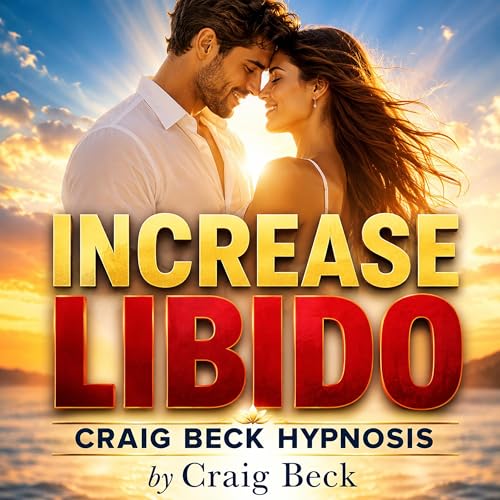 Low libido is not a depletion of some fixed quantity of desire. It is the absence of the conditions in which desire naturally arises. Modern life systematically removes those conditions through chronic stress, mental overload, identity shift, and the slow erosion of safety and novelty within long-term relationships. The desire is not gone. The internal weather in which it grows has been quietly disassembled. Hypnosis works on low libido because it restores the inner state in which wanting returns of its own accord, beneath the reach of conscious effort.
Ready to find the wanting again? Download Increase Libido: Craig Beck Hypnosis and start retraining the part of you that has been pressing the brake pedal for years.
Why Increasing Libido Has Nothing to Do With Forcing Yourself
The conventional advice for low libido tends to arrive in the form of small lifestyle prescriptions. Schedule date nights. Try date night underwear. Read this guide to bedroom novelty. Take this supplement. Drink less alcohol. Do more cardio. Each suggestion treats desire as a switch that can be flipped by sufficient effort. Desire is not a switch. It is the result of an internal state, and no amount of effort produces it once that state has been disassembled. Forcing yourself toward intimacy when the underlying state is wrong tends to deepen the aversion rather than resolve it. The conscious mind says yes, the body says no, and the resulting experience reinforces the body's vote for the next time.
The reason willpower keeps losing this fight is that libido lives downstream of state, not effort. You cannot will yourself into desire any more than you can will yourself to sleep on a night your nervous system has decided to keep you awake. The lever is in a different room. Once you find that room and use the right lever, the response returns naturally, often quite quickly. Conscious negotiation with your own body is rarely the right room.
The Hidden Wiring Behind Low Desire
The sex researcher Emily Nagoski has popularised what is sometimes called the dual control model of sexual response, originally developed by Erick Janssen and John Bancroft. The model proposes that sexual desire is governed by two simultaneous systems. An accelerator that responds to sexually relevant cues. A brake that responds to anything the brain reads as off, unsafe, distracting, or threatening. Most people with low libido do not have weak accelerators. They have very active brakes. The brake is being applied so consistently by the modern environment that the accelerator, regardless of how well it functions, simply cannot get the system moving.
According to research summarised by the American Psychological Association, this dual control framework has been replicated in multiple studies of both men and women, and it consistently identifies brake-related factors as the dominant driver of low desire in long-term relationships. Stress is a brake. Resentment is a brake. The mental list of unfinished tasks is a brake. The crying child two rooms over is a brake. Your limiting beliefs about your own desirability or the worthiness of taking time for intimacy are brakes too, often unconscious ones, that have been pressed lightly for years.
What Your Body Actually Needs Before Wanting Can Arise
If you traced backward from a moment of genuine desire in your earlier life, you would find a remarkably consistent set of preceding conditions. Enough sleep. Enough rest. Enough mental space free from the running list of obligations. Enough safety in the relationship to be vulnerable. Enough novelty to keep the experience interesting. Enough physical health to feel comfortable in your own skin. Enough psychological availability to actually be present rather than watching from somewhere slightly outside yourself. These are not luxuries. They are the soil in which desire grows. Remove them, and the most enthusiastic accelerator in the world cannot produce the response.
Modern life is remarkably efficient at removing these conditions one by one. The smartphone in the bedroom erodes the mental space. The work load erodes the rest. The children erode the privacy. The years erode the novelty. The accumulating relationship resentments erode the safety. By the time most couples reach their second decade together, the soil has been so thoroughly compacted that nothing can grow in it, regardless of how much they want to want each other. The desire is not the problem. The garden is.
The Brake Pedal That Has Been Pressed for Years
The single biggest contributor to chronic low libido in long-term relationships is what researchers call cognitive interference, the inability to mentally arrive in the moment because the brain is busy doing something else. The to-do list. The work email. The schedule for tomorrow. The thought you had about your mother's birthday card. The faint sound of the dishwasher you forgot to start. Each of these is a small mental tab open in the background, and each one is a small foot on the brake pedal. By the time you are in the bedroom, the brake has been so thoroughly pressed by ordinary daily life that the accelerator could not move the car if it tried.
According to research published by the National Center for Biotechnology Information, cognitive distraction is one of the most reliable predictors of low sexual response in studies of both men and women in long-term relationships. The mind being elsewhere is the mechanism. Anything that pulls attention from the body into mental admin produces the same effect. Stress, anxiety, depression, parental load, work load, and the general overload of contemporary life all converge to keep the mind out of the room. Until the mind can return, the body cannot follow.
Done seeing the brake? Time to release it. Try Increase Libido: Craig Beck Hypnosis and let your subconscious step out of the supervisory role it has been holding for years.
How Modern Life Quietly Drains the Mental Space Desire Needs
Beyond the brake mechanism, there is the broader story of what chronic stress does to the hormonal and neurological systems that govern desire. Cortisol, the body's primary stress hormone, directly suppresses the production of the sex hormones that fuel libido. The body, when chronically stressed, makes a sensible biological decision. Survival before reproduction. The system downregulates desire because the environment is reading as too demanding to allow for it. This is not failure. It is intelligent prioritisation. The system is doing exactly what it is designed to do given the inputs it has been receiving. The trouble is that the inputs have been wrong for years.
And there is a layer beneath that, which most articles never reach. Identity. The version of you that desired and was desired in your twenties has been buried under several rounds of identity shift since then. The mother. The father. The professional. The caregiver. The reliable one. Each of these has gathered around you like sediment, and the sexual self underneath has slowly become invisible even to you. Until that underlying sexual self is allowed back into the picture, no amount of date night underwear will move the needle. The clothes can be changed. The deeper identity must be re-accessed at the same level it was buried.
How Hypnosis Reprograms the Desire Response
Hypnosis is uniquely effective for low libido because the brakes that produce it live precisely in the layer of mind hypnosis is designed to reach. It is not stage theatre. It is not surrender of free will. Hypnosis is a focused state of relaxed attention, scientifically observable, in which the protective filter between conscious thought and the deeper machinery softens, and new instructions can be loaded directly into the part of you that has been holding the brake down. Your conscious mind does not need to argue the brake into releasing. The work happens in the layer where the brake actually lives.
If you have ever sat on a quiet beach and watched the tide come in for what felt like ten minutes only to realise an hour had passed, you have already touched the threshold of trance. The brain naturally enters states like this many times a day. Hypnosis steers you into one deliberately and uses the open channel to do something targeted. For low libido, that means releasing the chronic brake pressure of accumulated mental load, restoring the inner state of safety and availability that desire requires, dissolving the resentments and unspoken grievances that have been quietly attached to intimacy, and reconnecting you with the sexual self that has been buried under decades of other identities.
Identity is the deepest leverage point. Most advice on libido tries to change behaviour while leaving the underlying identity of "person whose desire has gone" untouched. Behaviour change without identity change is fragile. The next exhausting Tuesday will collapse it. Hypnosis goes underneath the behaviour and updates the file labelled "who I am inside my own body." Once that file shifts, desire returns as the natural consequence rather than the result of effort. Neuroplasticity, the brain's lifelong ability to rewire itself, rewards consistent input. The new pattern hardens with each session.
What Happens While You Listen
The Increase Libido recording opens with a slow, careful induction. The breath lengthens. The body softens. The mental commentary that has been running domestic admin since you opened your eyes today finally falls silent. Brainwave activity moves from the rapid beta of waking thought into the slower alpha and theta frequencies associated with deep meditation and the threshold of sleep. The doorway to the subconscious quietly opens, and the real work begins.
The script then guides your unconscious mind through a series of structured suggestions designed to release the chronic brake and restore the conditions in which desire arises. Carefully sequenced language invites the part of you that has been holding the supervisory role to step back, the mental tabs to close, the resentments to soften, and the sexual self to come back into the room. Visualisation walks you through the felt experience of being present in your own body, of receiving touch without the running commentary, of wanting that arises rather than wanting that is performed. The body learns, in trance, what no amount of date nights has been able to teach it sustainably.
Most listeners report a softening of the brake within the first week of nightly use. By the four to six week mark, the inner conditions for desire have begun to return, and intimacy stops feeling like an obligation. The change is rarely a single dramatic moment. It is more often the slow realisation that you reached for your partner last night without thinking about it, and you cannot remember when that was last true.
The Question Nobody Asks About Low Libido
Everybody asks how to want sex again. Almost nobody asks who they become inside the relationship once desire returns. That second question is where the real change lives.
 When the brake finally releases, the surface changes show up first. Intimacy becomes available again. The bedroom stops being a low-grade source of guilt and starts being a place you both genuinely look forward to. The conversations beforehand stop carrying the quiet undertow of performance pressure. The mornings after stop involving silent calculations about whose turn it might be to initiate next. The relationship, which had been quietly contracting around the issue, expands back into its full shape.
The deeper change runs underneath. The chronic background guilt of feeling broken, deficient, or unfair to a partner who deserves more, dissolves. The mental load of carrying that guilt becomes available for actually enjoying your life. You become more present everywhere, not just in the bedroom, because the underlying mental availability has been restored at a baseline level. Friendships warm. Conversations deepen. The world around you registers more vividly. The version of you who had been quietly half-absent for years comes back into focus, and most of the relationships in your life benefit from the return.
Past listeners describe a strange sense of meeting their partner for the first time in years. The version of the relationship that existed before the brake took over slowly comes back into view. Many also describe an unexpected shift in their relationship with themselves. The body that had been gently disliked, neglected, or treated as a stranger becomes available again as a source of pleasure rather than another obligation. Self-worth lifts as a side effect, because the parts of you that had quietly closed down have been allowed to reopen.
None of this requires you to become some sort of bedroom enthusiast. The aim is not constant desire. The aim is the return of the natural availability you used to have, the kind that arrives gently in moments when the inner conditions are right, and that allows intimacy to be one of the genuinely good parts of long-term love rather than another thing to manage. Hypnosis is the cleanest route there, because it works in the layer where the brake has been quietly pressed for years. If your low libido is linked to a specific medical or hormonal issue, please do also speak with your doctor. The recording works very well as a complement to medical care, addressing the layer that medication and lifestyle changes alone rarely reach.
Stop pretending the absence of desire is something you can solve by trying harder. Download Increase Libido: Craig Beck Hypnosis and let the system that has been pressing the brake finally take its foot off. The version of your relationship waiting on the other side of one released pedal is closer than the quiet pretence at the bedside lamp has allowed you to imagine.
What Listeners Are Saying
Rebecca J., Lexington, Kentucky: "After my second baby in 2020 I felt my desire vanish entirely. I am forty-three now and I had quietly accepted that this part of my life was simply over. My husband was patient and never pushed, which somehow made the guilt worse. Six weeks of nightly listening to this recording and something has genuinely changed. Not constantly. But there are moments now where I reach for him rather than the other way around, and the relief on both sides is enormous."
David W., Memphis, Tennessee: "I am a fifty-one year old man who had assumed my libido had simply faded with age. My GP confirmed my hormone levels were normal. I bought this on a sceptical whim. Five weeks of using it before sleep and the desire is back at a level I had not experienced in roughly a decade. My wife asked me at breakfast what was different. I told her honestly and she laughed and said she had wondered the same thing."
Anita F., Tacoma, Washington: "I have spent fifteen years in a wonderful marriage with no desire to speak of. Therapy did not help. Couples counselling did not help. Books did not help. Seven weeks of nightly listening to this recording and I genuinely want my husband again for the first time since our wedding. He is, frankly, in shock. I am, frankly, in shock. I do not understand the mechanism. I do not need to."
Frequently Asked Questions
Does low libido always have a psychological cause?
No. Low libido can be driven by hormonal imbalances, certain medications, thyroid conditions, depression, and several other medical factors that benefit from proper clinical assessment. If you have not yet seen a doctor about persistent low desire, please consider doing so. The recording is most effective for the psychological component, which is the dominant driver in many cases. For low libido with both medical and psychological elements, the combination of clinical care and the recording produces consistently better outcomes than either approach alone.
How quickly will I notice a difference?
Most listeners report a softening of the inner pressure and a return of mental availability within the first seven to ten days of nightly use. Genuine returns of desire tend to follow inside four to six weeks of consistent listening, as the chronic brake gradually releases. Deeper changes, in which the bedroom returns to feeling like a place of pleasure rather than obligation, develop over two to three months. Repetition is the variable that matters most. Treat the recording as a nightly ritual and the new pattern continues to consolidate.
Will this work if my partner has not changed?
The recording works on your internal state, which is the layer almost entirely under your own control. Many listeners find that their partner responds positively to the shift even without knowing exactly what has changed, because relationships are systems and changing one component changes the dynamic. If there are deeper relational issues at play, couples counselling can be a valuable complement. Many listeners use both. The recording addresses the psychological brake mechanism in you. Counselling addresses the shared patterns. Together they tend to produce considerably more progress than either alone.
About the Author
 Craig Beck is internationally recognised as one of the leading voices in persuasion, behavioural psychology, and the mechanics of inner change. A certified NLP Master Practitioner, clinical hypnotherapist, former UK broadcaster, and bestselling author of more than one hundred books and audio programmes, he has spent two decades dismantling the patterns of anxiety, overload, and quiet self-restriction that erode the parts of life people most value, including intimacy. Over a million listeners around the world have used his hypnosis recordings to release phobias, retire compulsive habits, and reopen the rooms of their lives that had quietly closed. He does not deliver theory from a textbook. He works in the layer underneath conscious thought, where every meaningful change begins. You can read more about his approach on his about page.
Last updated: 11 May 2026