Improve Posture Rewired: How Hypnosis Lifts Your Frame From Within
May 11, 2026Improve Posture Rewired: How Hypnosis Lifts Your Frame From Within
You caught your reflection in a shop window this morning and you flinched. The person looking back at you had your face but somebody else's body language. Shoulders rolled forward like a question mark waiting to be answered. Head poking out toward the phone you were holding two inches from your chin. The chest collapsed in a way you do not remember happening. You straightened up for about four seconds and felt rather noble about it. By the time you reached the bus stop, you had quietly returned to exactly the shape that had bothered you in the glass. Welcome to posture, the most honest conversation your body has ever had with the world, and the one you keep trying to override with a thirty-second adjustment.
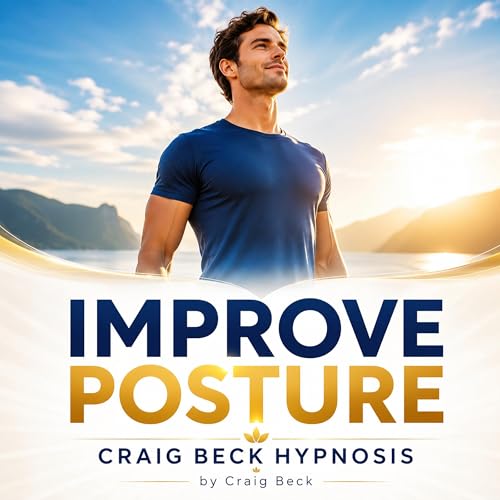 Improving posture is not a habit you can fix with conscious effort. Your posture is a portrait of the emotional load your body has been carrying without permission to release. The slumped shoulders, the forward head, the collapsed chest, are not bad mechanics. They are the shape your body holds when it cannot fully let down its guard. Hypnosis works on posture because it speaks to the part of you that has been holding that shape, in the layer where the holding actually happens, beneath the reach of conscious correction.
Ready to lift the load? Download Improve Posture: Craig Beck Hypnosis and start retraining the part of you that has been quietly shaping your body since long before this morning's reflection.
Why Improving Posture Has Nothing to Do With Standing Up Straight
The conventional approach to posture is a small museum of well-meaning suggestions that almost never work. Imagine a string pulling you up from the top of your head. Roll your shoulders back. Pull your navel in. Tuck your tailbone. Stand against a wall and memorise the feeling. Set a reminder on your phone every twenty minutes. Buy a lumbar pillow. Buy a standing desk. Buy a posture corrector that gently shocks you whenever you slouch. Every one of these approaches assumes posture is a discipline issue, and that more conscious attention will produce a permanent change. Within a fortnight, you are back to the question mark.
The reason these strategies fail is that posture is not under conscious control most of the time. It is run by deep postural muscles, fascia, and the autonomic nervous system, all of which are responding to information you are not aware of receiving. Your conscious mind can override the system for thirty seconds. The system reasserts itself the moment your attention drifts. Asking willpower to maintain your alignment all day is like asking yourself to remember to breathe. Possible in short bursts. Impossible as a permanent setting.
The Hidden Wiring Behind the Slump
Inside the body sits a postural system that has been quietly choreographed by every experience you have ever had. The autonomic nervous system, the silent partner that runs your heart rate, your digestion, and your breathing, also runs your default body shape. When the system is calm, the body opens. Shoulders drop. Chest broadens. Head balances effortlessly. When the system is on guard, the body closes. Shoulders curl forward. Chest collapses. Head juts out as if scanning for something approaching. The shape your body is in right now is a real-time readout of where your nervous system has been living for the past several years.
For most modern adults, the system has been on quiet guard for a long time. Stress at work. Hours spent over a phone. Sleep that never quite restores. Old emotional weight that has been suppressed rather than felt. Each one of these pulls the body into the protective shape and keeps it there. According to research summarised by the American Psychological Association, posture and mood are bidirectionally linked, meaning your body shape both reflects and reinforces your psychological state. The slump is not just a consequence of your inner life. It is part of the loop that maintains it. Limiting beliefs about your right to take up space or be seen sit on top, further compressing the frame.
What Your Body Is Quietly Saying About How You Feel
If you watched a silent video of yourself walking through a typical Tuesday, you would learn more about your private emotional life than any therapist could extract in a year. The forward head says you are scanning for what is next instead of inhabiting where you are. The rolled shoulders say you are guarding the heart from something the conscious mind has dismissed as long since over. The collapsed chest says the breath has been shallow for years because the body decided full breathing was unsafe somewhere along the line. The tilted pelvis says you have been bracing against something for so long that bracing has become the default. None of this is mechanical failure. All of it is communication.
The painful irony is that the modern world is built around forcing your body deeper into these shapes. Phones held below eye line for hours every day. Laptops on kitchen tables. Cars whose seats compress the chest. Sofas that swallow you whole. The cultural environment is in continuous conversation with your nervous system, and the conversation is reinforcing the same protective posture your earlier emotional experiences had already been writing into the frame. You are not slouching because you are weak. You are slouching because the body is doing exactly what it was designed to do in response to the signals it has been receiving for years.
The Protective Hunch Your Subconscious Is Holding For You
The psychiatrist Wilhelm Reich, working in the 1930s, observed that chronic muscle tension in patients often corresponded to specific emotional patterns they had been suppressing. He called this phenomenon character armour, the idea that the body builds physical defences around feelings it has not been safe to express. Modern researchers describe the same observation in different language, but the underlying principle has held up. Muscles that brace for years lose their ability to relax even when the original threat has long since passed. The body keeps holding the shape because the system has forgotten there is any other shape available.
For many people with chronic poor posture, the armour was built in childhood. A small body trying to take up less space in a household that did not have room for it. A teenager rolling the shoulders forward to hide the changes in the chest they were embarrassed about. A young adult learning to make themselves smaller in workplaces that punished visibility. Each adaptation seemed sensible at the time. Each one wrote itself into the deep postural muscles. Decades later, the original reasons have been forgotten, the original threats are gone, and the armour is still standing. You wake up in a shape your conscious mind never agreed to, because the body never received the message that the war is over.
How Poor Posture Reshapes Your Confidence and Energy
The downstream cost of habitual poor posture is much larger than the cosmetic concern that brought most people to the topic in the first place. The compressed chest reduces the volume your lungs can fill, which lowers oxygen uptake, which raises baseline fatigue and lowers concentration. The forward head shifts the load on the cervical spine by tens of pounds, generating tension that spreads into the jaw, the shoulders, and the head, eventually producing headaches, jaw pain, and chronic tightness. The collapsed abdomen compresses digestion and contributes to the kind of sluggishness that no amount of coffee resolves.
And then there is the psychological cost. Posture and mood communicate constantly across the same neural channels, which means your habitual shape is teaching your brain how to feel about itself every moment of every day. Research published by the National Center for Biotechnology Information has demonstrated that participants who sat upright during stressful tasks reported higher self-esteem, better mood, and lower fear than those who sat slumped, even when the task itself was identical. The slump is not a neutral position. It is a continuous, low-level signal to the nervous system that you are smaller, less safe, and less worthy of taking up space. You have been receiving that signal from your own body, every minute, for as long as the posture has been in place.
Done analysing the shape? Time to update it. Try Improve Posture: Craig Beck Hypnosis and let your subconscious set down the armour it has been holding for you.
How Hypnosis Reprograms the Body's Default Shape
Hypnosis is uniquely effective for posture because the holding pattern that produces poor alignment lives precisely in the layer of mind hypnosis is designed to reach. There is no swinging watch and no surrender of free will. It is a focused state of relaxed attention, scientifically observable, in which the protective filter between your conscious mind and the deeper systems softens, and new instructions can be loaded directly into the part of you that has been running the postural set-point. Your conscious mind does not need to remember to stand up straight. The work happens beneath the reminder.
 If you have ever been swimming in a warm pool and felt your shoulders unhook from your ears for the first time in months, you have already touched the threshold of trance. The brain enters states like this many times a day. Hypnosis steers you into one deliberately and uses the open channel to do something targeted. For posture, that means inviting the deep postural muscles to release the chronic bracing, allowing the autonomic nervous system to recognise that the original threats are no longer present, and updating the body's default shape from defensive to open. The change is not a rule you must enforce. It is a setting that quietly shifts.
Identity is the deepest leverage point. Most posture work tries to change the body while leaving the underlying identity of "person who slouches" untouched. Behaviour change without identity change is fragile. The body will return to the shape that matches the inner story within hours. Hypnosis goes underneath the body and updates the file labelled "who I am inside my own frame." Once that file changes, the body follows without effort. Neuroplasticity, the brain's lifelong ability to rewire itself, responds to consistent input the way the spine responds to consistent space. The new pattern hardens with each session.
What Happens While You Listen
The Improve Posture recording opens with a slow, careful induction. The breath lengthens. The shoulders ease. The mental commentary that has been quietly criticising your reflection since this morning falls silent. Brainwave activity moves from the rapid beta of waking thought into the slower alpha and theta frequencies associated with deep meditation and the threshold of sleep. The doorway to the body's automatic systems quietly opens, and the real work begins.
The script then guides your unconscious mind through a series of structured suggestions designed to release the long-held bracing patterns and install a new default shape. Carefully sequenced language invites the postural muscles to lengthen, the chest to broaden, the head to balance, and the autonomic nervous system to stand down from the chronic guard it has been holding for years. Visualisation walks you through the felt experience of moving through an ordinary day in a body that no longer carries the armour, of catching your reflection and finding a relaxed, upright frame looking back. The body learns, in trance, what no amount of conscious effort has ever been able to teach it sustainably.
Most listeners notice the chest opening and the shoulders dropping within the first week of nightly use. By the four to six week mark, the default shape has begun to shift in ways visible to other people. The change is rarely a single dramatic moment. It is more often the slow realisation that you have just spent two hours at a desk without your head creeping forward, and you cannot remember the last time that was true.
The Question Nobody Asks About Posture
Everybody asks how to stand up straighter. Almost nobody asks who they will become once the body is no longer holding the old defensive shape. That second question carries far more than the cosmetic answer the first one usually receives.
When the posture shifts, the surface changes arrive first. You appear taller, even though no inches have been added. You look younger, because the slump that ages a body more than wrinkles has lifted. You photograph differently, because the silent narrative of defensiveness has been replaced by something more open. Strangers begin to treat you with subtly more deference, because the human nervous system reads upright posture as competence and authority without anyone consciously deciding to do so. Job interviews go better. First impressions land cleaner. The version of you that was always being underestimated finally gets a fair hearing.
The deeper change runs underneath. The chronic background tension of carrying the old armour drops away, and the energy it had been consuming becomes available for everything else. Breathing deepens, often for the first time in decades. Sleep improves, because the body is no longer fighting its own tension all night. Mood lifts measurably, because the postural signal arriving at the brain has changed. You become more present in your own body, more aware of how it feels, more interested in moving it. The exercise habits that used to require willpower start to feel obvious, because the system finally remembers that movement is enjoyable when the frame is no longer braced.
And there is a quieter shift that listeners report many months in. The relationship with yourself changes. You stop hiding. You stop apologising for the space your body occupies. You stop performing smallness around people you used to feel intimidated by. The voice you carry into rooms becomes steadier because the diaphragm has room to work. The eye contact you make becomes longer because the head is no longer ducking. Confidence stops being a thing you must summon and becomes a thing your body is broadcasting before you have spoken a word. The world responds accordingly.
None of this requires you to become rigid, theatrical, or performatively upright. The aim is not parade ground bearing. The aim is the natural ease of a body that is no longer holding an old emotional load it was never meant to carry indefinitely. Hypnosis is the cleanest route there, because it speaks to the part of you that has been doing the holding all along, in the language that part actually understands.
Stop renegotiating with your reflection every morning. Download Improve Posture: Craig Beck Hypnosis and let the system that has been carrying the old armour finally lay it down. The version of your body waiting on the other side of one updated set-point is closer than the shop window has allowed you to imagine.
What Listeners Are Saying
Jessica B., Portland, Oregon: "I am five foot ten and I have spent my whole adult life trying to look five foot seven. The slump felt permanent. Two physiotherapists, one chiropractor, and a thousand reminders on my phone made no difference. Five weeks of nightly listening to this recording and my mother told me at lunch that I looked different. She could not put her finger on it. I knew exactly what had changed. I have stopped folding myself inward."
Marcus L., Indianapolis, Indiana: "I am a software developer. I have been hunched over a keyboard for sixteen years. I had resigned myself to the curved upper back and the perpetual neck pain. Six weeks of using this recording every night and the pain has dropped to almost nothing. I caught a glimpse of myself in a glass door at work last week and did not recognise the upright person walking through it. Whatever this is, it works in a way I cannot explain."
Sandra K., Reno, Nevada: "I am forty-six and I have been told to stand up straight by everyone in my life since I was eleven. None of it ever held for more than ten minutes. Seven weeks into using this recording and my husband took a photograph of me at our anniversary dinner and I cried because I looked like myself in a way I have not for thirty years. The body remembers, and apparently it can be reminded."
Frequently Asked Questions
Can hypnosis really change my posture?
Hypnosis cannot correct structural conditions that require medical or physiotherapy intervention, and severe spinal issues should always be assessed by a qualified clinician. What hypnosis can do is release the chronic muscular bracing and the subconscious holding patterns that account for the majority of habitual poor posture in otherwise healthy adults. By updating the autonomic system's default shape and dissolving the long-held armour, the body returns to a more natural, upright alignment. The changes are gradual, durable, and visible to other people within weeks of consistent listening.
How quickly will I see improvement?
Most listeners notice the chest opening and the shoulders softening within the first seven to ten days of nightly use. Visible changes in standing posture and a more upright default shape typically settle in over four to eight weeks. Deeper improvements in breathing, energy, and the absence of chronic tension tend to develop over two to three months. Repetition is the variable that matters most. Treat the recording as a nightly ritual and the new pattern hardens until upright alignment becomes the body's default state rather than something you have to remember.
Should I still do posture exercises or physiotherapy?
Absolutely, if those approaches are appropriate for your situation. The recording works best alongside sensible movement, strengthening of the postural muscles, and any clinically indicated treatment. Where physiotherapy addresses the mechanical layer, hypnosis addresses the subconscious holding pattern and the autonomic set-point. The combination tends to produce results neither approach achieves alone. The conscious work strengthens the body. The hypnotic work updates the inner story telling the body what shape to be.
About the Author
 Craig Beck is internationally recognised as one of the leading voices in persuasion, behavioural psychology, and the mechanics of inner transformation. A certified NLP Master Practitioner, clinical hypnotherapist, former UK broadcaster, and bestselling author of more than one hundred books and audio programmes, he has spent two decades dismantling the patterns of fear, habit, and physical holding that quietly shape people's lives, and engineering the tools that release them. Over a million listeners around the world have used his hypnosis recordings to break addictions, retire phobias, and rebuild the inner architecture of body and mind. He does not deliver theory from a lecture hall. He works in the layer underneath conscious thought, where every meaningful change begins, and walks you through the process step by step. You can read more about his approach on his about page.
Last updated: 11 May 2026