
Emotional Eating Rewired: How Hypnosis Stops the Cycle
May 11, 2026Emotional Eating Rewired: How Hypnosis Stops the Cycle
You opened the fridge five minutes ago and you cannot remember why. The pasta you ate at lunch should have been enough. The chicken from yesterday should have been enough. The handful of crackers you grabbed while the kettle was boiling should have been enough. None of it was. Your hand is in a packet of something now and you are eating standing up at the kitchen counter, scrolling your phone with the other hand, telling yourself again that you will start fresh on Monday. It is Thursday. You started fresh on Monday three Mondays ago. Welcome to emotional eating, the most articulate language your body has ever learned to speak, and the one your conscious mind has been trying not to listen to for the better part of two decades.
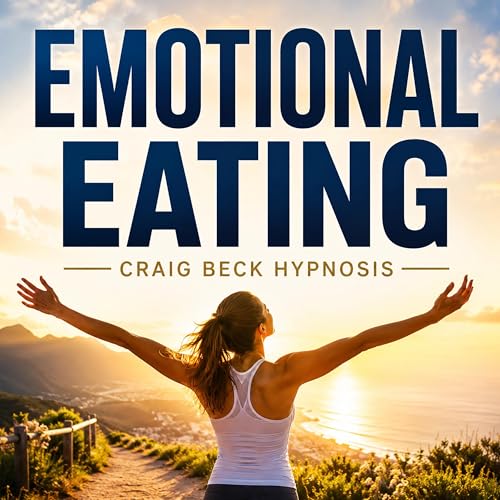 Emotional eating is not a willpower problem or a hunger problem. It is a translation problem. The body produces an emotional signal. The mind cannot identify or accept it. The nervous system reaches for the most reliable comfort it knows, which is food. The eating soothes the moment but never addresses the original feeling, so the feeling returns, and the cycle compounds. Hypnosis works on emotional eating because it teaches the system to read the signal instead of feeding it, which is the only place lasting change has ever happened.
Ready to stop the cycle? Download Emotional Eating: Craig Beck Hypnosis and start retraining the part of you that has been confusing feelings for hunger since childhood.
Why Emotional Eating Has Nothing to Do With Hunger
The conventional approach to emotional eating treats it as a behavioural error to be managed through better choices. Eat smaller portions. Drink water before reaching for food. Keep a food diary. Use the hunger scale before every meal. Wait twenty minutes to see if the craving passes. Each of these techniques addresses the symptom and ignores the language being spoken underneath. Emotional eating is not a misfire in the hunger system. It is a working communication channel doing exactly what it was trained to do. Trying to silence it with rules is like trying to stop someone shouting for help by gluing their mouth shut.
The cruel feature of the modern advice landscape is that it consistently positions emotional eaters as the problem. Lacking discipline. Lacking commitment. Lacking the magic ingredient successful dieters supposedly possess. The truth is closer to the opposite. Emotional eaters are people whose internal communication systems are functioning so loudly that they overpower every dietary intervention. The system is not broken. It is shouting. Stopping it requires understanding what it is saying, not muffling the volume.
The Hidden Wiring Between Feeling and Fork
Somewhere in your past, the pathway from feeling to food was wired in with remarkable efficiency. For some, it was installed by a parent who handed over a biscuit every time tears welled up, teaching the small version of you that sadness gets resolved at the kitchen counter. For others, it was learned through cultural ritual, where every birthday, every holiday, every difficult day was marked by a particular plate of something rich and warming. For others still, it was an act of quiet rebellion in adolescence, when food became the one thing nobody else could control. Whatever the route, the pathway was carved into the nervous system long before your adult conscious mind had a vote in the matter.
According to research summarised by the American Psychological Association, emotional eating shows strong continuity from childhood into adulthood and is significantly more common in households where emotional expression was discouraged or unsafe. The mechanism is straightforward. A growing child who cannot name, share, or process feelings will reach for the most available emotional regulator in the environment. In most homes, that regulator was food, sitting patiently in the cupboard, asking no questions. Limiting beliefs about which emotions are acceptable to feel, and which must be quickly disposed of, then reinforce the pathway across decades.
What Your Subconscious Is Trying to Say With the Snack
If you could pause yourself mid-fridge-raid and ask the part of you reaching for food what it actually wants, you would hear answers that have very little to do with calories. It wants to be soothed. It wants to feel held. It wants the world to slow down for ten minutes. It wants the conversation you had with your boss earlier today to stop replaying. It wants permission to put down a load you have been carrying since Sunday. The food is the only language the system has access to in this moment, because the underlying need has never been given a different vocabulary.
This is why most emotional eating happens in the hour before bed and the hour after a difficult interaction. The mind is closing down its analytical functions and the body is finally being heard. The feelings that have been suppressed all day are surfacing, and there is no other channel set up to receive them. The fork becomes the closest thing to a listening ear. The plate becomes the closest thing to a hug. The packet becomes the closest thing to permission to feel something. Every reach for food during one of these moments is a small, unconscious request for an internal experience the system does not yet know how to give itself directly.
The Translation Problem That Drives the Binge
Psychologists describe the inability to identify and label one's own emotional states as alexithymia, and research has shown a measurable association between higher alexithymia scores and disordered eating patterns. The principle is simple. If your nervous system cannot tell the difference between sadness, loneliness, anxiety, fatigue, and boredom, all five sensations will be experienced as a vague internal discomfort. The brain, looking for something to do about the discomfort, defaults to the regulator with the fastest payoff. Food, especially food rich in fat, sugar, or salt, provides immediate physical sensation, distracts the conscious mind, and produces a small wave of vagal tone that genuinely calms the body. The relief is real. The match between the relief and the original problem is almost zero.
 A related concept, interoception, refers to your ability to accurately perceive internal bodily states. Researchers writing for the National Center for Biotechnology Information have demonstrated that people with poor interoceptive awareness routinely confuse emotional sensations with hunger, thirst, fatigue, and arousal. The signal arriving at the conscious level is interpreted through whatever template the system finds most familiar. For emotional eaters, that template reads almost every uncomfortable internal sensation as a request for food. The translation problem becomes the fork problem becomes the wardrobe problem becomes the self-respect problem, all from a single broken link in the system.
Done analysing the loop? Time to interrupt it. Try Emotional Eating: Craig Beck Hypnosis and let your subconscious learn to read the signal rather than smother it.
How Emotional Eating Hijacks the Body's Comfort Signal
Every emotional eating episode produces a complicated cocktail of consequences. In the short term, dopamine rises, the vagus nerve responds to the act of chewing and swallowing with a small wave of parasympathetic calm, and the conscious mind gets a brief reprieve from whatever was uncomfortable. In the medium term, the brain logs the entire experience as effective comfort and strengthens the neural pathway between feeling and food. In the long term, the body experiences metabolic strain, weight gain in many cases, sleep disruption, and a slowly intensifying shame cycle that itself becomes another emotion the system needs to medicate.
The shame loop is the cruellest mechanic. You eat in response to a feeling. The eating produces shame. The shame is a feeling. The shame triggers more eating. By the time the cycle has been running for years, the original emotional signal has been buried under multiple layers of subsequent eating, and the system no longer remembers what started the whole thing. The fridge has become a chapel of small private confessions you keep making to yourself and immediately drowning out. This is rarely visible to anybody else. It is exhausting to the person living inside it, and it can persist for decades while the world sees only the surface.
How Hypnosis Reprograms the Reach for Food
Hypnosis is uniquely suited to emotional eating because the pattern lives in exactly the layer of mind that hypnosis is designed to reach. It is not stage performance. It is not surrender of free will. Hypnosis is a focused state of relaxed attention in which the critical filter between your conscious mind and the deeper machinery softens, and new instructions can be loaded directly into the part of you that runs the pathway from feeling to food. Your conscious mind does not need to win an argument with the impulse. The work happens at a layer beneath the argument, which is the only level at which lasting change has ever been documented.
If you have ever stared at rain on a window for fifteen minutes and emerged feeling oddly calm without quite knowing why, you have already touched the threshold of trance. The brain enters these states many times a day. Hypnosis steers you into one deliberately and uses the open channel to do something targeted. For emotional eating, that means severing the automatic link between unidentified emotion and the kitchen, retraining the system to receive feelings as signals rather than threats, and installing a new internal vocabulary in which discomfort is recognised, named, and addressed at the level it actually lives.
Identity is the deepest leverage point. Most weight management approaches try to change behaviour while leaving the underlying identity of "emotional eater" untouched. Behaviour change without identity change is fragile, because the old identity will pull you back the moment a hard week arrives. Hypnosis goes underneath the behaviour and updates the file labelled "how I respond when I feel something difficult." Once that file changes, food becomes nourishment again rather than therapy. Neuroplasticity, the brain's lifelong capacity to rewire itself, rewards consistent input. The new pattern hardens with each session.
What Happens While You Listen
The Emotional Eating recording opens with a slow, deeply settling induction. The breath lengthens. The body softens. The mental commentary that has been narrating your relationship with food since you opened your eyes today finally falls silent. Brainwave activity moves from the rapid beta of waking thought into the slower alpha and theta frequencies associated with deep meditation and the threshold of sleep. The doorway to the subconscious quietly opens, and the real work begins.
The script then guides your unconscious mind through the felt experience of a fundamentally different relationship with both food and emotion. Carefully sequenced suggestions invite the part of you that has been reaching for the cupboard to recognise the original feeling instead, to receive it as information rather than threat, and to discover that emotions can be experienced fully without being medicated. Visualisation walks you through the felt experience of standing in front of the open fridge and noticing, in real time, that what you wanted was not food at all. Embedded language updates the deeper pathway. Post-hypnotic anchoring folds a new response into the very moments where the old reach used to slip in unnoticed.
Most listeners report a softening of the automatic reach within the first week of nightly use. By the four to six week mark, the late-night fridge visits tend to fade into a memory of an earlier version of themselves. The change is rarely a single dramatic moment. It is more often the slow realisation that you have just had an objectively difficult day and have not been near the kitchen, and you cannot quite remember when that was last possible.
The Question Nobody Asks About Emotional Eating
Everybody asks how to stop the eating. Almost nobody asks what becomes possible once the channel is no longer needed. That second question is where the genuine transformation lives, and the diet industry has spent fifty years carefully avoiding it.
When the link between feeling and food finally dissolves, the surface changes show up first. Weight that was being driven by emotional consumption begins to release of its own accord, often without changes in formal diet, because the unconscious snacking that was carrying most of the surplus simply stops happening. Energy stabilises. Sleep deepens. The complicated relationship with the kitchen, the bathroom scales, and your own wardrobe quietens dramatically. These changes are real, and they are also the least interesting thing that occurs.
The deeper change is what happens to your emotional life when food is no longer doing the regulating for you. Feelings that had been buried for years come into focus. The loneliness underneath the late-night packet of crisps becomes visible, and once visible, can finally be tended to properly. The resentment that had been swallowed every time you ate after a difficult conversation surfaces and asks for attention. The grief, the anxiety, the boredom, the fatigue, each finds its own voice. This is uncomfortable for a few weeks. It is also where freedom lives. Once your feelings can be felt and met directly, your nervous system relaxes, and the pull toward food dissolves because the function it was performing is no longer needed.
Past listeners describe a strange sense of being more in their own bodies than they have ever been. The food becomes ordinary again, neither demonised nor revered. Mealtimes return to being practical events rather than emotional landmines. The chronic background calculation about what was eaten, what should be eaten, and what was eaten in secret simply stops. The mental real estate this frees up is genuinely vast. It returns to you, intact, after years of being colonised by an internal argument with the contents of your kitchen.
And there is a quieter shift, often reported months in. The relationship with yourself transforms. The shame around food, the body, and the secret behaviours softens and eventually disappears. You stop being your own harshest critic in the supermarket. You stop hiding wrappers in the bin. You stop apologising silently for every plate. The kindness you have always extended to friends finally becomes available to yourself, and the surplus you experience as a result tends to ripple outward into every other corner of your life.
None of this requires you to renounce food or to live a life of careful restriction. The aim is not control. The aim is freedom from compulsion, which is a different country altogether. Hypnosis is the cleanest route there, because it speaks to the part of you that has been doing the reaching all along, in the language that part actually understands.
Stop letting unspoken feelings finish themselves at the kitchen counter. Download Emotional Eating: Craig Beck Hypnosis and let the system that has been speaking in food finally find a new vocabulary. The version of your evenings waiting on the other side of one rewired pathway is closer than the fridge door has allowed you to imagine.
What Listeners Are Saying
Megan W., Ann Arbor, Michigan: "I have been an emotional eater since I was eleven. I am thirty-nine. Every diet I have tried collapsed inside three months because none of them touched the part of me reaching for food when I felt anything difficult. Five weeks of nightly listening to this and the late-night cupboard runs have stopped. Not weakened. Stopped. I have lost nineteen pounds without trying. The fridge is finally just a fridge."
Jonathan F., Charlotte, North Carolina: "I am a stress eater. Hard week at work and I would put away an entire bag of crisps before I had even sat down. This recording finally got past the part of me that was running the show. Six weeks in and I came home after the worst meeting of my year and made an actual dinner instead of grazing destructively for two hours. My wife says I look different. She is right."
Allison M., Sacramento, California: "I have used food to manage my emotions since my divorce in 2018. Nothing else has worked. Therapy helped me understand the pattern but I could not stop doing it. Seven weeks of listening to this nightly and I have stopped reaching for food when I feel sad. I do not fully understand the mechanism. I only know I feel like I have my evenings back."
Frequently Asked Questions
Is emotional eating the same as binge eating disorder?
They overlap but are not identical. Binge eating disorder is a clinically defined condition involving recurrent episodes of consuming large quantities of food while feeling out of control, and it requires proper professional assessment. Emotional eating is a broader pattern in which food is used to regulate feelings, and it can range from mild to severe. Hypnosis is effective for both because they share the same underlying mechanism in the link between emotion and food. Severe symptoms should also be discussed with a clinician, with the recording used as a complementary daily practice alongside any professional care.
Will I lose weight from listening?
Weight changes vary from person to person and are not the primary aim of the recording. Many listeners do experience weight loss, often substantial, because the unconscious snacking that was driving most of their surplus simply stops happening once the emotion-to-food pathway dissolves. Others find their weight stabilises while their relationship with food becomes far calmer. The recording works on the underlying compulsion. Weight changes follow naturally if there was excess being driven by the pattern, but the freedom from compulsion is the change that matters most.
How quickly will I see results?
Most listeners notice the automatic reach softening within the first seven to ten days of nightly use. Behavioural changes, such as stopping the late-night cupboard visits, eating more mindfully at meals, and feeling less haunted by the kitchen, tend to settle in over four to eight weeks. The deeper identity shift, in which emotional eating stops being something you do because you stop being a person who reaches for food when you feel something, develops over two to three months of consistent listening. Repetition is the variable that converts a temporary shift into a permanent rewiring.
About the Author
 Craig Beck is internationally recognised as one of the leading voices in persuasion, behavioural psychology, and the mechanics of inner change. A certified NLP Master Practitioner, clinical hypnotherapist, former UK broadcaster, and bestselling author of more than one hundred books and audio programmes, he has spent two decades dismantling the patterns of compulsion, avoidance, and self-restriction that quietly run people's lives, and engineering the tools that release them. Over a million listeners around the world have used his hypnosis recordings to break addictions, retire compulsive habits, and rebuild the operating system inside their own minds. He does not deliver theory from a textbook. He works in the layer underneath behaviour, where every meaningful change begins, and walks you through the process step by step. You can read more about his approach on his about page.
Last updated: 11 May 2026