Death Lied to Me: The Evidence for Life After Death and Beyond
Sep 23, 2026Fear of Death Decoded: Why the Dread You Never Mention Runs Your Life
The fear of death is mostly a fear of dying: the pain, the indignity, the burden and the mess left behind, wrapped around a smaller, colder fear of simply not existing. Left unexamined, it never sits still. It steers your spending, your temper and your opinions from below the waterline. And the evidence about what happens when you die is far less settled than the lights-out story you were handed at school.
 It tends to arrive between three and four in the morning. Nothing has happened. Nobody is ill. You are lying in the dark listening to the fridge hum downstairs when your brain, without asking permission, starts doing arithmetic. How many more summers. How many more Christmases with both parents at the table. How many birthdays before the one where people talk in low voices in the kitchen. Your chest tightens, you roll over, and you do what every sensible adult does. You pick up the phone and scroll until the thought gets bored and wanders off. By breakfast it has been filed away, and you would sooner read your browser history aloud to the in-laws than admit you spent the night doing sums about your own funeral.
So, here is the question this article answers. If you never think about death on purpose, why does it keep thinking about you?
Want the whole case laid out, the evidence and the method together? Get Death Lied to Me on Amazon and weigh it for yourself.
What You Were Told Happens When You Die
The official line is short enough to fit on a beer mat. You are your brain. Your brain runs on oxygen. When the oxygen stops, the show is over, so there is no point dwelling on it. Say it in the pub and you will get sage nods, because it sounds like the grown-up position. Plenty of us arrived at it by walking out of a church. In the 2021 census for England and Wales, the share of people calling themselves Christian dropped below half for the first time, to 46 per cent. Leaving a belief you no longer hold is honest. The trouble is that nobody built anywhere else for those people to stand. They got the exit and no map, and the shrug moved into the empty space and started calling itself maturity.
I found out exactly what that shrug is worth in September 2007, when my then father-in-law died in Dublin. My daughter met me at the arrivals gate for the funeral, pushed her wet face into my coat and asked whether Granddad was in heaven. The word yes left my mouth before any part of me had voted on it. Then I caught the look from her older brother, who had heard me explain at more than one dinner table why heaven was a bedtime story, and the look said, Dad, you don't even believe that. He was right. What stung for years afterwards was realising that my confident sceptic's answer had never been checked either. I had inherited both versions, the way you inherit an accent, and delivered each one with total conviction.
The Crack in the Lights-Out Story
If the brain produces the mind the way a kettle produces steam, a brain with no blood flowing through it should produce nothing at all. No experience, no memory, nobody home. In 2001 a Dutch cardiologist tested that assumption the dull, careful way, by interviewing 344 consecutive cardiac arrest survivors from ten hospitals shortly after they were brought back. The results, published in The Lancet, showed that 62 of them, 18 per cent, reported a near-death experience from the window when their hearts had stopped. What bothered the sceptics most was what did not predict it. It had no link to how long the arrest lasted, to the drugs they had been given, or to how frightened of death they had been beforehand. A terrified brain inventing comfort should have been more likely to invent it. It was not.
The Stain Nobody Could See
Numbers persuade, but stories stick. In 1971 a young psychiatrist in Virginia called Bruce Greyson, the son of a no-nonsense chemist, dripped spaghetti sauce on his tie in the hospital canteen. His pager went off, so he buttoned his white coat over the stain and went to see an unconscious overdose patient. He spoke to her roommate in a separate room down the corridor. The next morning the patient, now awake, repeated that conversation back to him, told him where each of them had been sitting, and then mentioned the red stain on his tie. Nobody in the building had seen it. Greyson spent the next fifty years hunting for the ordinary explanation. He never found it, and he became one of the most careful researchers this subject has ever had.
The Surgeon Who Flapped His Elbows
In 1988 a Connecticut van driver called Al Sullivan went into emergency heart surgery with his eyes taped shut and his head behind a sterile drape. Afterwards he described watching the operation from above, and one detail sounded like nonsense. He said his surgeon was flapping his elbows like a bird trying to take off. That surgeon had a genuine habit of keeping his scrubbed hands flat against his chest and directing his team by pointing with his elbows. It is not the sort of thing a man picks up from hospital dramas. A single case can always be put down to luck, a careless conversation or a kind witness misremembering. Stack enough of them together, though, and each one needs its own escape hatch, while the experiencers only need one explanation for the lot.
Why "It Is Only Oxygen" Explains Less Than You Think
The favourite rebuttal is a starved brain, and it has real data behind it. Military researchers spun fighter pilots in centrifuges until the blood drained from their heads, and those pilots reported tunnel vision, bright lights and the odd floating sensation. Tidy enough. Except the blackouts came bundled with jerking limbs, confusion on waking and scrappy little dreams that faded by lunchtime, and nobody climbed out of the centrifuge a changed man. The near-death reports run the other way. They are ordered, vivid and stubborn, and people tell them the same way decades later. When researchers in 1990 pulled the medical records of 58 people who had reported these experiences, they found that the ones who had truly been close to death described brighter light and clearer thinking than the ones who only believed they were dying. A failing engine should splutter. This one appears to sharpen as it fails.
The strangest exhibit turns up in care homes, and nurses have described it for centuries. Researchers call it terminal lucidity. A person whose mind has been dismantled by dementia, a stroke or a tumour becomes clear again shortly before death. They use names. They ask after the grandchildren. They grumble about the tea. One collection of 49 such cases found that most happened in the final week of life, and a large share on the final day. Meanwhile, in 2023 a team at the University of Michigan recorded four comatose patients as life support was withdrawn and found a surge of organised, high-frequency brain activity in two of them, strongest in regions linked to conscious processing. All four died, so nobody can say what, if anything, was experienced. None of this amounts to proof. What it does is take the certainty out of the story you were handed, and certainty was the only thing holding that story up.
What the Fear of Death Is Doing to Your Brain Right Now
You might fairly ask why any of this matters to someone with a pulse, a mortgage and a full inbox. The answer lies in an experiment from 1989 that I think about more than is healthy. Twenty-two municipal court judges, people trained for years to keep emotion out of their decisions, were handed what looked like a routine personality questionnaire. Half of them found two extra questions tucked inside, asking what would happen to their body as they died and what the thought of it stirred up in them. Then every judge set bail for the same woman in the same straightforward case. The judges who had written about their own death set an average bond of $455. The rest set $50. Two questions produced nine times the severity, and not one of those judges could have told you why.
Psychologists call this mortality salience, which is a posh way of saying that a brief reminder of death makes people grip harder to whatever makes them feel permanent: their beliefs, their tribe, their rules and their stuff. A hearse at the traffic lights will do it, or a birthday with a zero on the end, or a hospital letter with a window in the envelope. The nasty twist is that the part of you that explains your behaviour never sees the reminder. It only sees the result, and it writes a perfectly reasonable press release to cover it. You were not frightened, you were being principled. You did not need the new car, you had earned it. And you did not snap at your son over dinner because of that phone call from the consultant. He was simply wrong about electric cars.
The Loop That Keeps the Fear Alive
Now watch the habit loop that runs every time the thought surfaces. The cue arrives: the hearse, the birthday, the 4am arithmetic. The routine follows: change the subject, pour the glass, open the app, find something urgent to do in the garage. Then the reward lands, which is the relief of the dread dropping back below hearing. Your brain logs that sequence as a success and runs it faster next time. The problem is what the loop prevents. Fear shrinks when you look straight at the thing you are afraid of and discover it is smaller than you imagined. Avoidance guarantees you never look, so the fear never gets tested, and an untested fear keeps its full size forever. It is the child who never checks under the bed. The monster does not need to exist. It only needs you to keep the light off.
How One Buried Fear Grows Into a Whole Life
A fear you refuse to examine does not go quiet. It goes underground and starts making decisions. It shows up as hurry, the sense that every hour must be protected, spent and justified, which is why you cannot sit on a bench for ten minutes without reaching for your pocket. It shows up as hoarding, the savings account treated as a sea wall against a tide nobody will name. And it shows up as performing, the endless audition for approval and legacy, as if enough people remembering your name could stand in for continuing to exist. That heaviness that lands around six o'clock on a Sunday evening, the one you blame on the weather or the week ahead, often has a deeper source than Monday morning.
We have also made ourselves unusually bad at facing it. Roughly two in every three deaths in England now happen behind a curtain in a hospital or a care home. A century ago people died in the front room with the family in the house and the neighbours calling in, and children saw it. We are the first generation in history to reach middle age without ever having been in the room, and our language gives us away. Nobody dies anymore. They pass, or slip away, or lose their battle. Try saying the plain word next time it comes up, my father died in March, and watch who flinches. There is a decent chance it will be you.
Why Every Fix You Have Tried Has Failed
The shrug is the most popular fix, and it fails because it is avoidance with a university degree. Keeping busy fails because busy is the loop wearing a lanyard. Thrill seekers who hurl themselves out of perfectly good aeroplanes fail too, because shouting at the thing is one more way of never sitting down with it. The cleverer readers will have tried philosophy, usually the old Roman argument that you were not bothered by the eternity before you were born, so why fear the one afterwards. It is elegant. It has also never once helped me at 3am, because the two eternities are not equal. Before you were born, nobody had a life to lose.
Then there is the tribe. One camp offers certainty that you are going somewhere lovely. The other camp offers certainty that you are going nowhere, and sneers at anyone who asks. They look like opposites, yet they sell the same product, and the product is membership. Picking a side ends the discomfort of not knowing, and that relief feels almost exactly like insight. You have also stopped looking, and you did it in company, which is why it feels like wisdom. The same machinery sits behind how everyday anxiety convinces you it is telling the truth.
If you would rather read the full file than my summary, Death Lied to Me is waiting on Amazon, strongest objections and practical tools included.
The Difference Between Fearing Death and Fearing Dying
This is the reframe that changed the shape of the problem for me. Suppose you knew for certain that your end, whenever it arrives, would be painless. You would not linger. You would not become a burden or lose your dignity in a room that smells of disinfectant. Every conversation you have been putting off would already have been had, and everyone you love would know exactly where they stood. Now check what is left of the fear. For most people the bulk of it drains straight out of the room, because it was never about death. It was about dying, and dying has practical answers. A will. A conversation. A good palliative team. The phone call you have been dodging since the Christmas before last. Those are jobs you can start this week, and the people who sat beside the dying for a living can tell you what the regrets at the end sound like.
What remains after that subtraction is the pure fear of not being, and that is the only part the evidence can speak to. You demote one sentence, the one that wakes you at four, from a verdict to a hypothesis. A verdict is closed and you are stuck with it. A hypothesis can be tested, weighed and argued with. Most people who come back from a near-death experience report that their fear of death shrank or vanished, and small studies suggest that simply learning about these accounts can lower death anxiety in people who have never been anywhere near a resuscitation trolley. You do not need to nearly die. It seems you only need to stop refusing to look.
Your First Move Before You Close This Tab
Put a notebook and a pen by your bed tonight, a paper one, because your phone belongs to the loop. For the next 14 days, every time a thought about death turns up, write down four things. The time. The thought in its own words, before you tidy it into something respectable. A label: is it a fact, an inference, or a fear dressed up as a fact? And one line naming what would change your mind. An entry might read: Tuesday, 4.10am, when it is over there is nothing, inference, one documented case of someone reporting what they could not have known while their heart was stopped. Another might read: Saturday, at the cemetery, she is gone completely, fear dressed as fact, nothing would change my mind, because I decided this at nineteen and never looked again. That second entry is a habit posing as a conclusion, and seeing it in your own handwriting is the whole point.
At the end of the fortnight, count how many entries are genuine facts. When I ran this, the total was one. Everybody dies, which I already knew. Everything else was inference I had been treating as settled, and habit I had been calling thinking. The exercise costs nothing, commits you to no belief and asks you to buy nothing. It asks one thing, which is that you stop letting a sentence you never checked run the rest of your life.
The Question Nobody Asks About Dying
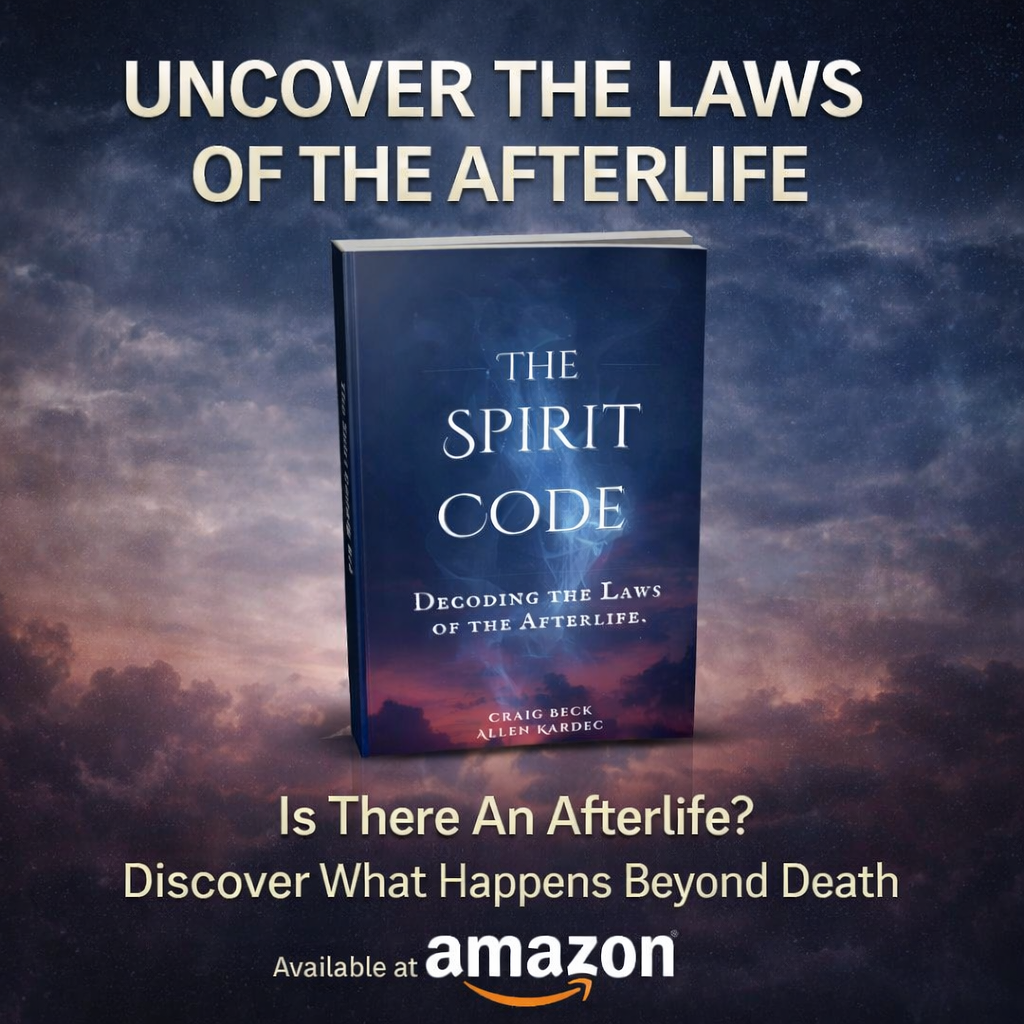
Most of us spend decades wondering what happens when we die, and almost nobody asks the more awkward question underneath it. Who told you, and did they check? The confident voice in your head that says lights out is the same voice that explains every decision you made yesterday after the fact, with total sincerity and very little information. It sounds like a scientist and carries the authority of a newsreader reading somebody else's script. If you want to go further into the accounts themselves, I have written about near-death experiences decoded, and gathered survivors' stories in The Light Beyond. The first step is smaller than either. Read your own copy before you broadcast it.
If dread of dying has started to organise your days, or thoughts about death have turned into thoughts about ending your life, please talk to your GP or call Samaritans free on 116 123 in the UK, or 988 in the US, today.
And if the thought does come for you at four tomorrow morning, you will have somewhere to put it. Whether it survives being written down is between you and the notebook.
Ready to find out how much of your one life you have spent obeying a lie? Pick up Death Lied to Me on Amazon in paperback, on Kindle, or as the audiobook I narrated myself.

About the Author
 Craig Beck is a former UK broadcaster, a certified NLP Master Practitioner and the bestselling author of more than one hundred books on persuasion and human behaviour. For two decades he has taken apart the machinery behind why people believe what they believe and keep doing what they swore they would stop. More than a million readers worldwide have used his work to understand their decisions, their habits and their fears. He does not deal in theory. He shows you the wiring, then hands you the screwdriver.
Last updated 23 September 2026
FAQ SECTION:
Frequently Asked Questions
Why do I keep thinking about death at night?
Night strips away the distractions your brain normally uses to keep the thought out of range. During the day the avoidance loop runs smoothly: a reminder appears, you change the subject or reach for your phone, and relief follows. At 4am there is nothing to reach for, so the fear arrives at full size, untested and unedited, which is why it feels so much bigger in the dark. Writing the thought down and labelling it as fact, inference or fear starts to shrink it, because it finally gets examined instead of avoided.
Is there scientific evidence for life after death?
Nothing proves it beyond reasonable doubt, and anyone who tells you otherwise is selling something. What does exist is a body of evidence the lights-out story struggles to explain. Nearly one in five resuscitated patients in a large Dutch hospital study reported a near-death experience, with no link to medication or to how long their hearts had stopped. There are documented cases of patients accurately describing events they should not have been able to perceive, and of people with dementia regaining clarity in their final days. The question is open, not closed.
How do I stop being afraid of dying?
Start by separating the fear of dying from the fear of death. Most of the dread belongs to dying, the pain, the burden and the unfinished business, and that part responds to practical action: a will, an honest conversation, a plan for your care. What remains is the fear of not existing, and that part shrinks when you examine it instead of avoiding it. Keeping a short written log of your death thoughts for two weeks works better than trying not to think about them. If the fear is stopping you living, speak to your doctor.