Panic Attacks Rewired: How Hypnosis Stops the Cascade
May 11, 2026Panic Attacks Rewired: How Hypnosis Stops the Cascade
You were standing in the queue at the supermarket when it happened the first time. The fluorescent lights felt suddenly too bright. Your heart kicked. Your hands tingled. The floor seemed to tilt slightly under your trainers. By the time you reached the till you were absolutely certain you were dying, and the cashier was scanning your tinned tomatoes oblivious to your private apocalypse. You made it home somehow, sat on the kitchen floor for forty minutes, and the world quietly returned to normal. The doctor's appointment ran six tests and found nothing wrong. The cardiologist agreed. So did the neurologist. The body that put you on the kitchen floor has been declared healthy by every machine in the building, and somehow it has not felt safe to be inside it since. Welcome to panic attacks, the most frightening condition there is, and one of the most misunderstood.
 A panic attack is not a sign that something is wrong. It is a misfire of the body's threat detection system, in which ordinary physiological sensations are interpreted as imminent danger, and the alarm response amplifies them into a full-blown crisis. The fear is real. The danger is not. Hypnosis works on panic attacks because it retrains the threshold at which the body sets off the alarm and updates the catastrophic interpretation of innocent sensations that keeps the cascade firing.
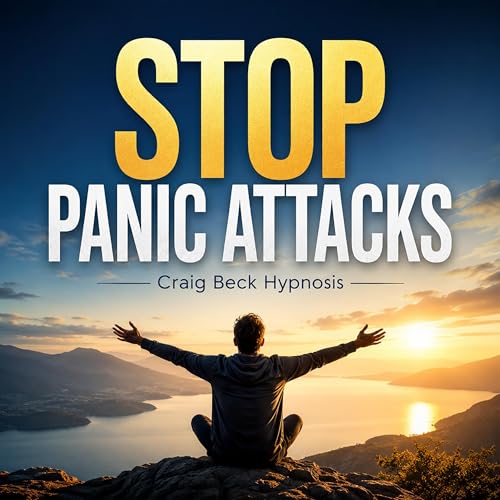
Ready to stop the cascade? Download Stop Panic Attacks: Craig Beck Hypnosis and start retraining the part of you that has been on red alert since the first attack.
Why Stopping Panic Attacks Has Nothing to Do With Calming Down
The advice you have been given by people who have never had one tends to be a small parade of unhelpful suggestions. Take deep breaths. Drink a glass of water. Count backward from a hundred. Press an ice cube to your wrist. Remember it will pass. Each of these techniques assumes a panic attack is a logical event that can be talked out of. It is not. A panic attack is a hijacking, in which the part of the brain that reasons goes offline for several minutes while the part that produces the alarm takes complete control of the body. By the time you remember the breathing exercise, you are already mid-cascade, and the exercise itself is being interpreted by your nervous system as further evidence that something is dangerously wrong.
The reason willpower fails inside a panic attack is that the system that produces them has already overridden the system that would attempt to manage them. The sympathetic nervous system has flooded the body with adrenaline, the prefrontal cortex has been temporarily silenced, and the conscious mind is now a passenger watching the body do something it cannot stop. The way out is not better self-management during an attack. The way out is to retrain the threshold so the attack does not start in the first place.
The Hidden Wiring Behind the Cascade
Inside the brain, a small structure called the locus coeruleus releases the neurotransmitter noradrenaline whenever it detects what it considers a threat. In a properly calibrated system, the locus coeruleus only fires for genuine danger. In somebody who has had a panic attack, the structure has become hyper-vigilant, scanning the body's normal physiological signals for any hint of something concerning. A slightly elevated heart rate from climbing the stairs. A flicker of breathlessness after a strong coffee. A wave of warmth on a humid afternoon. The system reads these innocent sensations as the opening notes of another attack and triggers the cascade pre-emptively.
The cascade itself is a textbook fight-or-flight response. Heart rate accelerates. Breathing quickens, which lowers blood carbon dioxide and produces the tingling, the dizziness, and the unreal feeling. Blood is redirected from the digestive system to the muscles, which produces the nausea. The vision narrows. The hands shake. According to research summarised by the American Psychological Association, every symptom of a panic attack is a normal, evolutionarily useful response to genuine threat, fired at the wrong moment by a threat detection system that has lost its calibration. Your limiting beliefs about your body's stability, formed in the wake of that first attack, then sit on top, ensuring the system continues to misinterpret its own signals.
What Your Body Is Misreading as Imminent Danger
Cognitive psychologist David Clark proposed in 1986 a model of panic that has held up consistently in research since. He demonstrated that panic attacks are produced by what he called the catastrophic misinterpretation of bodily sensations. A normal heartbeat becomes evidence of a heart attack. A normal moment of breathlessness becomes evidence of suffocation. A normal wave of light-headedness becomes evidence of imminent collapse. The interpretation is the engine. Without it, the sensations would pass unnoticed. With it, the sensations trigger the alarm, the alarm produces stronger sensations, the stronger sensations confirm the interpretation, and the cascade fires.
This is why people with panic attacks describe their bodies as feeling like enemies. The very organ that pumps your blood is being read as a potential murderer. The lungs that breathe you become objects of suspicion. The brain that hosts your thoughts is being scanned for signs of a stroke. Every normal twinge, every flutter, every passing sensation is being filtered through a question the system never used to ask. Is this the start of another attack? The constant scanning, known to researchers as interoceptive hyper-vigilance, becomes its own background tax, exhausting the body and feeding the very anxiety that produces the next attack.
The Catastrophic Interpretation Loop
What makes panic attacks so stubborn is the loop they build around themselves. The first attack creates fear of having another attack. The fear produces baseline anxiety. The baseline anxiety produces slightly elevated heart rate, slightly shallower breathing, and slightly more vigilance for bodily signals. These elevated signals trigger the catastrophic interpretation, which triggers the alarm, which produces the cascade. By the time the loop has been running for a few months, the person trapped inside it cannot remember what their body felt like when it was simply available rather than under permanent suspicion. Every shop, every dinner, every cinema, every queue, every car journey now carries the possibility of another attack, and the avoidance begins to spread.
According to research summarised by the National Center for Biotechnology Information, agoraphobic avoidance develops in roughly 30 to 50 percent of people with recurring panic attacks, not because they are afraid of the place itself, but because the place became associated with an attack and the brain decided to file the location under "unsafe." The world contracts, sometimes to a few familiar rooms. The life shrinks. The very freedom you had at twenty-eight becomes a memory by thirty-five, all on the basis of a wiring error in a structure most people have never heard of.
Done analysing the loop? Time to step out of it. Try Stop Panic Attacks: Craig Beck Hypnosis and let your subconscious learn a new interpretation of the body's ordinary signals.
How Panic Attacks Hijack Your Sense of Safety
Beyond the attacks themselves, the most disabling feature of panic is what it does to your sense of basic safety inside your own life. The world becomes a place to be navigated rather than enjoyed. The body becomes a vehicle that might break down at any moment. The conversations you used to have without thinking become small marathons of bodily monitoring. The dinner with friends is half spent checking your own pulse under the table. The train journey is half spent calculating the next station you could exit at. The cinema is half spent looking for the door, even though you have not used it. Your inner life has been split into two streams, one of which is doing the actual living and one of which is silently checking whether your body is about to mutiny.
 And the cost is rarely visible to anybody else. To the outside world, you are still the same person. To yourself, you have become a person whose life is constructed around the possibility of the next attack. The sleep gets disturbed because the moment before sleep is when the first attack often happens. The intimacy gets careful because elevated heart rate now reads as a warning. The exercise gets reduced because the body's natural response to exertion is now interpreted as suspicious. The freedom that was the unspoken foundation of every other freedom in your life is the freedom that panic quietly removes.
How Hypnosis Reprograms the Body's Alarm Threshold
Hypnosis is uniquely suited to panic attacks because the threshold setting that produces them lives precisely in the layer of mind hypnosis is designed to reach. It is not stagecraft, and it is not surrender of free will. Hypnosis is a focused state of relaxed concentration, observable on brain imaging, in which the protective filter between conscious and unconscious processing softens, and new instructions can be loaded directly into the part of you that has been firing the alarm. Your conscious mind does not need to win an argument with the locus coeruleus. The work happens in the layer beneath the argument.
If you have ever been on a sun lounger and felt yourself drift between waking and napping for a quarter of an hour, you have already touched the threshold of trance. The brain naturally enters states like this many times a day. Hypnosis steers you into one deliberately and uses the open channel to do something targeted. For panic attacks, that means resetting the threshold at which the threat detection system fires, retraining the catastrophic interpretation pattern, and updating the deep belief that the body is unreliable. The body learns, in trance, that ordinary sensations are ordinary, and that an elevated heart rate after a flight of stairs is information rather than warning.
Identity is the deepest leverage point. Most panic treatment tries to manage attacks while leaving the underlying identity of "person who has panic attacks" untouched. Behaviour change without identity change is fragile, because every elevated heart rate keeps proving the identity right. Hypnosis goes underneath the behaviour and updates the file labelled "who I am inside my own body." Once that file shifts, the constant interoceptive scanning relaxes, the alarm threshold rises, and the cascade simply has nothing to feed on. Neuroplasticity, the brain's lifelong ability to rewire itself, rewards consistent input. The new pattern hardens with each session.
What Happens While You Listen
The Stop Panic Attacks recording opens with a slow, careful induction designed to give a body that has been on high alert for months or years permission to set the alert down. The breath lengthens. The shoulders soften. The mental commentary that has been silently monitoring your physical state since you opened your eyes today finally falls quiet. Brainwave activity moves from the rapid beta of waking thought into the slower alpha and theta frequencies associated with deep meditation and the threshold of sleep. The doorway to the subconscious quietly opens, and the real work begins.
The script then guides your unconscious mind through a series of structured suggestions designed to retrain the alarm system. Carefully sequenced language invites the locus coeruleus to recalibrate its threshold, the interpretive system to read bodily signals as benign, and the deep belief about your body's stability to update from suspicion to trust. Visualisation walks you through the felt experience of moving through previously avoided situations without the cascade arriving, of feeling an elevated heart rate after climbing stairs and simply registering it as exercise rather than warning. Post-hypnotic anchoring folds a new response into the moments where the old pattern used to fire.
Most listeners report a softening of the background anxiety within the first week of nightly use. By the four to six week mark, the frequency of attacks tends to drop noticeably, and previously avoided situations become approachable again. The change is rarely a single dramatic moment. It is more often the slow realisation that you have just been in a supermarket queue for ten minutes without scanning your own heart rate once, and you cannot remember the last time that was true.
The Question Nobody Asks About Panic Attacks
Everybody asks how to stop the attacks. Almost nobody asks what life becomes available again once the threat has been removed. That second question carries the part of the answer the rest of the conversation always seems to skip.
When panic attacks dissolve, the surface changes show up quickly. Supermarkets stop being landmines. Train journeys stop requiring an exit strategy. Restaurants become places where you can actually taste the food. Cinemas become dark rooms where the only thing happening is the film. The world reopens in degrees, each previously avoided situation slowly becoming neutral again. The freedom that had been quietly extracted from your life over months or years returns, often within weeks of consistent use of the recording, and often in ways more dramatic than the original loss had allowed you to imagine recovering.
The deeper change runs underneath. The chronic baseline anxiety that came with constantly monitoring your own body dissolves, and the energy that was being consumed by the monitoring becomes available for everything else. You sleep through the night without lying awake checking your pulse. You exercise again, because elevated heart rate is no longer a warning. You eat without scanning for early symptoms of digestive trouble. You drink coffee, perhaps, for the first time in years. You travel. You commit to things in advance, because the calendar stops looking like a series of potential disasters. The general experience of being alive, free of the constant background fear, returns to feeling like the gift it was always meant to be.
Past listeners describe a strange sense of returning to themselves. The version of them that existed before the first attack, the one their loved ones have been quietly missing, begins to reappear. Conversations land deeper, because the parallel monitoring channel has finally been turned off. Romantic life becomes available again, because closeness no longer feels like a potential trigger. Work expands, because the daily commute is no longer an endurance event. The world that had been editing itself down around your avoidance quietly reopens, and the version of your life that had been waiting for you on the other side becomes possible.
And there is a quieter shift many listeners report long after the attacks have faded. The relationship with your own body transforms. You stop being afraid of yourself. You stop treating your heart as a potential traitor. You stop scanning your nervous system for evidence that you are about to collapse. The body returns to being the home it used to be, and the strange sense of exile inside your own skin, which is the unspoken cruelty of panic, finally ends.
None of this requires you to become reckless or to ignore real health concerns. The aim is the return of a properly calibrated alarm system, one that fires for actual danger and stays quiet for ordinary life. If you are experiencing recurrent or severe panic attacks, please also speak with a qualified clinician, because panic disorder is a real and treatable condition that benefits from professional support. Hypnosis is a powerful complement to that support, not a replacement for it. Used alongside proper care, it can be the deeper layer of work that the conscious interventions cannot reach.
Stop letting an old miscalibration decide how much of the world you can use. Download Stop Panic Attacks: Craig Beck Hypnosis and let the system that has been firing the alarm finally update its settings. The version of your week waiting on the other side of one recalibrated threshold is closer than the queue at the till has allowed you to believe.
What Listeners Are Saying
Rachel D., Salem, Oregon: "I had my first panic attack in 2020 and they were happening multiple times a week by 2022. I had a list of supermarkets I could no longer enter, restaurants I avoided, and a road I would not drive on. Six weeks of nightly listening to this recording and the attacks have stopped. Not weakened. Stopped. I went to my niece's wedding last weekend and did not check my pulse once. I cried in the car afterwards because I had forgotten this kind of freedom existed."
Michael S., Greensboro, North Carolina: "Started having panic attacks at forty-two after a stressful divorce. They cost me my job and most of my friendships because I stopped showing up. I bought this on a sceptical recommendation. Eight weeks in, I have not had an attack in over a month, and the constant background fear of having one has gone with them. I cannot fully explain the mechanism. I only know I have my life back."
Christina B., Spokane, Washington: "I have had panic attacks since I was nineteen years old. I am now fifty-one. I have tried therapy, three different medications, two clinics, and one rather expensive retreat in California. Nothing produced the kind of shift this recording has produced in seven weeks. The attacks have reduced to about one a month, and even when they arrive they pass faster and feel less convincing. The world has reopened."
Frequently Asked Questions
Is hypnosis a treatment for panic disorder?
Hypnosis is not a replacement for clinical treatment, and panic disorder should be properly assessed and treated by a qualified mental health professional. What hypnosis can do is support and complement that care by retraining the threshold at which the threat detection system fires, dissolving the catastrophic interpretation pattern, and helping the body settle into a more accurate reading of its own signals. Many listeners use the recording alongside therapy and any prescribed medication. The combination tends to produce results neither approach achieves on its own.
How quickly will the attacks reduce?
Most listeners report a softening of the background anxiety within the first seven to ten days of nightly use. Reduction in the frequency of attacks typically emerges over four to eight weeks of consistent listening. The deeper change, in which previously avoided situations become approachable and the constant body monitoring drops away, develops over two to three months. Repetition is the variable that matters most. Treat the recording as a nightly ritual, and the new pattern continues to consolidate over time.
What if I have an attack while listening?
Listeners almost never experience a panic attack during a session, because the relaxed state of trance is the opposite of the activated state required for an attack to fire. If you do feel a wave of anxiety during the recording, allow it to pass without alarm. The sensation is simply your nervous system encountering a different state than the one it has been habituated to. Continue listening. The discomfort fades quickly, and each session helps the body learn that calm is available and safe, even when the old pattern would have predicted otherwise.
About the Author
 Craig Beck is internationally recognised as one of the leading voices in persuasion, behavioural psychology, and the mechanics of inner change. A certified NLP Master Practitioner, clinical hypnotherapist, former UK broadcaster, and bestselling author of more than one hundred books and audio programmes, he has spent two decades dismantling the patterns of fear, anxiety, and avoidance that quietly run people's lives, and engineering the tools that release them. Over a million listeners around the world have used his hypnosis recordings to release phobias, retire compulsive habits, and quiet alarm systems that had been firing for years without legitimate cause. He does not deliver theory from a lecture hall. He works in the layer underneath conscious thought, where every meaningful change begins, and walks you through the process step by step. You can read more about his approach on his about page.
Last updated: 11 May 2026