Nail Biting Rewired: How Hypnosis Stops the Habit
May 11, 2026Nail Biting Rewired: How Hypnosis Stops the Habit
You did it again before you even noticed. You were halfway through an email, your other hand drifted up to your mouth without asking permission, and by the time you looked down, the index finger you have spent the past six weeks growing is back to a ragged stub of skin and torn keratin. You felt nothing while it was happening. You feel everything now. The flush of irritation. The promise to yourself, for the four-hundredth time this year, that today is the day you finally stop. The same promise you have been making and breaking since you were nine years old.
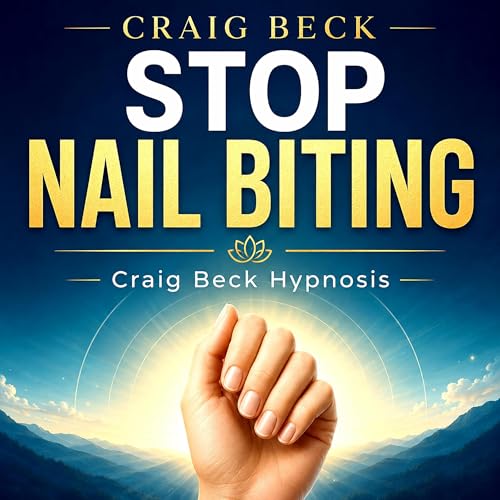 Nail biting is not a bad habit. It is a self-soothing trance. Clinically classified as a body-focused repetitive behaviour, it is the nervous system reaching for a private little ritual to discharge anxiety the conscious mind has no idea is even present. The reason you cannot stop with effort alone is that nail biting was never under conscious control to begin with. Hypnosis works because it speaks to the system that started the habit, in the same channel the habit already uses.
Ready to stop biting? Download Stop Nail Biting: Craig Beck Hypnosis and let the rewiring start tonight.
Why Stopping Nail Biting Has Nothing to Do With Willpower
The conventional advice for nail biting is almost charming in its uselessness. Paint your nails with bitter solution. Wear gloves around the house. Snap a rubber band on your wrist every time you reach for your mouth. Replace the bite with a stress ball. Reward yourself with a manicure once you have grown them out. Every one of these strategies asks your conscious mind to monitor a behaviour that operates underneath conscious awareness. By the time you notice you are biting, the action has already finished. Asking willpower to intercept it is like asking a referee to catch the ball before it leaves the pitch. The whistle blows too late.
What makes this habit so resistant is that you genuinely do not remember starting each session. The hand goes up. The teeth find the nail. The mind, meanwhile, is preoccupied with the spreadsheet, the conversation, the worry about Tuesday's meeting. By the time awareness returns, the damage is done and the shame is already loading. You then bite again later to soothe the very shame the previous round produced. The pattern feeds itself, and willpower never gets a clean shot at it.
The Hidden Wiring Behind the Bite
Watch any nail biter mid-session and you will see a person in a light trance. The eyes glaze slightly. The breathing shallows. The face goes still. Time slips sideways. This is not a metaphor. It is the brain entering a measurable altered state in which conscious processing dims and an automatic motor programme takes over. You have entered a self-induced hypnotic state, used your fingers as the ritual object, and stayed in it long enough for the nervous system to discharge the tension it was carrying. The fingers are not the point. The trance is the point.
According to research compiled by the TLC Foundation for Body-Focused Repetitive Behaviors, nail biting and its cousins such as skin picking and hair pulling share a common neurological signature. They are regulation strategies that begin in childhood, anchor themselves to anxiety reduction, and become deeply automatic within months. The behaviour soothes a feeling the conscious mind has not even labelled yet. By adulthood, the loop runs on its own, often through entire phone calls, films, or commutes without registering at all.
This explains why the habit feels different from a craving. There is no real urge. There is only the drift upward of the hand, followed by the relief that you never asked for and never quite remember feeling.
What Your Subconscious Is Really Trying to Regulate
Every nail biter I have worked with eventually admits the same thing once we dig past the surface. The biting is rarely about the nails. It is about an undercurrent of low-grade anxiety, perfectionism, or restlessness that has been with them for as long as they can remember. For some, it began as the only available coping mechanism in a household where emotions were not welcome. For others, it started during a stressful school year and quietly outstayed its welcome by three decades. The fingers became the body's private valve, releasing a pressure the mind was never given permission to express directly.
And here is the layer most articles never reach. Body-focused repetitive behaviours often correlate with high-functioning, conscientious people who keep an enormous amount inside. The very qualities that make you reliable at work, considerate with your family, and steady under pressure are the qualities that drive the build-up your fingers are quietly bleeding off. Your limiting beliefs about being too much, taking up space, or needing to keep it all together are the engine. The biting is the exhaust pipe.
Once the engine is retuned, the exhaust disappears. The fingers stop being needed because the pressure stops building in the first place.
How Nail Biting Hijacks the Calm Switch
 Inside the brain, a small structure called the basal ganglia handles repetitive motor habits. Once a behaviour is wired in here, it runs without conscious approval and resists deletion with admirable stubbornness. Nail biting found its way into your basal ganglia before you were old enough to know what was happening, and it has been firing on autopilot ever since. Each repetition reinforces the neural pathway. Each round of relief reinforces the association between bite and calm. The brain genuinely believes the behaviour is helping you, because every time you have ever felt anxious and bitten, the anxiety dropped.
Research summarised by the National Center for Biotechnology Information shows that habits anchored in this region of the brain require a fundamentally different approach than habits driven by conscious decision-making. You cannot reason them out. You cannot shame them out. You must replace the underlying programme with a new one, ideally through repetition during a receptive state of mind. That receptive state has a name. It is the same state you accidentally enter every time you bite, just used in the opposite direction.
The fingers were never the problem. The calm switch wired to the fingers is the problem. Once it is reconnected to a different action, or better yet, to no action at all, the biting fades away as if it had never been there.
The Three Trances That Keep the Habit Alive
Nail biting tends to happen inside three predictable trance states, and recognising them is the first step toward dismantling them. The first is the boredom trance. The meeting is dragging. The film has lost your interest. The drive home is on autopilot. Your nervous system needs something to do, and the fingers provide a familiar little task to occupy the hands and the mouth. The second is the concentration trance. You are writing, coding, reading, problem solving. Your focus narrows. The part of you that handles fidget management goes quiet, and the bite slips in under the radar.
The third, and most stubborn, is the emotional trance. Something low-level uncomfortable is happening underneath conscious awareness. A worry about money. A flicker of social unease. A simmering resentment that has not been spoken aloud. Your subconscious notices the discomfort before you do and reaches for the regulator it knows works. The hand is at your mouth before the feeling has even surfaced. By the time you feel the irritation that prompted it, the biting has already medicated the moment.
Each trance has the same root, which is the nervous system trying to manage state without troubling the conscious mind. Once you understand this, the moralising voice in your head can finally retire. You are not weak. You are not gross. You are a deeply efficient self-regulator, using the only channel your subconscious knows how to use.
Done analysing the habit? Time to retire it. Try Stop Nail Biting: Craig Beck Hypnosis and let your subconscious learn a new way to handle the build-up.
How Hypnosis Reprograms the Reflex
If nail biting is a form of self-induced trance, hypnosis is the master version of the same skill. Both states involve a softening of the critical filter and a heightened receptivity of the subconscious. The difference is that one is accidental, ritualistic, and damaging, while the other is deliberate, guided, and curative. Hypnosis uses the same neurological doorway your habit has been using for decades. It simply walks through it on purpose and changes the furniture once inside.
During a session, the new instruction set goes in through the same channel that originally received the biting programme. Your hands learn a different response to tension. Your nervous system learns that the calm signal is available without the bite. Your identity quietly updates from "person who bites their nails" to "person whose hands rest comfortably wherever they are placed." The change is rarely loud. It happens in the same quiet way the original habit was installed, except this time you are the author rather than the unwitting recipient.
I learned to bite my own nails by the age of seven and stopped at thirty-one, after years of believing I was simply incapable of change. The shift happened, in the end, within a few weeks of consistent subconscious work. Not because my willpower finally arrived. Because the system that had been running the habit was finally given a new programme to run instead.
What Happens While You Listen
The Stop Nail Biting recording begins with a slow, careful induction. The breath lengthens. The shoulders descend. The mental traffic quietens. Within minutes your brain shifts from the busy beta wave activity of waking thought into alpha and theta frequencies, the same patterns produced during deep meditation and the soft drift before sleep. This is the moment your subconscious comes online and your critical filter steps aside.
From there, the work begins. Carefully sequenced suggestions invite your unconscious to recognise the biting trance, see it as outdated, and adopt a new way of handling tension. Visualisation guides your hands toward stillness, your fingers toward neutrality, and your nails toward a steady, undisturbed growth. Post-hypnotic anchoring folds a fresh response into the very moments where the bite used to slip in unnoticed. Boredom now feels like boredom. Concentration now feels like concentration. Neither one carries an automatic invitation to your mouth.
Most listeners report a noticeable softening of the urge within the first week of nightly use. Within four to six weeks, the new pathway tends to settle into the default. Neuroplasticity, the brain's lifelong capacity to rewire itself, responds to consistent input the way grass responds to consistent watering. The new behaviour grows. The old one withers. The fingernails grow back as a side effect of the deeper change, not as the goal of it.
The Question Nobody Asks About Nail Biting
Everybody wants the cosmetic outcome. Hands you are happy to show. Nails you can have manicured for the first time in your adult life. Photos you no longer need to crop to hide your fingertips. Handshakes you no longer need to dread. These results are real and they come quickly. They are also the least interesting thing that happens when you rewire this habit.
The deeper change is what nobody anticipates. The undercurrent of anxiety the biting was masking finally becomes visible. For the first few weeks, you feel it. Not catastrophically. Just enough to notice that there has been a low hum in your nervous system for as long as you can remember, and now you can hear it clearly. That hum is the gold. It is the thing the habit was muting. Once it surfaces, it can be worked with directly, and the relief is incomparable to anything a bitten nail ever delivered.
Past listeners describe sleeping more soundly within a month. Snapping at their partners less often. Feeling more present in conversations because their hands are no longer providing a parallel activity to listen through. The fingers, freed from their job as emotional pressure release, become more sensitive, more available, more useful in the way fingers were originally designed to be. You feel the warmth of a coffee cup. The texture of a book cover. The skin of someone you love. Small sensations the bite had quietly anaesthetised.
None of this requires you to become a different person. It requires the part of you that has been working overtime, soothing the system through your fingertips since primary school, to finally be allowed to rest. Hypnosis simply gives that part of you permission, and an alternative, and the time to settle into it. The biting was a survival strategy that outlived its usefulness around three decades ago. Letting it go is less of an act of will than an act of update.
Stop fighting your hands. Download Stop Nail Biting: Craig Beck Hypnosis and let the system that started the habit be the one that finally lets it go.
What Listeners Are Saying
Emma S., Madison, Wisconsin: "I have bitten my nails since I was four years old. I am forty-two. I have tried bitter polish, hypnotic apps, accountability partners, and one mortifying hypnotherapy session in person that did absolutely nothing. Three weeks of listening to this recording before sleep and my nails have grown past my fingertips for the first time in my adult life. I keep staring at my hands like they belong to a stranger."
Brandon H., Salt Lake City, Utah: "I work in financial services and have spent twenty years hiding my hands during meetings. My wife asked me to try this for our anniversary because she was tired of seeing me bleed onto napkins. I rolled my eyes, listened anyway, and forgot to bite my nails for the first time in living memory by the end of the second week. It is not magic. It is the first thing that has reached the part of me that does the biting."
Sophia C., Albuquerque, New Mexico: "I am a paediatric nurse. I knew my nail biting was unhygienic and probably an anxiety issue. Knowing did nothing. This recording bypassed all the things I already understood and went straight to the part of my brain that was doing the chewing. Five weeks in and I have hands I can use at work without dread. Recommended this to two colleagues already."
Frequently Asked Questions
Is nail biting really a form of self-hypnosis?
Yes, in a meaningful sense. Watch any nail biter mid-session and you will see the classic markers of a light trance, including narrowed focus, glazed eyes, and reduced conscious awareness. The behaviour is automatic, repetitive, and emerges to regulate state. This is precisely why willpower keeps failing. The habit operates beneath the level willpower can reach. Hypnosis works because it uses the same channel the habit uses, only with a different instruction set.
How long before I see real progress?
Most listeners notice the urge softening within the first week of nightly use. Visible nail growth typically begins inside two to three weeks once the biting frequency drops. Deeper changes, including reductions in baseline anxiety and increased awareness of the underlying tension the habit was masking, settle in over four to eight weeks. Treat the recording as a nightly ritual. Repetition is the variable that turns a temporary shift into a permanent rewiring.
Will the biting come back during stressful times?
If the habit is replaced rather than merely suppressed, no. Stress no longer triggers the biting because the calm signal has been reconnected to a different response, or to no response at all. Listeners who treat the recording as a one-off sometimes feel the urge return during a difficult period. Those who continue listening intermittently report the new pattern remaining stable for years. Use the recording as a maintenance tool whenever life becomes turbulent, and the habit stays in the past.
About the Author
 Craig Beck is widely regarded as one of the world's leading voices on persuasion, behavioural psychology, and the mechanics of habit. A certified NLP Master Practitioner, clinical hypnotherapist, former UK broadcaster, and bestselling author of more than one hundred books and audio programmes, he has spent two decades dissecting why people stay stuck and engineering the tools that move them on. Over a million listeners around the globe have used his hypnosis recordings to dismantle addictions, retire compulsive behaviours, and rewrite the operating system inside their own minds. He does not deal in motivational posters. He deals in the wiring underneath, and he shows you how to change it. You can read more about his background on his about page.
Last updated: 11 May 2026