Quit Drinking Rewired: How Hypnosis Ends the Loop | Craig Beck
May 11, 2026Quit Drinking Rewired: How Hypnosis Ends the Loop
It is 5:47pm on a Tuesday. You already know how the next four hours will play out, because they have played out on this exact patch of kitchen floor for years. You will tell yourself you are only having one. You will mean it when you say it. By half past six the second bottle will be open, by eleven you will be promising the ceiling that tomorrow is the day, and by morning you will be googling the symptoms of liver damage with a head that feels like a bag of broken glass. The promise never breaks the pattern. The pattern breaks the promise. Every time.
 Alcohol addiction is not a willpower failure. It is a learned subconscious pattern in which the brain has welded drinking to emotional relief, chemical reward, and identity. Quitting drinking rarely fails because the drinker is weak. It fails because the conscious mind is trying to overrule a programme running ten levels below it. Hypnosis works on alcohol addiction because it edits the pattern at the layer where the pattern actually lives, rather than fighting it on the surface where willpower keeps losing.
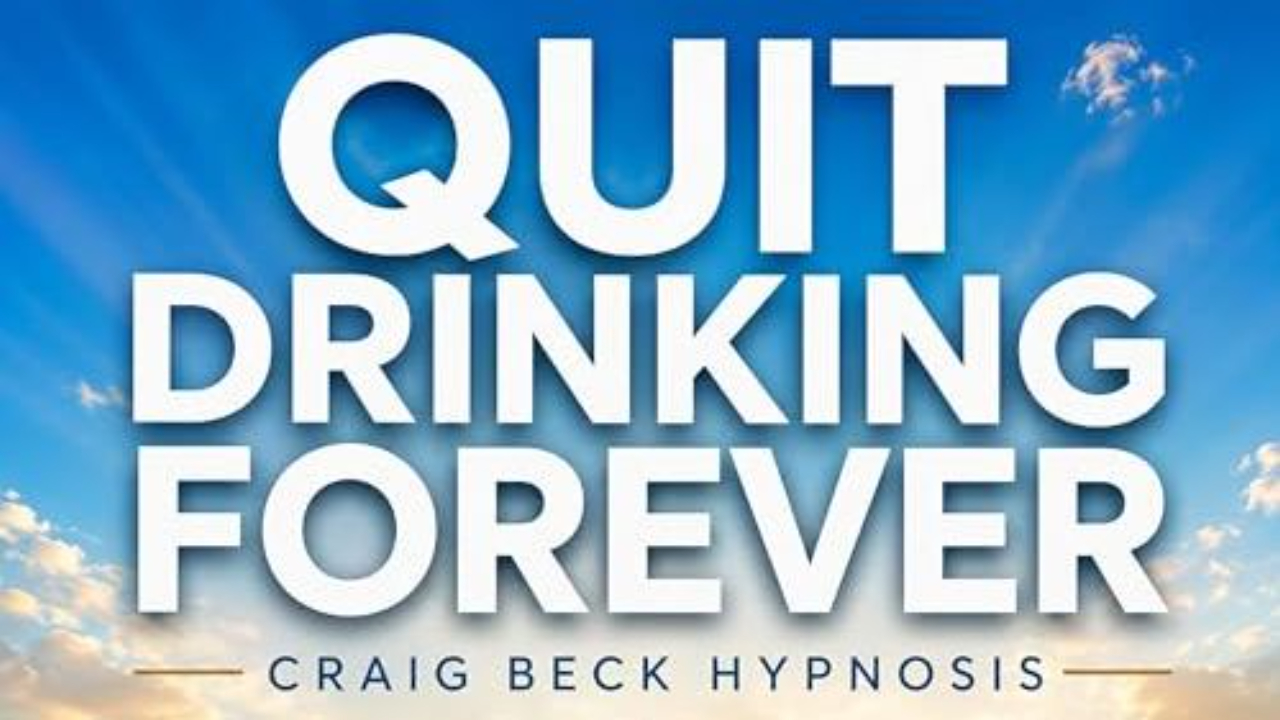
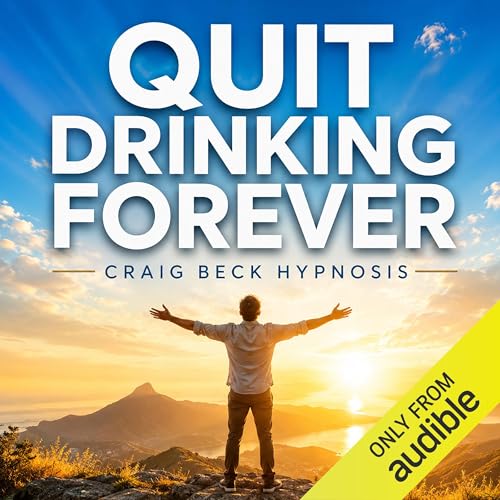
Ready to step out of the loop? Grab Quit Drinking Forever: Craig Beck Hypnosis and let the rewiring begin tonight.
Why Quitting Drinking Has Nothing to Do With Willpower
The drinks industry has sold you a story about discipline. Drink less. Drink mindfully. Stop after two. Track your units in a clever little app. Every one of those strategies asks your conscious mind to win an argument it was never going to win, because the conscious mind is a tea-light trying to outshine a stadium floodlight. The decision to pour the first glass was made long before you opened the fridge. It was made by a part of you that has been rehearsing the routine since the very first time alcohol promised to dim the noise.
I drank a bottle of wine a night for twenty years, give or take a few weeks of brave abstinence followed by spectacular relapse. I read every book. I tried every gimmick. I quit on Mondays. I quit on January 1st. I bought clever glasses that were really small. None of it worked, because none of it was speaking to the part of me that wanted the drink. That part lives below speech. You cannot reason with something that does not use language.
The Hidden Wiring Behind the Evening Pour
Your brain is a habit engine. Anything you do often enough, with a reward attached, gets carved into a neural groove until it runs on autopilot. Driving to work. Brushing your teeth. Reaching for your phone the second a queue forms. Each of those grooves started as a deliberate choice and ended as a reflex. The evening drink is no different. The first time you poured one to take the edge off a hard day, your subconscious quietly wrote a note. Drink equals relief. The next time you felt the edge, it offered the same answer faster. Within months, the answer was arriving before you had even noticed the question.
This is how a behaviour becomes a habit becomes an identity. The neural pathway is built in roughly the same way you build the path to your front door, by walking it repeatedly until the grass dies underneath. According to the National Institute on Alcohol Abuse and Alcoholism, repeated heavy drinking produces measurable structural changes in the brain's reward and decision-making circuitry. You are not fighting a vice. You are fighting a re-engineered brain.
What Your Subconscious Thinks the Bottle Is Solving
Nobody really drinks for the taste. If you wanted the flavour of red wine, you would settle for the third sip, savour it, and put the cork back. The reason the bottle keeps emptying has nothing to do with what is in the glass and everything to do with what is going on inside the person holding it. Alcohol is an emotional regulator dressed up as a social lubricant. It softens shame. It mutes anxiety. It blurs the edge of unprocessed grief, unspoken resentment, and the low-grade dread of a life that has drifted slightly out of shape. The reason your subconscious refuses to let it go is that, on a primitive level, it believes alcohol is keeping you functional.
And here is the painful bit. Most heavy drinkers are using the bottle to medicate something that was already happening before they ever lifted a glass. Childhood patterns of emotional avoidance. Limiting beliefs about worthiness, fun, or relaxation that whisper that you cannot enjoy yourself sober. The drink is the answer your inner child reached for in lieu of one nobody offered them at the time. Until the underlying question is heard, the answer keeps refilling itself.
The Lies Alcohol Tells About Itself
 The most elegant trick alcohol pulls is convincing you it solves the very problem it manufactures. You drink to relax, but ethanol is biochemically a stimulant for the first ninety minutes before the depressant phase kicks in. You drink to sleep, but the second half of the night is wrecked because your liver is sprinting and your REM cycles are shattered. You drink to be more sociable, but a brain pickled in repeated alcohol exposure becomes more anxious, not less, in the days between binges. The relief the drink seems to provide is the rebound from the anxiety the previous drink created.
That is the loop. Alcohol creates the discomfort it then sells itself as the cure for. It is a protection racket dressed in expensive packaging. Once your subconscious sees through the racket, the romance fades fast. The bottle stops looking like a friend and starts looking like the colleague who has been quietly siphoning money from your account while pretending to help you with your taxes.
Most drinkers I have worked with never had alcohol's mythology dismantled at the level it needed dismantling. They knew, intellectually, that booze was harming them. They still felt, viscerally, that the drink was their reward, their relaxant, their reliable mate at the end of a hard day. Until the felt belief is updated, the intellectual one is just background noise.
How Drinking Hijacks the Reward System
Inside the brain, a small cluster of cells called the nucleus accumbens runs your reward department. It fires dopamine when something promising appears, whether that is food, sex, money, or a notification on your phone. Alcohol flooded that system the very first time you used it, and your brain duly filed it under "highly worth pursuing." With repeated use, the system adapts. Tolerance builds, baseline dopamine drops, and the chemical reward you used to get from one glass now requires three. By the time you notice the change, the bar for any non-alcohol pleasure has been quietly raised out of reach. Food tastes flat. Music feels dimmer. A walk on a Sunday morning no longer touches the sides.
This is why early sobriety can feel so grey. You have not lost the capacity for joy. You have temporarily flattened the receptors that detect it. The brain rewires itself within weeks to months once the drinking stops, a process clinical neuroscientists call neuroadaptation reversal. The grey lifts. The colours return. According to research published by the American Psychological Association, sustained abstinence produces meaningful recovery of dopaminergic function and prefrontal regulation within a relatively short window.
Tired of fighting yourself every night? Try Quit Drinking Forever: Craig Beck Hypnosis and let your subconscious do the heavy lifting your willpower keeps refusing to do.
How Hypnosis Reprograms the Pattern
Hypnosis is not what stage shows have led you to expect. There is no swinging watch, no clucking like a chicken, no surrender of your free will to a man in a velvet jacket. It is a focused, naturally occurring state of relaxed concentration, measurable on an EEG, in which the rigid filter between your conscious and subconscious mind temporarily softens. In that window, new instructions can be installed directly into the part of you that has been driving the drinking. Your conscious mind does not have to agree with them. It only needs to step out of the way long enough for the work to happen.
If you have ever finished a chapter of a novel and realised forty minutes have slipped past, you have already been in trance. The brain enters and exits these states multiple times a day. Hypnosis simply steers you into one on purpose and uses the open door to repattern the wiring. For alcohol addiction, that means uncoupling the link between emotional discomfort and the drink. Severing the association between celebration and the glass. Removing the identity tag of "drinker" from the file your subconscious uses to describe you. None of that work can happen at the conscious level, because the conscious level is where the addiction already lost the argument years ago.
What Happens While You Listen
The Quit Drinking Forever recording opens with a slow induction. Your breathing deepens. Your shoulders settle. The mental commentary that has been narrating your day since you first opened your eyes finally goes quiet. EEG readings during a session like this show the brain shifting from busy beta wave activity down into alpha, and for some listeners into theta, the same frequencies your body produces in deep meditation and the threshold of sleep. This is the gate to the unconscious swinging gently open.
What happens next is layered. The script guides your subconscious to see the drinking pattern from a new angle, to release the false beliefs propping it up, and to accept a new set of associations in their place. Embedded suggestion, sensory visualisation, and post-hypnotic anchoring fold a fresh story into the very part of you that has been running the old one. The deeper drives that used to pull you toward the bottle are redirected toward something that genuinely serves your life. You wake from the session feeling calm, lighter, and quietly different. Repeat the process nightly, and the rewiring compounds. Neuroplasticity rewards repetition, and within weeks the default response your brain reaches for at 5:47pm has been replaced.
The Question Nobody Asks About Quitting Drinking
Everybody wants to know how to stop. Almost nobody asks what stopping makes possible. That second question is where the real motivation lives, and the alcohol industry has worked hard to keep you from ever sitting with it.
When the drinking stops, your mornings come back. The flat panic at 4am, the hammering pulse at 7, the sour fog that hangs over the first half of every day, all of it lifts. Your face changes. Your eyes brighten. Old hobbies you had quietly abandoned because they competed with the bottle suddenly look interesting again. Conversations you had been having on autopilot become real. Sex stops being something you do half-anaesthetised and starts being something you actually feel. The bank balance recovers. The arguments you keep having with your partner about the empty bottles in the recycling fade into a memory of an earlier, smaller version of your life.
And then comes the part the marketing never mentions. The boredom of an evening without a drink is short-lived. The peace that replaces it is enormous. You stop renegotiating with yourself every night. You stop waking up owing yourself an apology. You stop being the person who needs a chemical to get through a Wednesday. The self-respect that grows from one quiet sober evening, repeated, is the kind of internal wealth no drink ever delivered for more than ninety minutes.
Hypnosis is not a magic wand. It is not a substitute for medical detox where one is required, and severe physical dependence on alcohol must be addressed under proper medical supervision. What hypnosis offers is the rewiring that conventional approaches keep failing to deliver. It speaks to the part of you that has been calling the shots, and it changes the shots being called.
Done fighting the same battle every night? Download Quit Drinking Forever: Craig Beck Hypnosis and start the rewiring tonight. By the time next Tuesday rolls around, the 5:47pm pull will be quieter than you ever believed possible.
What Listeners Are Saying
Rachel M., Portland, Oregon: "I had been drinking a bottle of pinot grigio every single night for fourteen years. I knew the numbers. I knew the damage. I could not stop. Three weeks of listening to this on headphones before sleep, and the craving softened. Six weeks in, the bottle in the fridge stopped calling my name. I am eleven months sober now and I do not miss it. I keep waiting for the longing to come back. It has not."
Tom B., Nashville, Tennessee: "I bought this on a Sunday at three in the morning, the lowest point of an extremely long bender. I listened that night and again the next. Something shifted that I cannot fully explain. I poured the rest of the whisky down the sink on day four and have not bought another bottle since. I have done expensive rehabs that did less. There is something about the voice on this recording that gets through."
Linda K., Phoenix, Arizona: "I am a forty-seven-year-old nurse who knew exactly how much harm I was doing and could not stop anyway. This recording met me at the level that knowing did not reach. The peace I have most evenings now is the thing I was always trying to drink toward. Turns out it was sitting on the other side of the bottle, not at the bottom of it."
Frequently Asked Questions
Can hypnosis really stop me drinking?
Hypnosis is a tool, not a magic switch. It works by rewriting the subconscious patterns that drive the behaviour, which is where willpower based approaches consistently fall short. Many listeners report dramatic reductions or full cessation of drinking within weeks of nightly use. Severe physical dependence on alcohol still requires medical supervision during detox, and hypnosis is a powerful complement to that process rather than a replacement for it. Used consistently, it removes the underlying psychological pull that keeps relapse cycling.
How long before the cravings fade?
Most listeners notice softening within the first week of daily use. The deeper restructuring of reward circuitry and identity beliefs typically settles in over four to eight weeks. Your brain rewires on roughly the same schedule it took to build the original drinking habit. Treat the recording like a nightly ritual. The repetition is the medicine. The more consistent the listening, the more the new neural pathways harden into your default response, and the quieter the old pull becomes.
What if I have tried everything else and nothing worked?
This is the most common message I receive. The reason previous attempts failed is rarely a lack of effort on your part. It is that every approach you tried spoke to your conscious mind, which makes up roughly five percent of your decision-making. Hypnosis speaks to the other ninety-five percent. If you have read the books, joined the groups, tried the apps, and still found yourself back in the same loop, the missing piece is almost always subconscious rewiring. Give it sixty days of consistent use before judging it.
About the Author
 Craig Beck is recognised across the globe as one of the leading authorities on persuasion, human behaviour, and the psychology of habit. A certified NLP Master Practitioner, clinical hypnotherapist, former UK broadcaster, and bestselling author of more than one hundred books and audio programmes, he has spent two decades dismantling why people stay stuck and engineering the tools that set them free. Over a million listeners worldwide have used his hypnosis recordings to break addictions, rewrite limiting beliefs, and rebuild the operating system inside their own heads. His own twenty year battle with alcohol gave him an unusually intimate understanding of the drinking mind, which informs every word of this work. You can read more about his background and approach on his about page.
Last updated: 11 May 2026