Stop Making Resolutions! This One Truth Will Change Everything
Jan 02, 2026Why New Year's Resolutions Don't Work
Every January arrives with bright promises and sincere intentions. People around the world declare this will be their year. They'll lose weight, quit drinking, start that business or finally learn Spanish. Yet within days, most of these grand declarations crumble into dust. The statistics paint a sobering picture. Twenty-three percent of adults abandon their goals before the end of the first week [web:1]. By month's end, that number swells to forty-three percent [web:1]. Only one percent stick with their resolutions all year long [web:5]. Something fundamental is broken in how we approach change.
The problem isn't your willpower. It's not because you're weak or lack discipline. The entire concept of New Year's resolutions sets you up for failure from the start. These arbitrary declarations made on a calendar date ignore how human brains actually work. Our neural pathways don't reset at midnight on December 31st. Real transformation requires understanding the psychology behind behaviour change, not empty promises fueled by champagne and optimism. Understanding why resolutions fail is the first step toward genuine personal evolution.
The Illusion of the Fresh Start
We love fresh starts. Clean slates feel powerful and liberating. The New Year offers this illusion perfectly packaged with fireworks and celebration. However, this temporal landmark creates a false sense of discontinuity from your past self [web:3]. You believe January 1st somehow erases your old patterns and programming. Your brain doesn't work that way. The same neural pathways that drove your behaviour yesterday remain firmly entrenched today, regardless of what the calendar says.
This fresh start effect actually undermines lasting change. It encourages all or nothing thinking [web:6]. You're either perfectly executing your resolution or you've completely failed. Miss one gym session and the entire commitment feels shattered. Eat one slice of pizza and your diet is ruined. This perfectionist mindset guarantees disappointment because humans are inherently imperfect creatures. We stumble, we falter, and we have bad days. Real change embraces this messy reality rather than demanding flawless execution from day one.
Research from Ohio State University found that seventy-seven percent of participants maintained their resolutions for just one week [web:5]. Initial commitment runs high when motivation feels fresh and exciting. Yet that enthusiasm erodes rapidly when confronted with daily reality. The novelty wears off. Old habits reassert themselves. You realize change requires sustained effort over months and years, not days and weeks. Most people simply aren't prepared for that marathon when they expected a sprint.
Your Brain Craves Instant Gratification
Humans are wired to prioritise immediate rewards over delayed benefits [web:9]. This isn't a character flaw. It's evolutionary biology. Our ancestors survived by satisfying immediate needs like hunger and safety. Planning for distant futures offered no advantage when predators lurked nearby. Modern life demands different thinking patterns, but our brains haven't caught up. We still default to choices that feel good right now, even when they sabotage our long-term goals.
New Year's resolutions typically involve delayed gratification. Lose weight over months. Build savings over years. Develop skills through consistent practice. None of these deliver instant satisfaction. Meanwhile, the behaviours you're trying to change offer immediate pleasure. That slice of cake tastes amazing right now. Skipping the gym means extra sleep this morning. Spending money provides instant enjoyment. Your brain calculates these trade-offs constantly, and immediate rewards usually win [web:9]. Willpower alone can't override millions of years of evolutionary programming.
This reward circuitry explains why approach motivation matters more than goals themselves [web:7]. Behavior change requires activating your brain's motivation and reward systems in new ways. Simply declaring a resolution doesn't rewire these neural pathways. You need strategies that make the journey itself rewarding, not merely the distant destination. Otherwise you're fighting your own neurobiology every single day, and biology always wins eventually. That's why resolutions feel like constant struggle before inevitable surrender.
Self-Betrayal Sabotages Your Success
Many people learned in childhood that their needs don't matter [web:6]. Parents dismissed their feelings or punished their authentic expressions. This creates a pattern psychologists call self-betrayal. You discount your own needs and desires as invalid. When your highest self sets a resolution to improve your life, another part of you actively undermines that effort. You've spent decades learning to betray yourself. One resolution won't undo that programming overnight.
Self-betrayal manifests as broken promises to yourself. You declare you'll exercise daily, then skip workouts without real consequences. You commit to healthy eating, then order takeout again. Each broken promise reinforces the belief that your needs aren't worth honouring. This creates a vicious cycle where resolutions become another opportunity to prove you can't trust yourself. The shame and guilt that follow further entrench the pattern. You feel like a failure, which makes future attempts even less likely to succeed.
The language you use matters enormously here. Harsh self-talk mimics the critical voices from childhood [web:6]. When you tell yourself you should go to the gym or ought to eat better, you're using shame and pressure as motivation. That rarely works long-term. Real change comes from genuine desire, not forced compliance. Switching from "I should" to "I'd like to" transforms the entire dynamic. You're choosing positive changes because you value yourself, not because you're trying to fix something fundamentally broken. That subtle shift makes all the difference.
The Calendar Doesn't Control Transformation
Genuine personal evolution happens when you're truly ready, not when the calendar flips to January. Forcing change based on an arbitrary date means you're probably not addressing the deeper reasons behind your current behaviors. Why do you overeat? What drives your drinking? Why do you avoid exercise? Until you understand and resolve these underlying issues, surface-level resolutions will always fail. You're treating symptoms while ignoring the disease.
This is where real work begins. It requires honest self-examination and often uncomfortable truths. Maybe you eat for emotional comfort because you never learned healthier coping strategies. Perhaps you drink to numb feelings you're afraid to face. You might avoid exercise because past trauma left you disconnected from your body [web:6]. These aren't problems you solve with willpower and a calendar date. They require compassion, understanding, and often professional support to unravel and heal.
The Craig Beck Show explores these deeper dimensions of human behavior and transformation. Real change isn't about forcing yourself into new patterns through sheer determination. It's about understanding why you do what you do, then creating conditions where healthier choices become natural and effortless. That's the difference between another failed resolution and genuine life transformation. You can't force authentic change, but you can cultivate the awareness and environment where it naturally emerges.
What Actually Works Instead
Abandon resolutions entirely. They're a flawed concept that sets you up for predictable failure. Instead, focus on understanding yourself with curiosity rather than judgment. When you notice behaviors you want to change, ask why they exist. What need are they meeting? What would you lose by changing? These questions reveal the hidden functions of unwanted habits. Once you understand those functions, you can meet those needs through healthier means.
Small, sustainable changes beat dramatic declarations every time. Don't announce you'll transform your entire life overnight. Pick one tiny behavior you can realistically maintain. Five minutes of movement daily. One healthy meal per week. Five minutes of meditation before bed. These micro-changes feel manageable, so you actually do them. Success builds confidence and momentum. Over months and years, these tiny shifts compound into profound transformation. That's how real change works in the messy reality of human life.
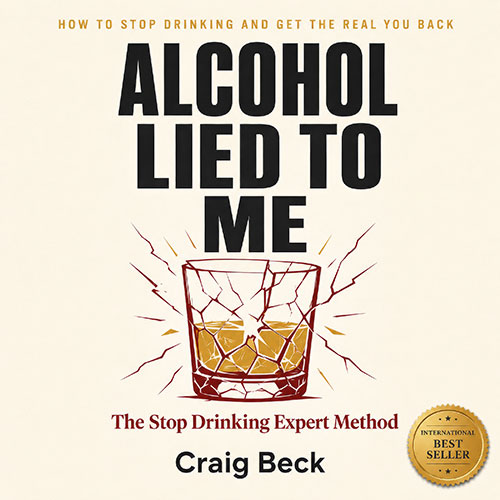
For those struggling with alcohol specifically, the approach remains the same. You don't need more willpower or another failed attempt at moderation. You need to understand why you drink and what you're really seeking in that bottle. The Stop Drinking Expert program addresses these deeper questions rather than just demanding you white-knuckle through cravings. When you resolve the underlying issues, sobriety becomes natural rather than a constant battle against yourself.
Beyond Behaviour to Consciousness
The deepest transformations happen when you shift consciousness, not merely behavior. This involves examining your fundamental beliefs about yourself and reality. Why do you believe you need to change? What stories do you tell yourself about who you are? These narratives shape everything you do. Changing surface behaviors while maintaining limiting beliefs is like rearranging deck chairs on the Titanic. The ship's still sinking.
This spiritual dimension of personal development goes beyond simple behavior modification. It's about recognising the patterns you inherited from family, culture and past experiences. Many behaviours you think are yours actually came from conditioning and programming. You're running someone else's software without realizing it. Real freedom means becoming conscious of these programs, then choosing which ones to keep and which to delete. That's genuine transformation rather than another failed resolution.
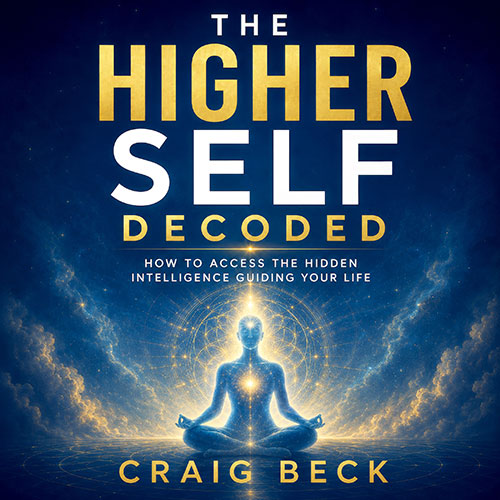
The Craig Beck Show's Humans Decoded explores these deeper questions about consciousness and transformation. The free Inner Circle provides a community for those ready to go beyond surface-level changes. When you understand the spiritual and psychological dimensions of human behaviour, everything shifts. You stop fighting yourself and start evolving naturally. Subscribe to The Craig Beck Show on YouTube for weekly insights into the hidden forces shaping your life. Real transformation awaits those willing to look beyond the illusion of New Year's resolutions.
The Truth About Lasting Change
Change happens in moments of genuine readiness, not calendar dates. It emerges from understanding and compassion, not force and willpower. The resolution model fails because it ignores these fundamental truths about human psychology and behaviour. You can't bully yourself into transformation. You can't shame yourself into growth. These approaches might work briefly, but they always collapse under the weight of your actual needs and desires.
Instead, cultivate awareness and self-compassion. Notice your patterns without judgement. Understand them with curiosity. Meet yourself where you actually are, not where you think you should be. From this foundation of genuine self-acceptance, change becomes possible. Not because you force it, but because you naturally evolve toward healthier expressions of who you truly are. That's the difference between another failed resolution collecting dust by February and genuine transformation that lasts a lifetime.
References and Further Reading
- Drive Research. (2025). New Year's Resolutions Statistics and Trends. Retrieved from https://www.driveresearch.com/market-research-company-blog/new-years-resolutions-statistics/
- CBS News. (2024). New Year's resolutions often don't last. Here's why they fail and how to change that. Retrieved from https://www.cbsnews.com/news/new-years-resolutions-tips-why-they-fail/
- Fast Company. (2025). Why most New Year's resolutions fail—and what that says about leadership habits. Retrieved from https://www.fastcompany.com/91453535/new-years-resolutions-fail-leadership-habits
- New Orleans City Business. (2024). 91% of Americans fail at New Year's resolutions. Retrieved from https://neworleanscitybusiness.com/blog/2024/01/02/91-of-americans-fail-at-new-years-resolutions-heres-how-to-succeed-in-2024/
- Accelerated Resolution Therapy. 5 Psychological Reasons Why Your Resolutions Fail. Retrieved from https://acceleratedresolutiontherapy.com/why-resolutions-fail/
- Frontiers in Behavioral Neuroscience. (2023). Understanding health behavior change by motivation and reward mechanisms. Retrieved from https://www.frontiersin.org/journals/behavioral-neuroscience/articles/10.3389/fnbeh.2023.1151918/full
- Newswise. (2025). New Year's Resolutions: Why They Often Fail and How to Stay on Track. Retrieved from https://www.newswise.com/articles/new-year-s-resolutions-the-psychology-behind-why-they-fail