Why Your Brain Is Programmed to Crave Alcohol (And How to Fix It)
Dec 05, 2025Why Your Brain Is Programmed to Crave Alcohol (And How to Rewire It)
Your Thursday evening ritual begins innocently enough. You walk through the front door after work and your feet carry you straight to the kitchen. Before conscious thought kicks in, you're reaching for a wine glass. This isn't weakness. It's Pavlovian conditioning at work and it has turned you into one of Pavlov's dogs, salivating at the sound of a bell. The bell in your case? Everything from the time on the clock to the sofa you sit on.
Classical conditioning was discovered by Russian physiologist Ivan Pavlov in the 1890s. He rang a bell before feeding dogs and eventually the dogs would drool at the sound of the bell alone, even without food present. Your brain has performed the exact same trick with alcohol. The smell of a pub, Friday afternoon emails, or even certain people have become triggers that make your body anticipate ethanol before you've touched a drop. Research published in Nature Neuropsychopharmacology demonstrates that discrete cues associated with alcohol can powerfully invigorate alcohol seeking behavior, especially when experienced in contexts where alcohol was previously consumed.
The conditioning runs deeper than most people realise. Scientists have documented that approximately 93% of problem drinkers report at least one environmental cue that heightens their craving for alcohol. Your nervous system has been trained over thousands of drinking episodes to release dopamine and other neurochemicals the moment you encounter these triggers. The actual ethanol becomes almost secondary to the conditioned response your brain has learned.
The Loop That Keeps You Trapped
Craig Beck understands this mechanism better than most because he lived it for two decades. The Stop Drinking Expert explains that most people approach quitting alcohol with willpower, which fails 95% of the time. Why? Because willpower tries to fight conditioning head on. It's like telling Pavlov's dogs to simply ignore the bell. The conditioning is too deeply wired into your neural pathways.
The loop works like this: environmental trigger activates conditioned response, you experience what feels like a physical craving (it's actually your brain demanding its expected reward), you drink to satisfy the craving, alcohol briefly quiets the response, tolerance builds, and the conditioning strengthens. Rinse and repeat until you've created neural superhighways dedicated to alcohol consumption. Beck's approach doesn't rely on battling these superhighways with willpower. Instead, he shows you how to completely rewire them.
Traditional methods focus on avoiding triggers or developing coping strategies. That's like living your entire life trying not to hear bells. Beck's methodology tackles the root programming. At Stop Drinking Expert, he demonstrates how to break the unconscious associations between environmental cues and alcohol. The goal isn't to white knuckle through cravings but to eliminate them at source by changing how your brain processes the conditioned stimulus.
Why Aversion Therapy Misses the Point
Some addiction treatments use aversion therapy, deliberately pairing alcohol with unpleasant experiences like nausea inducing drugs. The theory sounds logical on paper. If you make alcohol disgusting, surely the Pavlovian response will reverse? Clinical practice tells a different story. These associations rarely stick long term because they don't address the deeper psychological dependency.
Beck takes a fundamentally different approach explored in depth on The Craig Beck Show (The Deeper Truth) YouTube channel. Rather than making alcohol repulsive through artificial means, he reveals the truth that's been hiding in plain sight: alcohol never delivered what you thought it did. The relaxation, confidence, and stress relief you attributed to drinking were illusions created by the temporary cessation of withdrawal symptoms and the fulfilment of conditioned expectations.
When you understand that alcohol is a mild anaesthetic and addictive drug that creates the very anxiety it claims to solve, the Pavlovian loop begins to crumble. Your brain stops seeing alcohol as a reward worth pursuing. The environmental triggers lose their power because the association has fundamentaly changed. You're not avoiding alcohol through discipline. You genuinely don't want it anymore.
The Neurochemical Reality Nobody Mentions
Here's what happens in your brain during that Thursday evening ritual. The environmental cues trigger an anticipatory dopamine release. Your nucleus accumbens lights up on functional MRI scans before you've taken a single sip. Studies on Pavlovian alcohol seeking behavior show the basolateral amygdala becomes particularly active during these conditioned responses. This isn't imagination. It's measurable brain activity that feels completely real.
The ethanol itself acts as an unconditioned stimulus, initially producing feelings you interpret as positive (they're actually relief from emerging withdrawal and fulfilment of expectation). Over time, your brain begins associating neutral environmental factors with this neurochemical cascade. The soft cushion of your sofa becomes a conditioned stimulus. The theme tune to your favorite television programme becomes a trigger. Even the way evening light filters through your kitchen window can activate the response.
Beck's genius lies in recognising that you can't simply avoid every trigger forever. Life happens in environments. The solution requires fundamentaly altering what those triggers mean to your brain. When you deconstruct the alcohol illusion, when you viscerally understand that ethanol creates problems rather than solving them, the old associations begin to dissolve. The bell rings but you're no longer interested in drooling.
Breaking Free From the Pavlovian Prison
The research is unambiguous. Cue induced alcohol craving measured in laboratory settings predicts relapse in the real world. If environmental triggers can activate your seeking behavior, you remain vulnerable. Beck's approach doesn't dance around this uncomfortable truth. You need to completely rewire the conditioning, not manage it or cope with it for the rest of your existence.
This rewiring happens through education rather than deprivation. When you truly understand alcohol's pharmacology, when you grasp that it's simply ethanol (the same substance in antifreeze), when you see clearly how the alcohol industry profits from your addiction, something shifts fundamentaly. The substance loses its mystique. Those Pavlovian triggers begin firing into empty space because the reward they're signaling no longer seems rewarding.
On The Craig Beck Show, this process is explored through the lens of deeper truth and consciousness. Beck has evolved his message beyond simple alcohol cessation into questions of identity, meaning, and authentic freedom. The Pavlovian conditioning around drinking is just one manifestation of how unconsciously we live our lives, responding to programmed triggers without genuine choice.
The First Two Weeks Are Physical
Beck is honest about the initial challenge. For the first two weeks after stopping, alcohol retains the power to cause physical discomfort. This isn't the conditioning. It's actual chemical withdrawal as your body adjusts to functioning without regular ethanol. You'll feel jittery, anxious, or on edge. Your brain will vocalize this as "I need a drink" but what you actually need is time for your neurochemistry to rebalance.
The Pavlovian cravings are different. They arrive triggered by external cues, often weeks or months after the physical withdrawal has resolved. You're watching a film and a character pours whisky. Suddenly you want a drink despite feeling perfectly fine moments earlier. That's conditioning, not chemistry. Understanding the distinction matters because the strategies for handling each differ completely.
For physical withdrawal, you need support, medical supervision if you're a heavy drinker, good nutrition, hydration, and patience. For conditioned cravings, you need to dismantle the false beliefs that created the association in the first place. Beck's methodology addresses both systematically. The physical discomfort passes relatively quickly. The mental freedom that follows lasts a lifetime.
Why Most People Fail (And How You Won't)
Twelve step programs ask you to accept powerlessness and label yourself an alcoholic forever. Rehabilitation facilities cost a fortune and boast dismal success rates. General practitioners suggest cutting down, which proves useless once you've crossed the line into problem drinking. None of these approaches properly address Pavlovian conditioning. They either ignore it or suggest you spend decades attending meetings to constantly reinforce your identity as someone struggling with addiction.
Beck's research and personal experience revealed a better path. You're not powerless. You're not fundamentaly broken. You're conditioned, which means you can be unconditioned. The difference is profound. When you view yourself as diseased, every environmental trigger becomes a threat to your fragile sobriety. When you view yourself as someone who simply understands the truth about ethanol, those same triggers become irrelevant.
The method works because it aligns with how your brain actually functions. You can't willpower your way out of classical conditioning any more than Pavlov's dogs could choose not to salivate. But you can change what the conditioned stimulus signals. When the bell no longer predicts food, the response extinguishes naturally. When environmental cues no longer predict reward, your craving dissolves without effort.
The Spiritual Dimension of True Freedom
Beck's work has expanded into territory most quit drinking experts avoid. On his YouTube channel and through the Deeper Truth Club, he explores consciousness, identity, and the fundamental questions of existence. This isn't abstract philosophy. Understanding who you really are beneath the conditioned responses changes everything.
Pavlovian conditioning doesn't just make you crave alcohol. It shapes your entire experience of reality. You're responding unconsciously to thousands of triggers every day, living on autopilot, rarely making genuine choices. Breaking free from alcohol becomes a gateway to broader awakening. You start questioning other conditioned responses. You begin living deliberately rather than reactively.
This deeper truth liberates you from victim mentality. You're not battling an addiction disease for the rest of your life. You're not white knuckling through endless temptation. You've simply seen through an illusion and can't unsee it. The Pavlovian loop that once controlled your evenings and weekends dissolves because the foundation it was built on has crumbled. What remains is clarity, energy, and authentic freedom to create the life you actually want.
Your Next Step
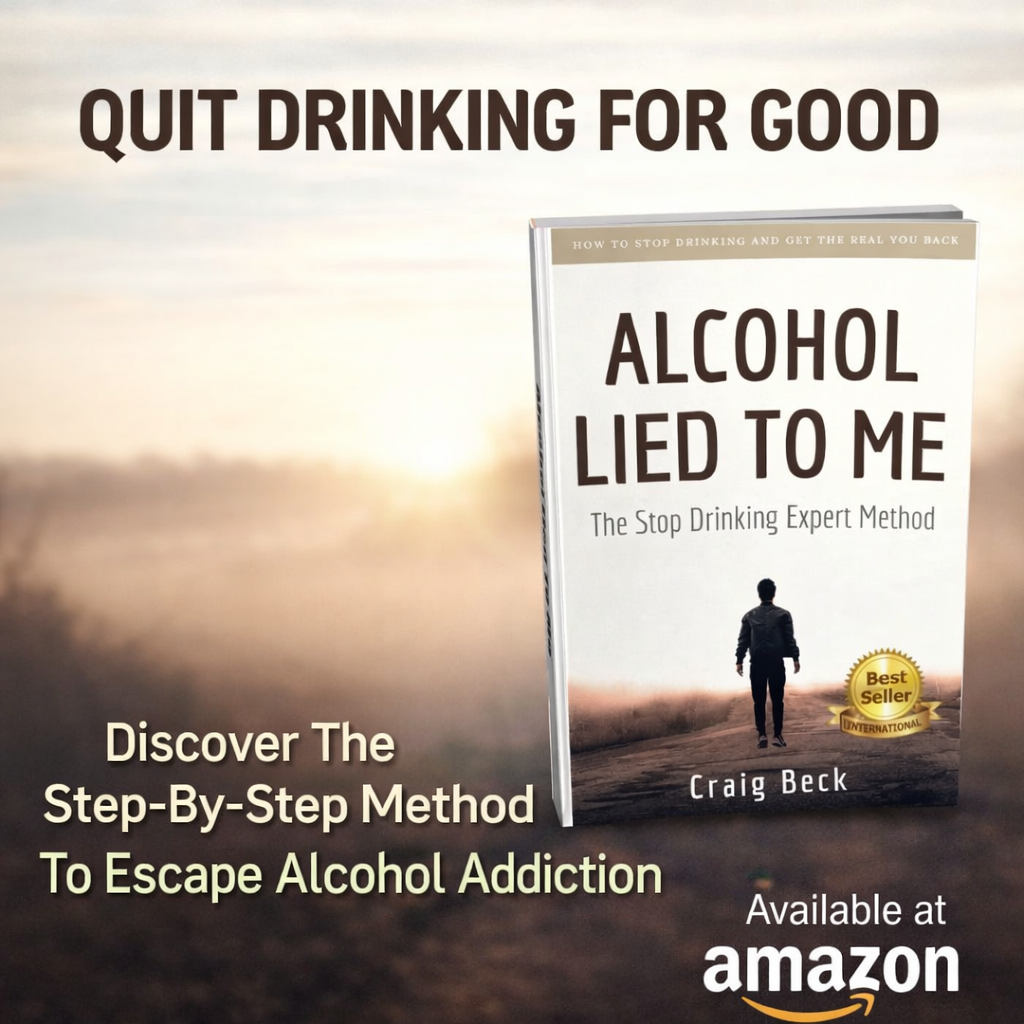
Thousands of people have escaped the Pavlovian loop using Beck's approach. They're not special or unusually disciplined. They simply gained access to information that completely reframed their relationship with alcohol. The methodology is freely available through his quit drinking webinars, detailed in his bestselling books, and explored weekly on his YouTube channel.
Subscribe to The Craig Beck Show (The Deeper Truth) on YouTube to access this perspective shifting content. Each episode builds your understanding of how conditioning controls behavior and how conscious awareness breaks those chains. This isn't entertainment. It's practical neuroscience presented in an accessible, engaging format that respects your intelligence.
The conditioned cravings you experience aren't evidence of weakness. They're proof of how effectively your brain has been trained. The good news? Brains are remarkably plastic. New neural pathways form quickly when fed the right information. The Pavlovian loop that has dictated your drinking for years can be broken completely. Not managed. Not coped with. Broken. And it starts with understanding exactly how that loop was created in the first place.
External References
- Sciascia JM, Reese RM, Janak PH, Chaudhri N. Alcohol-Seeking Triggered by Discrete Pavlovian Cues is Invigorated by Proximal Alcohol Cues: Studies in Male Rats. Nature Neuropsychopharmacology. 2015. Available at: https://www.nature.com/articles/npp2015130
- Ludwig AM. Pavlov's "bells" and alcohol craving. Addictive Behaviors. 1986. Available at: https://www.sciencedirect.com/science/article/pii/0306460386900328
- Remedios J, Woods C, Tardif C, Janak PH, Chaudhri N. Pavlovian-conditioned alcohol-seeking behavior in rats is invigorated by the interaction between discrete and contextual alcohol cues. PMC. 2014. Available at: https://pmc.ncbi.nlm.nih.gov/articles/PMC3967542/
- Glautier S, Drummond DC. Alcohol as an unconditioned stimulus in human classical conditioning. Psychopharmacology. 1994. Available at: https://pubmed.ncbi.nlm.nih.gov/7892428/
- Mental Health America. Classical Conditioning and Addiction. 2025. Available at: https://www.mentalhealth.com/library/classical-conditioning-and-addiction